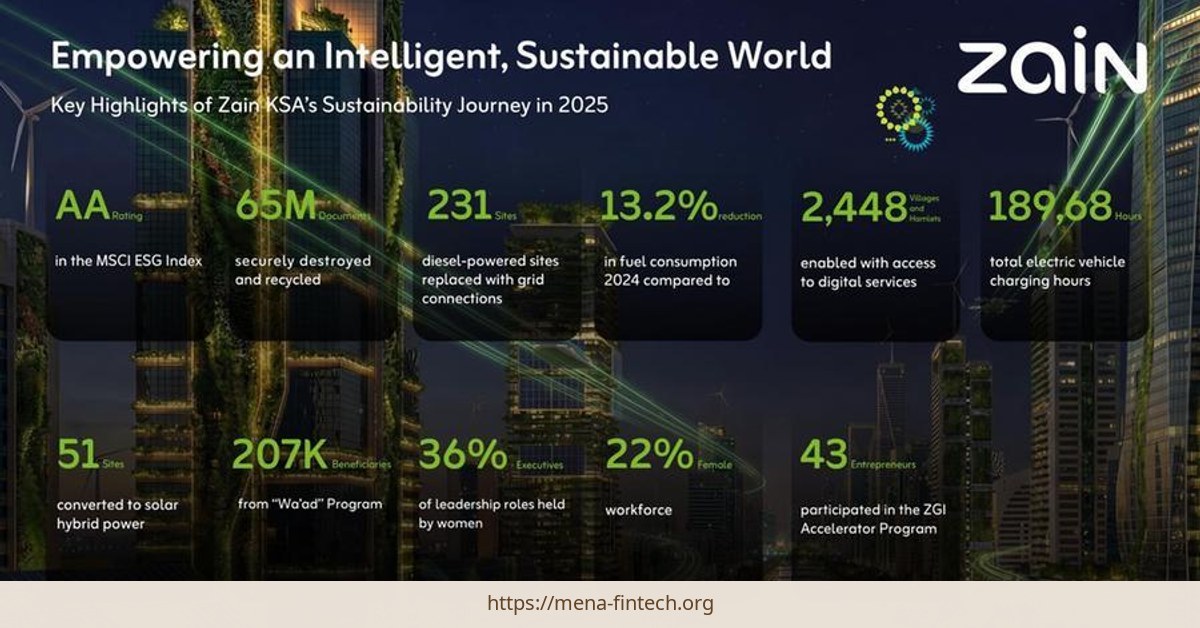
Zain KSA published its 2025 Sustainability Report on July 9, 2026, showcasing significant advancements in energy efficiency and digital inclusion. The report reflects the company’s alignment with national priorities such as Saudi Arabia’s Vision 2030, which emphasizes sustainable development and digital transformation across key sectors. These efforts are part of a broader regional trend where telecommunications firms are increasingly integrating environmental and social goals into their operational frameworks to meet evolving regulatory expectations and investor demands.
Key Achievements in Energy Efficiency
The report highlights landmark achievements in energy efficiency, including reductions in operational carbon emissions by 22% year-over-year and the deployment of AI-driven grid optimization systems across 80% of its network infrastructure. These initiatives align with the Saudi Arabian government’s Vision 2030 sustainability targets, which emphasize reducing energy consumption in telecommunications infrastructure. Vision 2030 specifically aims to diversify the economy away from oil dependency, with energy efficiency in critical sectors like telecommunications serving as a cornerstone of this transition.
Zain KSA’s energy efficiency programs include the replacement of 15,000 legacy network towers with solar-powered alternatives and the implementation of machine learning algorithms to predict and mitigate energy waste in data centers. The company reported a 35% reduction in energy costs for its mobile network operations in 2025, according to its own documentation. This represents a significant shift from traditional energy consumption models, which are often costly and environmentally taxing. By adopting renewable energy sources and AI-driven optimization, Zain KSA is not only reducing its carbon footprint but also setting a benchmark for other regional telecom providers to follow.
The broader implications of these initiatives extend beyond Zain KSA’s operations. As one of the largest telecom operators in the Middle East, its energy efficiency strategies could influence industry-wide practices. For instance, the integration of AI into grid optimization systems may inspire similar technologies in other sectors, such as transportation or manufacturing, where energy consumption is a critical concern. Additionally, the deployment of solar-powered towers aligns with Saudi Arabia’s National Renewable Energy Program, which seeks to generate 50% of the country’s electricity from renewable sources by 2030.
Digital Inclusion Efforts
The report emphasizes Zain KSA’s efforts in digital inclusion, particularly through its “Digital Bridges” initiative, which provided free mobile data and digital literacy training to over 500,000 low-income households in 2025. This program is part of a broader strategy to expand internet access in rural and underserved areas of Saudi Arabia. Digital inclusion is a key pillar of Vision 2030, which recognizes that equitable access to technology is essential for fostering economic growth and social mobility.
Zain KSA also partnered with local educational institutions to launch coding boot camps for youth, with a focus on developing skills in AI and blockchain technologies. The company stated that these programs aim to prepare 10,000 young Saudis for careers in the digital economy by 2026. By targeting youth education and workforce readiness, Zain KSA is addressing a critical gap in the region’s digital skills ecosystem, which is vital for sustaining innovation in sectors like fintech, e-commerce, and smart cities.
The “Digital Bridges” initiative, in particular, has the potential to catalyze broader economic participation. Free mobile data access enables underserved populations to engage with digital services, from online education to telehealth and e-commerce platforms. This, in turn, supports the government’s goal of creating a more inclusive digital economy, where technology serves as a tool for empowerment rather than a barrier to entry.
Implications for the Fintech Sector
Zain KSA’s sustainability report underscores the growing intersection between telecommunications infrastructure and financial services innovation in the MENA region. By prioritizing energy efficiency, the company is positioning itself to support the expansion of fintech services that require reliable, low-cost connectivity. For fintech firms operating in the region, Zain KSA’s focus on digital inclusion could create new opportunities in financial literacy programs and mobile banking solutions tailored to underserved populations.
The report also signals a potential increase in investment in green fintech initiatives that align with national sustainability goals. As energy-efficient infrastructure becomes more prevalent, fintech providers may leverage this to develop products that are both environmentally responsible and economically viable. For example, mobile banking platforms could integrate energy-saving features or promote financial services that support renewable energy adoption.
Significance: For MENA fintech, the report reflects a broader trend of telecommunications providers integrating sustainability into their operations, which could influence how financial services are delivered in the region. The practical question for market participants is whether Zain KSA’s energy efficiency and digital inclusion strategies will translate into scalable models for fintech innovation, particularly in areas like green finance and inclusive banking.
What wasn’t disclosed: The report did not specify investment amounts allocated to sustainability initiatives, regulatory approvals for new programs, or named fintech partners that may benefit from Zain KSA’s infrastructure upgrades.
Sources
Image: static.zawya.com