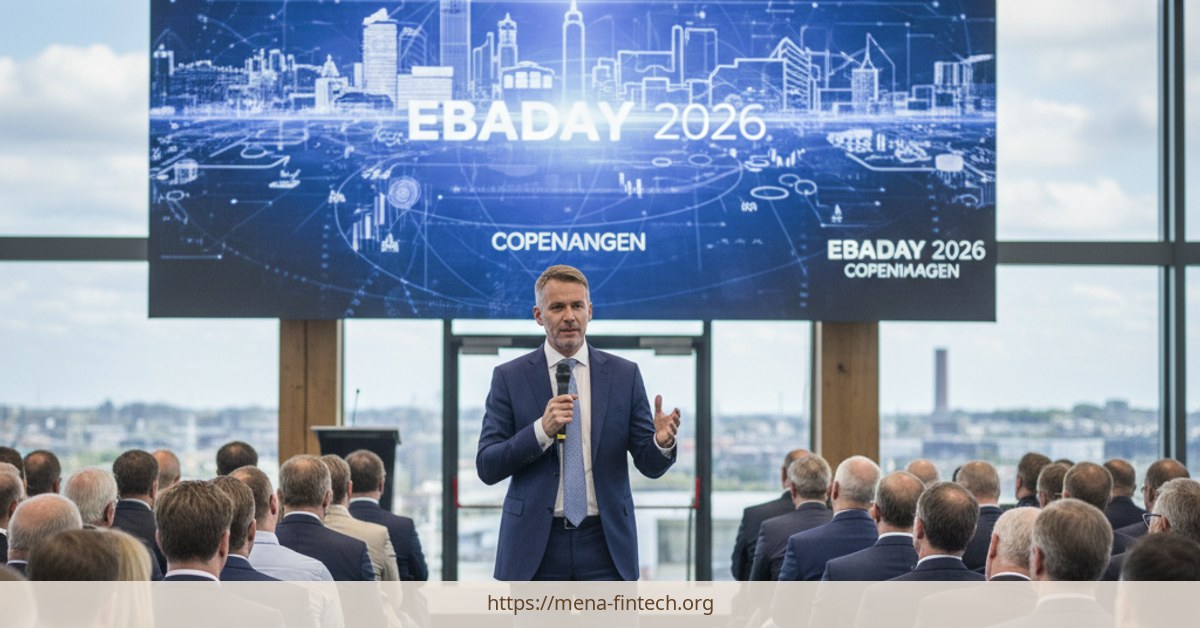
Daniel Szmukler, Director of the Euro Banking Association, highlighted the transformative potential of agentic AI and tokenized money during his speech at EBAday 2026.
Emerging Payment Technologies
Szmukler outlined the direction of travel for agentic AI and tokenized money, emphasizing their potential to reshape customer interactions and cross-border transactions. The discussion, held in Copenhagen on 9 July 2026, focused on how these technologies could redefine payment ecosystems globally. Agentic AI, capable of autonomous decision-making in financial workflows, was positioned as a tool to enhance personalization and efficiency in customer service. Tokenized money, meanwhile, was described as a mechanism to streamline cross-border transfers by reducing intermediation and increasing transparency.
Agentic AI represents a shift from traditional rule-based automation to systems that can adapt and learn from interactions, enabling real-time decision-making in areas such as fraud detection, transaction routing, and personalized financial advice. In the context of payments, this could mean systems that dynamically adjust to user behavior, optimize transaction pathways, and even predict customer needs based on historical data. Tokenized money, by contrast, involves representing traditional currency as digital tokens on a blockchain or distributed ledger, which can be transferred instantly and securely across borders without the need for traditional banking intermediaries. This approach has the potential to reduce transaction costs, improve settlement speeds, and increase transparency in cross-border flows, which are critical for the MENA region’s growing digital economy.
Regulatory Frameworks and Adoption
The integration of agentic AI into payment systems requires robust regulatory frameworks to ensure security, compliance, and consumer protection. Szmukler noted that regulators in the MENA region, including GCC authorities, are increasingly prioritizing innovation while balancing risk management. For tokenized money, he highlighted the need for harmonized standards to facilitate adoption across jurisdictions. In the MENA context, this could involve aligning with regional regulatory bodies such as the Central Bank of the UAE (CBUAE) or Saudi Arabia’s Saudi Arabian Monetary Authority (SAMA) to create a conducive environment for experimentation and deployment.
The MENA region’s regulatory landscape is characterized by a mix of progressive policies and cautious oversight. While GCC countries have been at the forefront of adopting digital financial infrastructure—evidenced by the UAE’s blockchain-based trade finance initiatives and Saudi Arabia’s Vision 2030 digital transformation goals—the pace of regulatory adaptation for emerging technologies like agentic AI and tokenized money remains uneven. For instance, the CBUAE has been proactive in establishing sandbox environments for fintech experimentation, while SAMA has emphasized the need for “responsible innovation” in its recent policy statements. However, the absence of a unified regional framework for AI governance and digital asset regulation presents challenges for cross-border interoperability and standardization.
The adoption of agentic AI in payment systems also raises questions about data privacy, algorithmic bias, and accountability. Regulators in the MENA region must navigate these complexities while ensuring compliance with international standards such as the EU’s proposed AI Act, which categorizes AI systems based on risk levels. Similarly, tokenized money requires clear legal definitions to address issues such as ownership, taxation, and anti-money laundering (AML) compliance. The lack of concrete timelines or regulatory approvals in the current dossier underscores the need for further clarity on implementation pathways, particularly for market participants seeking to deploy these technologies at scale.
Significance for the MENA Region
For the MENA fintech ecosystem, the implications of agentic AI and tokenized money are profound. These technologies could accelerate the region’s shift toward digital-first financial infrastructure, particularly in cross-border payments where GCC countries are already leading in innovation. However, the practical question for market participants remains: How will regional regulators and financial institutions adapt their frameworks to support these advancements without compromising stability? The absence of concrete timelines or regulatory approvals in the current dossier underscores the need for further clarity on implementation pathways.
The MENA region’s unique position as a hub for cross-border trade and remittances makes it a natural candidate for tokenized money adoption. With over USD 60 billion in annual remittances flowing into the region—primarily from GCC countries to South Asia and Africa—tokenized money could significantly reduce the costs and delays associated with traditional remittance channels. For example, the UAE’s recent pilot programs with tokenized dirhams have demonstrated the potential to cut settlement times from days to minutes, while also enabling real-time tracking of transactions. Similarly, agentic AI could enhance the efficiency of digital wallets and mobile banking platforms, which are increasingly used by the region’s young, tech-savvy population.
Yet, the path to widespread adoption is not without hurdles. The fragmented regulatory environment across MENA countries, combined with the need for infrastructure upgrades, poses challenges for fintechs and banks looking to integrate these technologies. Additionally, the region’s reliance on correspondent banking relationships for cross-border transactions means that tokenized money could disrupt existing revenue models for traditional financial institutions. As such, collaboration between regulators, financial institutions, and technology providers will be critical to ensuring a smooth transition.