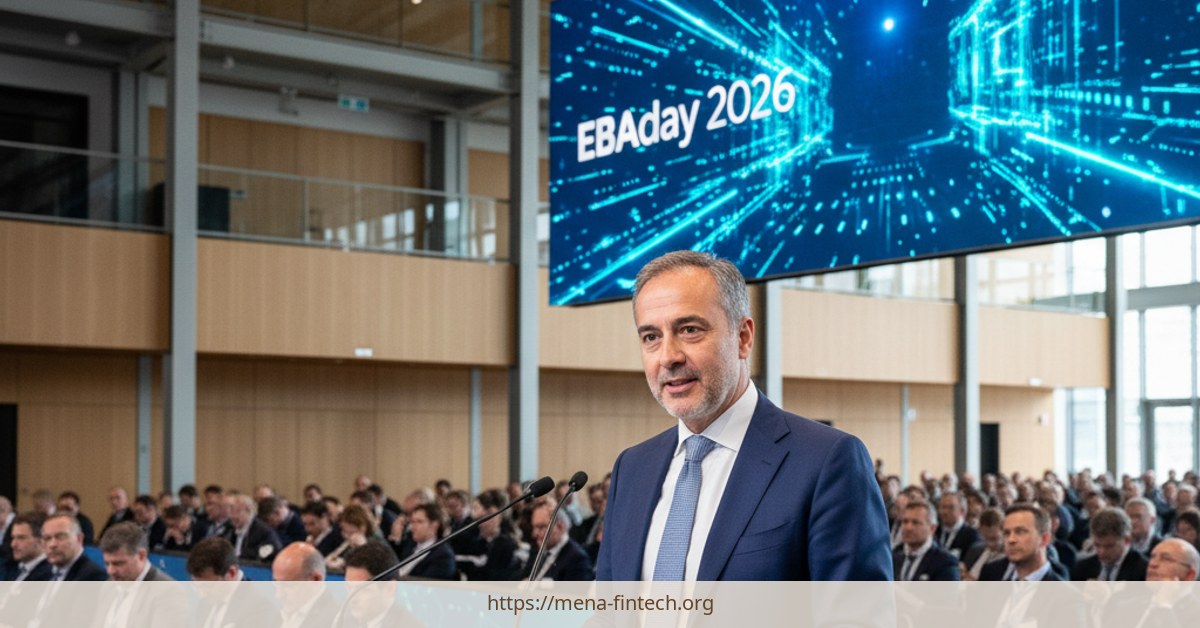
Federico Aondio, Payments and Digital Assets Lead for Accenture in Italy and Greece, emphasized the critical role of digital identity in establishing scalable trust during his presentation at EBAday 2026 in Copenhagen. His remarks underscored the growing importance of trust mechanisms in agentic commerce, a model where autonomous systems execute financial transactions with minimal human intervention. As the MENA fintech ecosystem continues to evolve, the integration of robust digital identity frameworks is seen as pivotal to addressing systemic challenges such as fraud, compliance, and cross-border transaction security.
The Role of Digital Identity in Trust
Digital identity is crucial for making trust scalable in agentic commerce. Aondio highlighted the need for visible trust in transactions, stating that digital identity solutions are essential for verifying participants in decentralized financial ecosystems. In the context of the MENA region, where rapid digital transformation is underway, the absence of standardized identity verification protocols has created friction in embedded finance models and cross-border payment systems. For instance, the lack of interoperable digital identity frameworks across GCC countries has hindered seamless financial inclusion, particularly for unbanked populations reliant on mobile money solutions. Aondio’s emphasis on visible trust aligns with regional efforts to build infrastructure that balances innovation with regulatory oversight, such as the UAE’s National ID system and Saudi Arabia’s Vision 2030 digital transformation agenda.
The concept of visible trust extends beyond mere authentication. It involves creating transparent, auditable processes that allow users and regulators to verify the legitimacy of transactions in real time. This is particularly critical in agentic commerce, where automated systems handle high volumes of transactions with limited human oversight. Aondio argued that without such mechanisms, the risk of systemic fraud and non-compliance could escalate, undermining consumer confidence and regulatory compliance. For MENA fintechs, this presents an opportunity to embed identity verification into the core architecture of payment platforms, ensuring alignment with regional regulatory standards while enhancing user confidence.
Invisible Payments and Consumer Behavior
Invisible payments, where transactions occur seamlessly without user intervention, are reshaping consumer expectations. Aondio noted that this evolution demands new trust-building mechanisms, as users may not always perceive the security layers behind automated transactions. For MENA fintech operators, this presents an opportunity to embed transparent identity verification processes into payment flows, ensuring compliance with regional regulatory standards while enhancing user confidence.
The rise of invisible payments is closely tied to the proliferation of embedded finance models, where financial services are integrated into non-financial platforms such as e-commerce marketplaces, ride-hailing apps, and social media networks. In the MENA region, this trend has gained momentum with the growth of digital wallets and API-driven payment gateways. However, the absence of a unified regulatory framework for embedded finance has created a patchwork of compliance requirements, complicating the integration of identity verification protocols. Aondio stressed that for invisible payments to gain widespread adoption, fintechs must ensure that the underlying identity verification processes are not only secure but also user-friendly, avoiding friction that could deter adoption.
Moreover, consumer behavior in the MENA region is increasingly influenced by mobile-first habits, with smartphone penetration exceeding 80% in the GCC. This demographic shift underscores the need for identity solutions that are accessible via mobile devices, leveraging biometric authentication and decentralized identifiers (DIDs) to reduce reliance on traditional KYC processes. Aondio highlighted that such innovations could bridge the gap between regulatory compliance and user convenience, a critical factor in the region’s digital finance landscape.
Regulatory Frameworks Supporting Trust
Regulatory support is vital for the adoption of digital identity solutions. Clear frameworks can help mitigate risks associated with digital transactions by setting benchmarks for identity verification, data privacy, and cross-border interoperability. In the GCC, initiatives such as the UAE’s digital identity infrastructure and Saudi Arabia’s Vision 2030 digital transformation goals provide a foundation for aligning private-sector innovation with public policy. However, agentic commerce models must navigate varying regulatory landscapes across MENA countries to ensure seamless adoption.
The regulatory landscape in the MENA region is characterized by a mix of progressive and cautious approaches. While the UAE and Saudi Arabia have made significant strides in digitizing identity systems, other countries in the region are still in the early stages of developing regulatory sandboxes for fintech experimentation. Aondio noted that this divergence poses challenges for cross-border agentic commerce, where transactions often span multiple jurisdictions with differing compliance requirements. For example, the lack of harmonized data privacy laws across GCC nations could complicate the sharing of identity information between financial institutions operating in different markets.
To address these challenges, Aondio advocated for the establishment of regional regulatory bodies or collaborative frameworks that standardize identity verification protocols. He cited the example of the Gulf Cooperation Council (GCC)’s efforts to create a unified digital identity framework, which could serve as a blueprint for cross-border interoperability. Such initiatives would not only reduce compliance costs for fintechs but also enhance consumer trust by ensuring consistent security standards across the region.
Significance: Regional Implications and Strategic Priorities
For the MENA fintech ecosystem, Aondio’s insights underscore the growing intersection of digital identity, regulatory alignment, and consumer trust in enabling agentic commerce. The practical question for regional stakeholders is how to integrate identity verification into invisible payment systems without compromising user experience or regulatory compliance. Until more concrete examples emerge from the region, the development remains a strategic priority for fintechs and regulators alike.
The implications of Aondio’s remarks extend beyond technical implementation. As agentic commerce becomes more prevalent, financial institutions and regulators must collaborate to establish governance models that balance innovation with risk management. This includes defining liability frameworks for automated transactions, ensuring transparency in algorithmic decision-making, and protecting consumer rights in cases of fraud or disputes. For MENA fintechs, the ability to navigate these complexities will determine their competitiveness in a rapidly evolving market.
Sources
- How to Scale Trust in Agentic Commerce and Digital Money – finextra.com