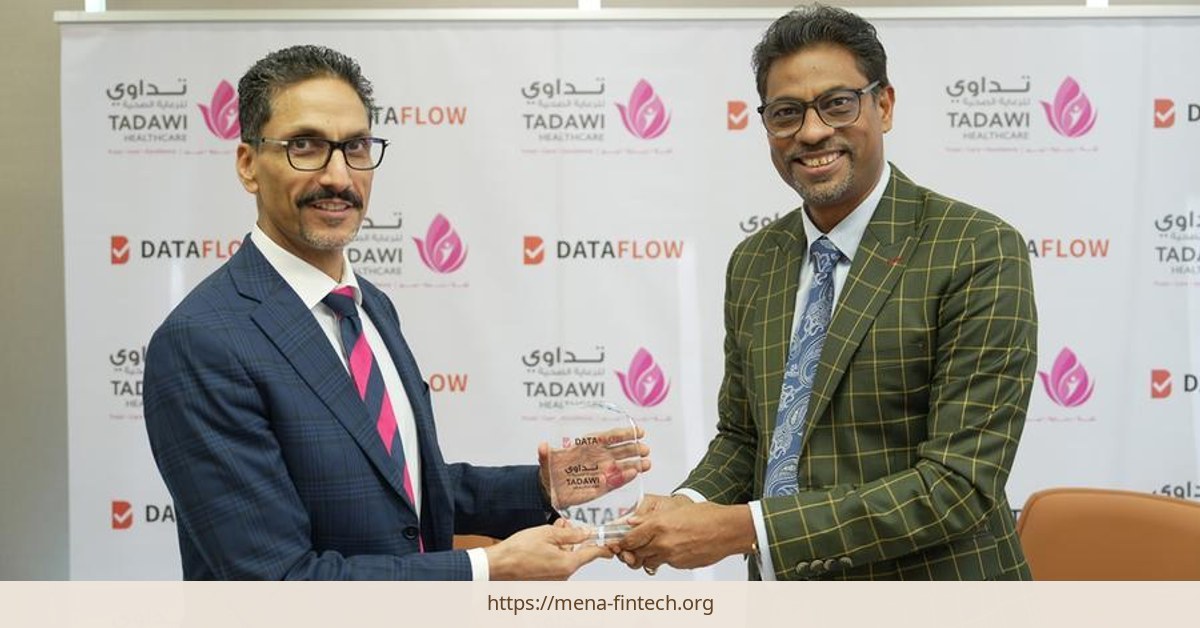
DataFlow Group has signed a Memorandum of Understanding (MOU) with Tadawi Healthcare to improve the standards of credential verification for healthcare practitioners in the UAE. The partnership focuses on elevating credential verification standards and introducing a dedicated primary source verification framework to support Tadawi Healthcare’s expanding clinical workforce.
Partnership Details
DataFlow Group and Tadawi Healthcare signed the MOU on July 15, 2026. The agreement centers on developing a primary source verification framework to ensure the authenticity of healthcare professionals’ credentials. This initiative aligns with Tadawi Healthcare’s goal to scale its clinical workforce while maintaining rigorous verification processes. The MOU does not disclose financial terms, regulatory approvals, or specific implementation timelines.
The collaboration marks a strategic alignment between DataFlow Group, a digital verification infrastructure provider, and Tadawi Healthcare, a regional healthcare services organization. By leveraging DataFlow’s expertise in digital verification, Tadawi aims to streamline the credentialing process for its growing network of clinical professionals. This framework is expected to reduce administrative burdens while enhancing the reliability of verification outcomes.
Significance of Enhanced Verification
Improved credential verification is critical for maintaining high standards of patient care and safety in the UAE healthcare ecosystem. With the sector experiencing rapid growth in clinical staffing, the partnership addresses a systemic need for reliable verification mechanisms. For regional healthcare providers, the practical question is whether this framework can be scaled across multiple jurisdictions while meeting local regulatory requirements. Until further details are disclosed, the development remains an infrastructure initiative to monitor.
The UAE healthcare sector has seen significant expansion in recent years, driven by government initiatives to enhance healthcare accessibility and quality. However, this growth has also highlighted the challenges of verifying the credentials of an increasingly diverse and mobile clinical workforce. Traditional verification methods, which often rely on manual checks and third-party intermediaries, are time-consuming and prone to errors. A primary source verification framework, as proposed by the partnership, could mitigate these risks by directly validating credentials through official educational and licensing institutions.
This development aligns with broader trends in the MENA region, where digital verification infrastructure is increasingly being adopted to support compliance in sectors such as finance, healthcare, and education. The UAE’s regulatory environment has been proactive in promoting digital solutions that enhance transparency and reduce fraud. For instance, the Central Bank of the UAE (CBUAE) has emphasized the importance of secure digital verification in financial services, a principle that could be extended to healthcare credentialing.
What Wasn’t Disclosed
The announcement did not specify investment size, ownership terms, regulatory approvals, named banking partners, launch markets, or committed transaction volumes. It also did not confirm when the first live verification process would be implemented.
The absence of financial details raises questions about the scale of the partnership and its potential impact on Tadawi Healthcare’s operational costs. While the MOU outlines the intent to develop a verification framework, the lack of implementation timelines leaves uncertainty about when the system will be operational. Additionally, the framework’s compatibility with existing healthcare regulatory frameworks across the UAE and neighboring Gulf Cooperation Council (GCC) countries remains unclear. This could affect the framework’s adoption rate and its ability to meet the needs of a region with diverse regulatory landscapes.
Significance:
For MENA fintech, the announcement reflects the convergence of digital verification infrastructure and healthcare compliance frameworks in the UAE. The integration of DataFlow’s technology into Tadawi Healthcare’s operations could serve as a model for other healthcare providers seeking to adopt similar solutions. This partnership may also influence regulatory discussions around the standardization of credential verification processes across the GCC, where harmonizing requirements could reduce administrative complexity for cross-border healthcare professionals.
For regional healthcare institutions, the practical question is how this model can be structured to meet modern compliance and cross-border regulatory requirements while preserving its core intent of ensuring practitioner authenticity. The success of the framework will depend on its ability to integrate seamlessly with existing systems and adapt to the evolving needs of the healthcare sector. As the UAE continues to invest in digital transformation, this initiative could become a cornerstone of its efforts to build a resilient and transparent healthcare ecosystem.
Sources
Image: static.zawya.com