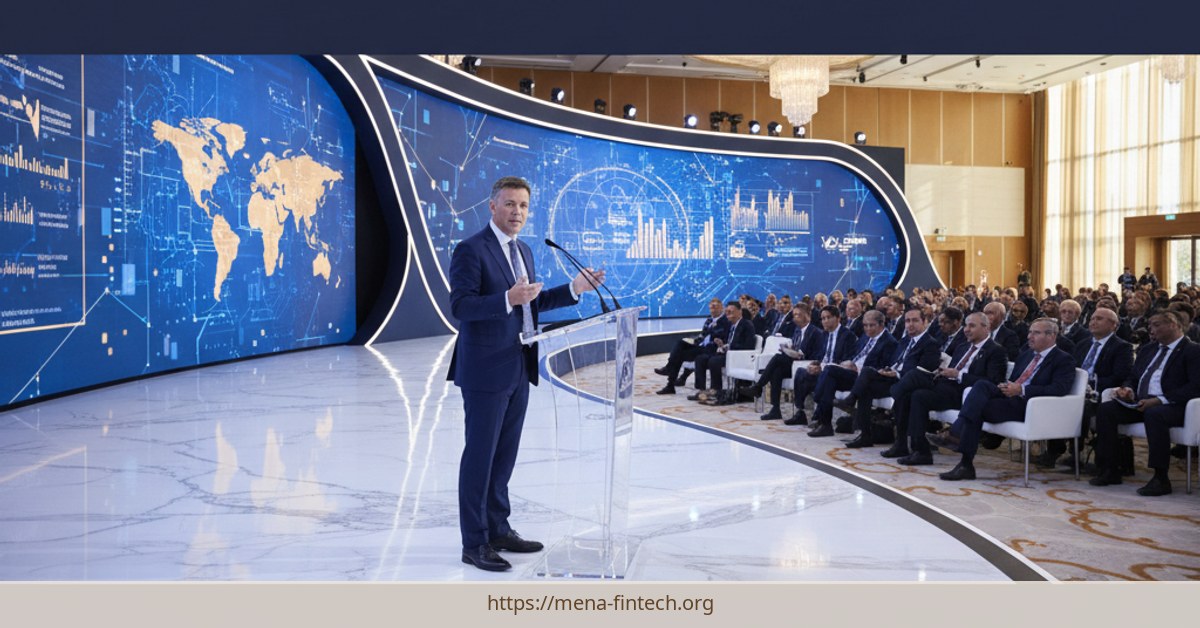
Daniel Hurst, International Line of Business Head at FIS Global, highlighted the rapid evolution of the payments landscape at EBAday 2026. He emphasized that the payments market has outpaced strategy and planning in the last 18 months, with no central controller overseeing the industry.
Implications for Fintech Companies
Hurst’s insights underscore the challenges faced by fintech companies and banks in the GCC as the payments landscape evolves. Rapid changes in the market affect regulatory frameworks, requiring stakeholders to adapt to shifting dynamics. Strategic planning must now keep pace with developments that have occurred faster than anticipated, creating a need for agile responses to maintain competitiveness.
The absence of a central authority in the payments industry has created a fragmented regulatory environment, particularly in the MENA region. This fragmentation complicates compliance for fintechs operating across multiple jurisdictions, as each country’s regulatory body may impose distinct requirements. For example, the UAE’s Central Bank of the UAE (CBUAE) has been proactive in adopting open banking standards, while Saudi Arabia’s Saudi Central Bank (SAMA) has focused on cross-border payment efficiency. Fintechs must navigate these divergent priorities, often requiring localized compliance strategies that increase operational complexity and costs. Hurst’s remarks suggest that the lack of harmonization will persist, forcing firms to prioritize flexibility in their governance models.
Moreover, the rapid pace of innovation has intensified competition. Traditional banks are accelerating digital transformation to retain market share, while new entrants leverage AI-driven fraud detection and blockchain-based settlement systems. This dual pressure demands that fintechs not only innovate but also scale infrastructure to handle higher transaction volumes and ensure real-time processing. In the GCC, where mobile penetration exceeds 90% and digital wallet adoption is rising, the need for seamless user experiences has become a critical differentiator.
Historical Context of Payments Transformation
Hurst described historical trends in payments transformation, noting how past developments inform current strategies. Understanding these trends is critical for shaping future planning, particularly in the MENA region where regulatory and market conditions are rapidly changing. The absence of a central controller in the payments industry further complicates the ability to predict or control future trajectories.
Historically, payments transformation has been driven by technological breakthroughs and regulatory mandates. The shift from paper-based systems to digital platforms in the early 2000s, for instance, was catalyzed by the rise of internet banking and the need for faster cross-border transactions. More recently, the proliferation of QR code-based payments and the emergence of real-time gross settlement (RTGS) systems have redefined transaction speed and security. In the MENA region, these trends have been amplified by the region’s youthful population and high smartphone penetration, which have accelerated the adoption of mobile-first financial services.
However, the current phase of transformation is distinct in its velocity and scope. Unlike previous cycles, which were often preceded by clear regulatory triggers (e.g., PSD2 in the EU), the present landscape is shaped by decentralized innovation and cross-border tech partnerships. For example, the collaboration between UAE-based fintechs and global payment gateways has enabled the rapid deployment of multi-currency solutions, bypassing traditional banking intermediaries. This decentralized model challenges regulators to balance innovation with systemic risk management, a tension Hurst highlighted as a defining feature of the 2026 payments ecosystem.
Significance: Regional Implications and Strategic Questions
For the MENA fintech ecosystem, Hurst’s remarks reflect broader trends in payments that could influence regional strategies and operations. The rapid pace of change highlights the need for continuous adaptation to ensure alignment with evolving market demands. For regional financial institutions, the practical question is how to integrate these insights into existing frameworks to support sustainable growth and compliance.
The MENA region’s payments landscape is poised for further disruption as emerging technologies like AI and blockchain converge with regulatory experimentation. In Bahrain, the Financial Conduct Authority (FCA) has been testing tokenized asset-backed securities, while Oman’s Central Bank is exploring central bank digital currencies (CBDCs) for trade finance. These initiatives, though nascent, signal a shift toward programmable money and automated compliance, which could redefine the role of intermediaries in the region. Fintechs that align with these trajectories may gain a competitive edge, but they must also address infrastructure gaps, such as underdeveloped payment corridors and limited interoperability between regional systems.
A critical challenge for stakeholders lies in balancing innovation with risk mitigation. As Hurst noted, the lack of a central controller means that regulatory oversight is often reactive rather than proactive. This dynamic raises questions about how fintechs and banks can collaborate with regulators to establish guardrails without stifling innovation. For instance, the use of regulatory sandboxes in the UAE and Saudi Arabia has allowed firms to test new models in controlled environments, but scaling these solutions across the region requires coordination that has yet to materialize.