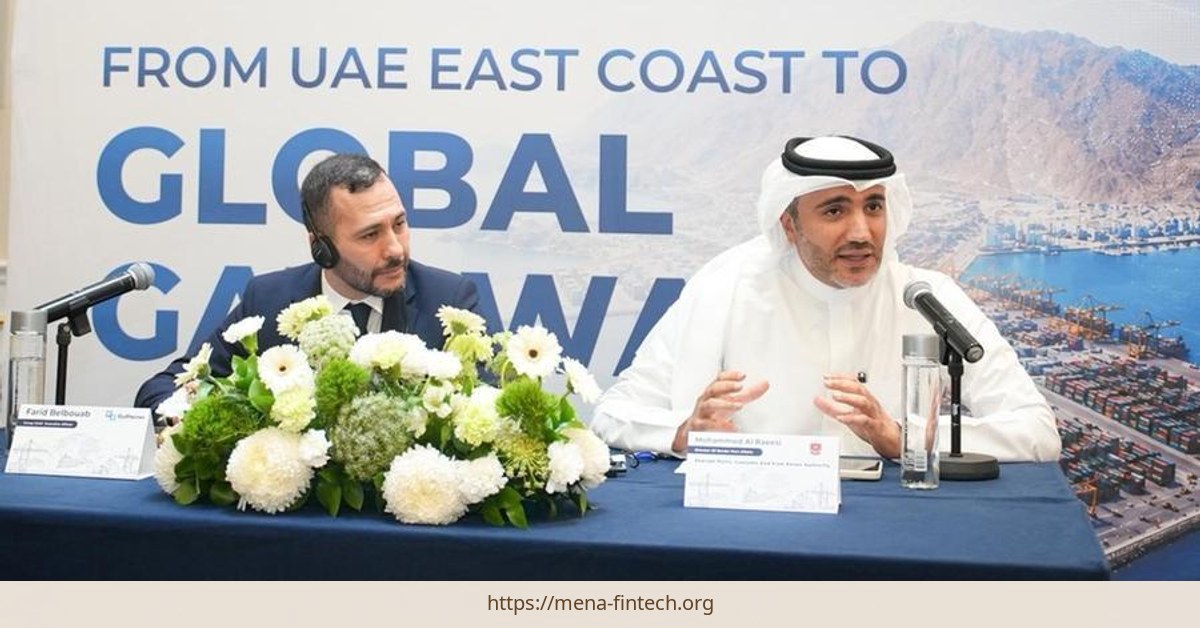
Gulftainer is transforming into a Global Trade Infrastructure Company with a strategy to enhance logistics capabilities across the Middle East.
Impact on MENA Trade Volumes
The strategy aims to connect over 10 million Twenty-foot Equivalent Units (TEUs) of future port capacity, with 2.3 million TEUs of inland logistics capacity. This expansion is expected to significantly boost trade volumes in the region, facilitating smoother movement of goods through strategic maritime corridors. For fintech companies reliant on logistics, this development could streamline operations and reduce costs associated with supply chain inefficiencies.
The MENA region has long faced challenges in logistics infrastructure, with fragmented port networks and limited inland connectivity hindering trade efficiency. Gulftainer’s plan to integrate port and inland logistics capacities aligns with broader regional economic diversification goals, particularly in the UAE and Saudi Arabia, where trade corridors are central to Vision 2030 and similar initiatives. By consolidating TEU capacity across key ports such as Jebel Ali, Khalifa Port, and Jeddah Islamic Port, Gulftainer aims to create a unified logistics network that reduces transit times and minimizes bottlenecks. This could have a cascading effect on trade volumes, with estimates suggesting that improved logistics infrastructure could increase regional trade by up to 15% over the next decade, according to industry analysts.
For fintech firms operating in the region, the enhanced logistics framework could enable more accurate and real-time tracking of goods, which is critical for managing trade finance instruments such as letters of credit and supply chain financing. Streamlined logistics would also reduce the risk of delays, which are a common source of disputes in cross-border transactions. This aligns with the growing demand for digital trade platforms that integrate logistics data with financial services, a trend that has gained momentum with the rise of embedded finance solutions in the MENA region.
AI in Supply Chain Management
AI-powered supply chains will be a key component of Gulftainer’s logistics ecosystem. By integrating advanced analytics and automation, the company aims to optimize route planning, inventory management, and demand forecasting. This technological integration could set a precedent for other logistics providers in the MENA region, potentially reshaping how trade is conducted and monitored.
The adoption of AI in supply chain management is not new globally, but its application in the MENA region remains nascent. Gulftainer’s initiative could accelerate the deployment of AI-driven solutions such as predictive analytics for inventory optimization, machine learning models for demand forecasting, and autonomous systems for route planning. These technologies have the potential to reduce operational costs by up to 20% while improving service reliability, according to a 2023 report by the World Bank on digital logistics in emerging markets.
For the MENA fintech market, Gulftainer’s strategy reflects a growing emphasis on embedding technology within logistics frameworks to enhance efficiency. The practical question for regional financial institutions and logistics operators is how to leverage AI and integrated infrastructure to meet evolving trade demands while ensuring compliance with regulatory standards. For instance, AI-driven systems may require new data governance protocols to ensure transparency in financial transactions tied to logistics operations. This could prompt regulators such as the UAE’s Central Bank or Saudi Arabia’s SAMA to revisit existing frameworks for digital trade platforms.
What Wasn’t Disclosed
The announcement did not specify investment amounts, ownership structures, or timelines for implementing the new logistics corridors. It also did not confirm which ports or inland hubs will be prioritized for expansion or provide details on partnerships with local or international stakeholders.
The absence of financial details raises questions about the scale of Gulftainer’s commitment to the project. While the company has previously invested in port expansions and logistics hubs, the lack of a disclosed investment figure may signal a phased approach or reliance on public-private partnerships. Similarly, the omission of specific ports or inland hubs could indicate strategic flexibility or a desire to avoid competition with existing infrastructure projects. For example, the UAE’s recent focus on expanding the Al Dhafra Industrial Complex and Saudi Arabia’s NEOM project may influence Gulftainer’s priorities, though these connections remain speculative without explicit confirmation.
The absence of partnership details also leaves uncertainty about the role of regional and global stakeholders. Potential collaborators could include Gulf-based logistics firms, international shipping conglomerates, or technology providers specializing in AI for supply chains. However, without named partners, it is unclear how Gulftainer plans to scale its AI integration or secure the necessary regulatory approvals for cross-border data flows, which are critical for AI systems operating in multiple jurisdictions.
Sources
Image: static.zawya.com