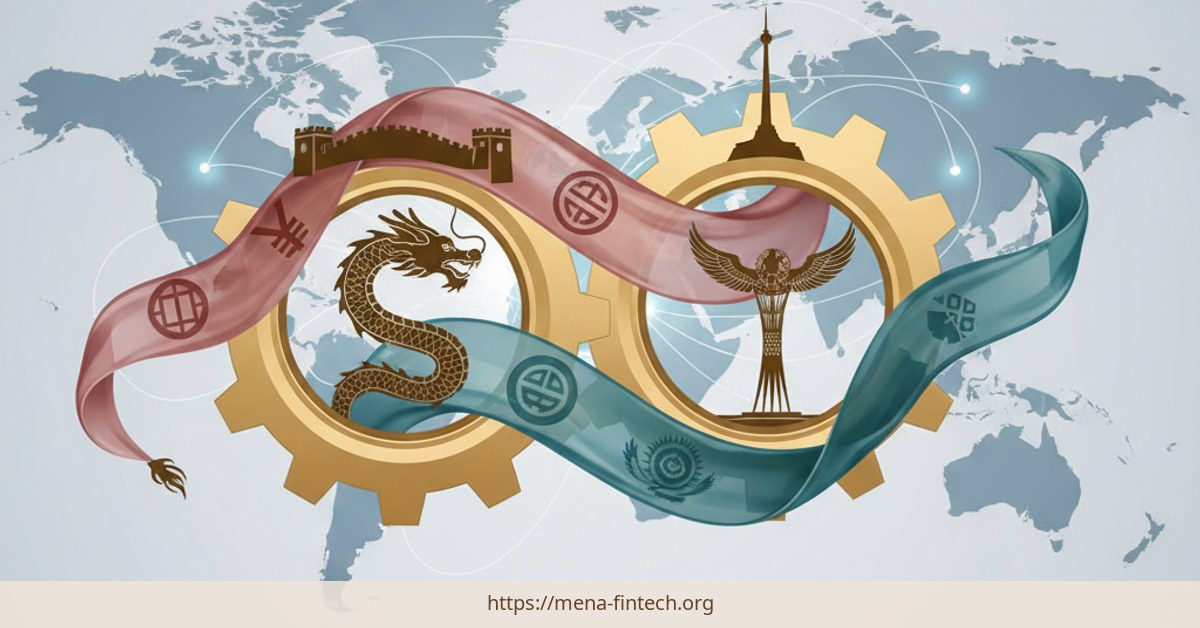
China and Kazakhstan have entered into a central bank agreement to link their Central Bank Digital Currencies (CBDCs), marking a significant step in enhancing cross-border payment solutions. The agreement includes a currency swap and integration of interbank payment systems, allowing transactions to be settled in their respective national currencies.
Implications for MENA Fintech
The linkage of CBDCs between China and Kazakhstan could inspire similar initiatives in the MENA region, particularly in the GCC, where cross-border trade and digital finance are expanding. Central banks in the region have been exploring digital currencies as part of broader financial modernization efforts. This development underscores the potential for CBDCs to streamline international transactions, reduce reliance on intermediaries, and lower costs for businesses engaged in cross-border trade. For MENA fintech firms, the agreement highlights the importance of aligning with regional regulatory frameworks to support the adoption of digital currencies.
The GCC’s strategic position as a hub for trade between Asia and Europe makes it a natural candidate for CBDC integration. Countries like the UAE and Saudi Arabia have already initiated pilot programs for digital currencies, with the UAE’s central bank exploring a digital dirham and Saudi Arabia’s SAMA investigating a digital riyal. The China-Kazakhstan model could provide a blueprint for these initiatives, particularly in sectors such as energy, manufacturing, and logistics, where cross-border transactions are frequent. However, the success of such projects hinges on harmonizing regulatory standards across jurisdictions, ensuring interoperability of payment systems, and addressing cybersecurity concerns. MENA fintechs must also navigate the complexities of compliance with both local and international financial regulations, which vary significantly across the region.
Significance of CBDCs in Cross-Border Trade
The integration of CBDCs represents a shift toward more efficient and transparent cross-border payment systems. By enabling direct settlements in national currencies, CBDCs can mitigate currency conversion risks and reduce transaction times. In the GCC, where trade with Asia is significant, such systems could enhance liquidity management and financial inclusion. However, the success of CBDC adoption depends on harmonized regulatory standards, infrastructure interoperability, and stakeholder collaboration. The China-Kazakhstan model may serve as a reference for regional players seeking to develop similar solutions, though local regulatory environments and market needs will shape implementation.
The GCC’s trade with China alone exceeds $150 billion annually, with key sectors including oil, gas, and technology. A CBDC-based system could reduce the time required for cross-border transactions from days to minutes, significantly lowering costs for businesses. For example, a UAE-based importer purchasing machinery from China could settle the payment directly in dirhams and yuan, bypassing the need for USD intermediaries. This would not only reduce transaction fees but also minimize exposure to exchange rate fluctuations. However, the adoption of CBDCs requires robust infrastructure, including secure digital wallets, real-time settlement systems, and regulatory sandboxes to test new technologies. The absence of a unified regulatory framework across the GCC could pose challenges, as each country has its own approach to financial innovation.
Significance: For MENA fintech, the agreement reflects growing interest in CBDCs as tools for cross-border efficiency. Regional institutions must assess how to integrate such systems while addressing compliance, security, and scalability challenges. The practical question for market participants is whether existing regulatory frameworks can support the rapid deployment of CBDC-based solutions without compromising financial stability. The China-Kazakhstan model also raises questions about data privacy and the role of central banks in overseeing digital transactions, which are critical considerations for the MENA region’s diverse regulatory landscape.
The potential for CBDCs to disrupt traditional banking models is evident in the GCC, where digital banking adoption is accelerating. Neobanks and fintechs are increasingly leveraging blockchain and AI to offer real-time payment solutions, and a CBDC could further enhance these capabilities. However, the integration of CBDCs with existing financial infrastructure will require collaboration between central banks, commercial banks, and technology providers. In Saudi Arabia, for instance, the National Transformation Program 2030 emphasizes digital innovation, and a CBDC could align with this vision by fostering a more resilient and inclusive financial ecosystem. Similarly, the UAE’s focus on becoming a global hub for fintech innovation could benefit from CBDC integration, which would position the country as a leader in cross-border digital finance.
Sources
- China and Kazakhstan to link CBDCs – centralbanking.com