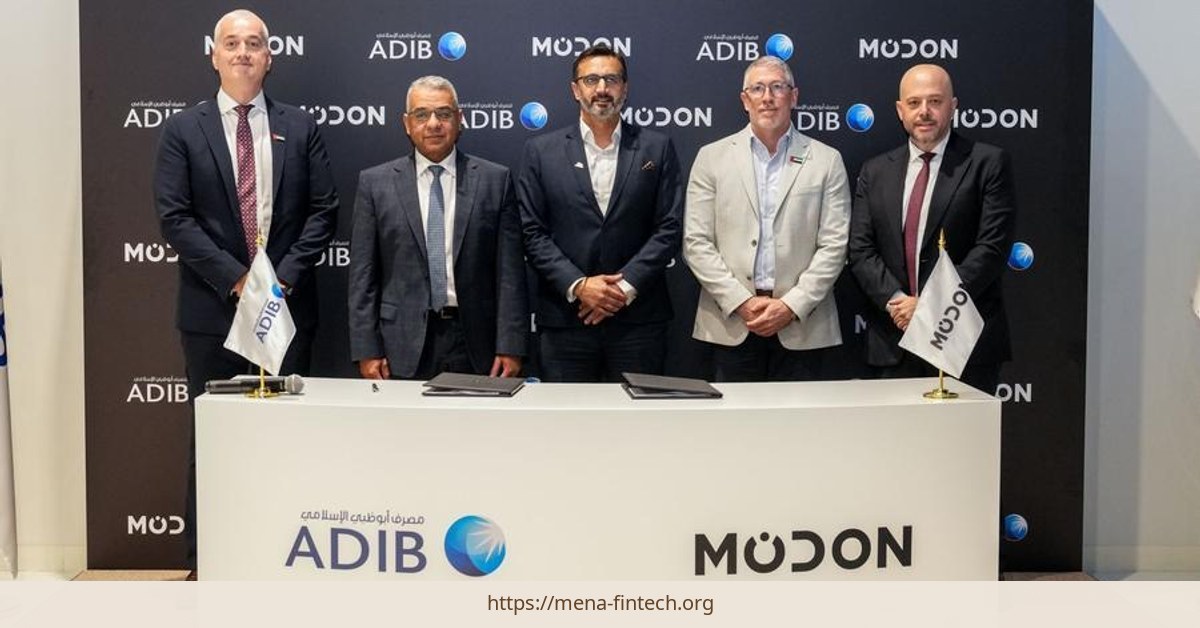
ADIB has partnered with Modon to introduce a groundbreaking financing solution for off-plan homes in Abu Dhabi, allowing homebuyers to secure up to 75% financing.
The initiative, announced on 9 July 2026, marks the first off-plan home financing solution in Abu Dhabi. ADIB’s offering covers the entire development journey from construction to handover, addressing a gap in the local real estate market. The partnership positions Abu Dhabi as a regional leader in innovative financial products tailored to real estate demand.
Market Implications
The introduction of off-plan home financing by ADIB represents a significant shift in Abu Dhabi’s real estate financing landscape. By enabling buyers to secure up to 75% of the property value during the construction phase, the solution could reduce liquidity constraints for developers and increase affordability for homebuyers. This aligns with broader trends in the MENA region, where financial institutions are innovating to support real estate growth and homeownership.
The model may also influence buyer behavior by reducing the financial barriers to purchasing properties in early development stages. For developers, this could accelerate project completions by ensuring consistent demand and funding throughout construction. However, the absence of regulatory frameworks specifically tailored to off-plan financing in Abu Dhabi introduces potential risks related to project delays or defaults.
The real estate market in Abu Dhabi has historically relied on completed properties for financing, leaving a void for buyers interested in pre-construction developments. ADIB’s initiative fills this gap by providing a structured mechanism for capital allocation during the construction phase. This could encourage more developers to prioritize off-plan projects, which are often more cost-effective and allow for design customization. For buyers, the 75% financing threshold reduces the need for large upfront payments, potentially broadening the pool of eligible purchasers.
Competitive Landscape
ADIB’s initiative could prompt other Gulf banks to introduce similar products, particularly in markets with high real estate activity such as Dubai and Riyadh. Competitors may seek to differentiate through lower interest rates, flexible repayment terms, or partnerships with larger real estate developers. The move also highlights the growing overlap between traditional banking and fintech-driven solutions in the MENA real estate sector.
The absence of immediate competitor responses suggests a cautious market approach, possibly due to the need for regulatory alignment or risk assessment. For regional financial institutions, the practical question will be whether they can replicate ADIB’s model while addressing local market conditions and compliance requirements. In Dubai, for instance, existing off-plan financing products are already available, but they are often limited to specific developers or require higher down payments. ADIB’s offering may set a new benchmark for accessibility and flexibility.
The initiative also underscores the evolving role of banks in the MENA fintech ecosystem, where traditional financial institutions are increasingly adopting technology-enabled solutions to meet evolving consumer demands. This trend is part of a broader regional push toward digital transformation in financial services, supported by regulatory bodies such as the Central Bank of the UAE (CBUAE) and the Dubai Financial Services Authority (DFSA). However, the lack of standardized regulations for off-plan financing across the GCC could create fragmentation, requiring banks to navigate varying compliance requirements.
Significance:
For MENA fintech, the announcement reflects the continued expansion of financial infrastructure into real estate, a sector historically reliant on traditional banking. It also underscores the role of banks in facilitating access to capital for developers and buyers in a market where demand for housing remains strong. For regional financial institutions, the practical question is how to balance innovation with regulatory oversight to ensure sustainable growth in off-plan financing.
The initiative aligns with the UAE’s broader economic diversification strategy, which seeks to reduce reliance on oil revenues by fostering growth in sectors such as real estate and construction. By enabling more buyers to access financing during the early stages of property development, ADIB and Modon’s model could contribute to increased housing affordability and stimulate demand in Abu Dhabi’s real estate market. This, in turn, may support the government’s vision of creating a more inclusive and sustainable urban environment.
What wasn’t disclosed: The announcement did not specify the regulatory approvals required for the product, the interest rate structure, or the expected volume of transactions. It also did not confirm whether other banks in the UAE or GCC are exploring similar offerings.
Sources
Image: static.zawya.com