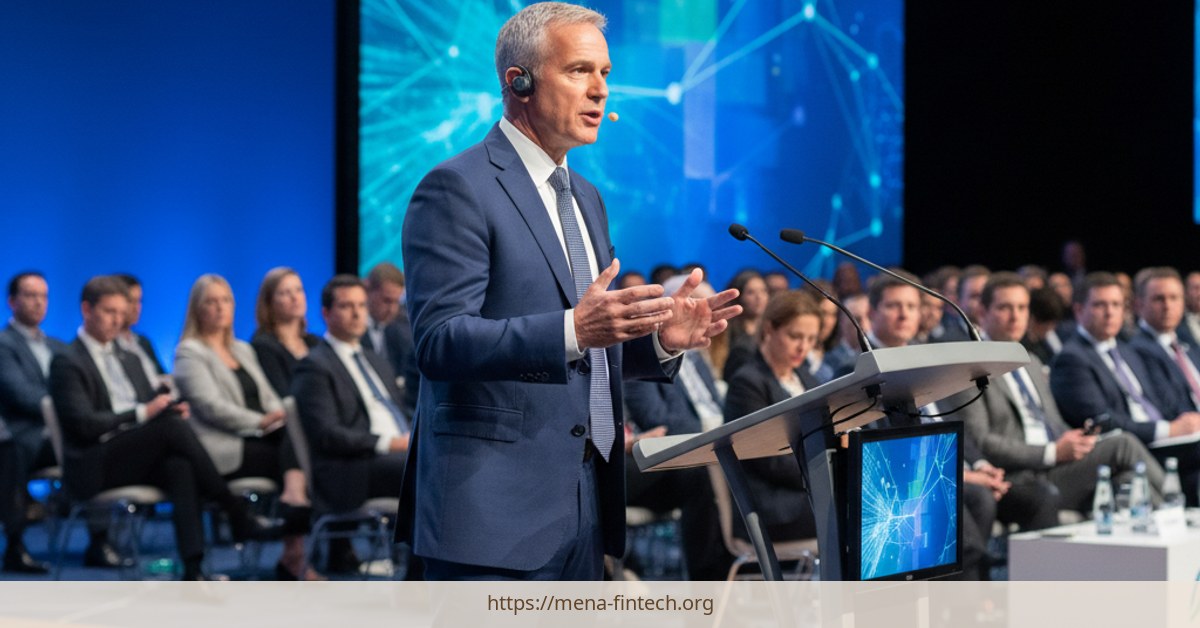
Craig Ramsey, Global Head of A2A Payments at ACI Worldwide, highlighted the rapid growth of Instant Payments during his recent speech at EBADay in Copenhagen. The discussion underscores the need for MENA banks to understand and adapt to the complexities of different payment rails to remain competitive in the evolving fintech landscape.
Understanding Payment Rails
Payment rails such as ACH, Swift, Instant Payments, and RTGS form the backbone of modern financial infrastructure. Each rail operates with distinct mechanisms, speed, and regulatory requirements. For example, ACH (Automated Clearing House) is widely used for batch processing of transactions in the US, while Swift (Society for Worldwide Interbank Financial Telecommunication) facilitates cross-border transactions globally. Instant Payments systems, like those gaining traction in Europe through initiatives such as Wero, enable real-time transfers, reducing settlement times and improving user experience. RTGS (Real-Time Gross Settlement) systems, on the other hand, handle large-value transactions with immediate settlement.
The fragmentation of payment infrastructure in the MENA region presents unique challenges. While the UAE has made progress with its National Payment System, which aims to streamline domestic transactions and enhance interoperability, cross-border operations remain complex due to differing regulatory frameworks and legacy systems. For instance, banks in Saudi Arabia and the UAE are increasingly adopting digital payment solutions, but integration with international systems like Swift requires significant investment in technology and compliance infrastructure. This is compounded by the need to align with local regulations that vary across the region, such as the UAE’s Central Bank of the UAE (CBUAE) guidelines on digital transactions versus the more conservative approaches in other Gulf Cooperation Council (GCC) nations.
Global Trends Impacting MENA Banking
The momentum behind initiatives like Wero signals a shift toward faster, more efficient payment systems. Ramsey emphasized that banks must keep pace with these changes to avoid falling behind. In the MENA region, where digital adoption is accelerating, the ability to support real-time transactions could be a critical differentiator. For example, Saudi Arabia’s recent push for digital transformation includes modernizing its payment infrastructure to align with global standards, such as those seen in the European Union’s Single Euro Payments Area (SEPA) framework. This alignment is crucial for facilitating cross-border trade and investment, particularly as the region’s economy becomes more integrated with global markets.
However, the adoption of new payment rails requires significant investment in technology and compliance. MENA banks must balance innovation with the need to adhere to local regulations, which vary across countries. This complexity is compounded by the need to integrate with international systems, such as Swift, to facilitate cross-border transactions. For instance, the CBUAE has been working on modernizing the UAE’s payment infrastructure to support real-time transactions and reduce reliance on traditional banking channels. Similarly, the Saudi Central Bank (SAMA) has been proactive in promoting digital payments through its Vision 2030 initiatives, which include expanding the use of electronic payment methods. These efforts are part of a broader regional strategy to position the MENA as a hub for fintech innovation and digital finance.
Regulatory Implications
Regulatory bodies play a pivotal role in shaping the adoption of new payment technologies. In the MENA region, entities like the Saudi Central Bank (SAMA), the UAE’s Central Bank of the UAE (CBUAE), and the Dubai Financial Services Authority (DFSA) are instrumental in setting the framework for payment innovation. These regulators are increasingly focused on ensuring that new systems meet security, transparency, and consumer protection standards.
For example, SAMA has been proactive in promoting digital payments through its Vision 2030 initiatives, which include expanding the use of electronic payment methods. Similarly, the CBUAE has been working on modernizing the UAE’s payment infrastructure to support real-time transactions and reduce reliance on traditional banking channels. The DFSA, meanwhile, has been emphasizing the need for robust compliance frameworks to address the risks associated with real-time payments, such as fraud and cyber threats. These regulatory efforts are critical for building trust in new payment systems and ensuring their seamless integration into the broader financial ecosystem.
Significance: For MENA fintech, the discussion highlights the growing importance of payment rails in shaping the region’s financial ecosystem. As banks and fintechs adopt new systems, the ability to integrate with global standards will be critical for competitiveness. For regional financial institutions, the practical question is how to balance innovation with regulatory compliance while ensuring seamless cross-border operations. Until more concrete examples of successful integration emerge, the focus should remain on infrastructure development and collaboration with regulators.
What wasn’t disclosed
The announcement did not specify the exact timelines for MENA banks to adopt new payment rails, nor did it provide detailed financial projections or case studies of successful implementations in the region. It also did not confirm the extent of regulatory support or the specific challenges banks may face in integrating these systems.