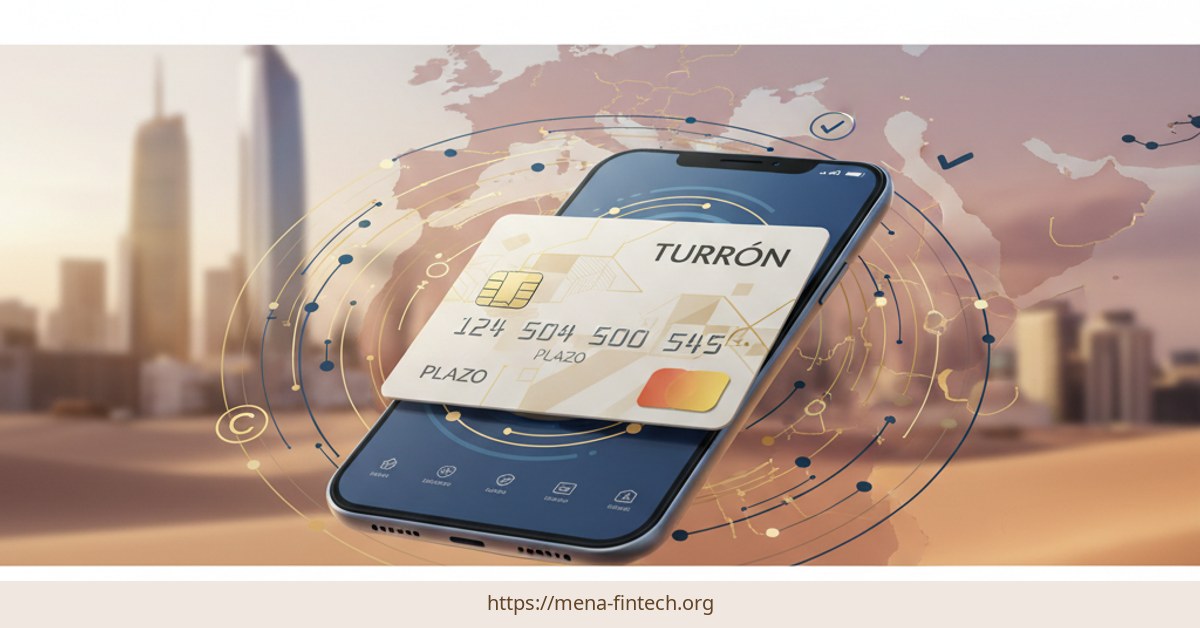
ID Finance, a fintech group operating in Spain and Mexico, has launched a buy now, pay later (BNPL) debit card called Turrón by Plazo, aimed at enhancing payment flexibility for customers. The product, announced on July 14, 2026, allows users to make both online and in-store purchases, reflecting a broader shift in the MENA region toward flexible payment solutions.
Product Overview
The Turrón by Plazo card is positioned as a hybrid financial instrument, combining the immediacy of a debit card with the deferred payment features of BNPL services. Unlike traditional credit cards, which require pre-existing credit lines, the card operates on a model where users can split payments into installments without upfront fees or interest charges, provided they meet predefined repayment terms. This approach aligns with the growing demand for financial tools that cater to consumers seeking greater control over their spending cycles, particularly in markets where cash remains a dominant transactional medium.
ID Finance’s entry into the BNPL space marks its expansion beyond its core operations in Spain and Mexico, signaling a strategic pivot toward the MENA region’s evolving fintech ecosystem. The product’s dual functionality—supporting both digital and physical retail environments—addresses a critical gap in the region’s payment infrastructure, where digital adoption is accelerating but physical commerce still dominates.
Market Context
The introduction of Turrón by Plazo coincides with a surge in BNPL adoption across the Middle East and North Africa. According to industry observers, the MENA region’s BNPL market is projected to grow at a compound annual rate exceeding 30% through 2028, driven by rising e-commerce penetration, increasing smartphone usage, and a younger demographic more receptive to digital financial services. This trend is particularly pronounced in the Gulf Cooperation Council (GCC) countries, where governments are actively promoting financial inclusion through digital initiatives.
However, the region’s BNPL landscape remains fragmented, with limited standardization in terms of regulatory oversight, consumer protection frameworks, and technological integration. While established players like Klarna and Affirm have made inroads into the region, local fintechs are increasingly positioning themselves as more agile and culturally attuned alternatives. ID Finance’s launch underscores the competitive dynamics at play, as global and regional players vie for dominance in a market still in its early stages of maturation.
Regulatory Landscape
The regulatory environment for BNPL services in the MENA region is in flux, with varying degrees of oversight across countries. In the UAE, for instance, the Central Bank of the UAE (CBUAE) has introduced guidelines for digital payment platforms, emphasizing transparency, risk management, and consumer safeguards. Similarly, Saudi Arabia’s Saudi Central Bank has been vocal about the need for robust frameworks to prevent over-indebtedness and ensure financial stability, particularly as BNPL services gain traction among younger, less financially literate users.
Despite these efforts, regulatory clarity remains a challenge. Many jurisdictions lack specific legislation tailored to BNPL models, leading to a reliance on general consumer protection laws that may not fully address the unique risks associated with deferred payment systems. This regulatory ambiguity creates both opportunities and risks for fintechs like ID Finance, which must navigate a patchwork of requirements while ensuring compliance with international standards.
Significance: The launch of Turrón by Plazo represents a pivotal moment for the MENA fintech ecosystem, as it signals the region’s growing acceptance of BNPL as a mainstream financial tool. By offering a debit card with BNPL features, ID Finance is addressing a critical need in markets where traditional credit infrastructure is underdeveloped, enabling consumers to access flexible payment options without the barriers of credit scoring or collateral. This innovation could accelerate the adoption of digital payments in sectors ranging from retail to travel, where installment-based transactions are increasingly preferred.
For regional financial institutions and policymakers, the challenge lies in crafting regulatory frameworks that balance innovation with consumer protection. The absence of standardized rules raises questions about how to mitigate risks such as predatory lending practices, data privacy concerns, and the potential for systemic financial instability if BNPL defaults rise sharply. Market participants must also contend with the need to educate consumers about responsible usage, particularly in regions where financial literacy remains a hurdle.
The announcement did not disclose financial terms, expected merchant volumes, or specific regulatory approvals. It also did not confirm when the first live corridor or product would move into production. These gaps highlight the need for further corroboration and detailed information before the product’s full impact can be assessed. However, the launch itself underscores the strategic importance of BNPL in shaping the future of payments in the MENA region, where the convergence of digital infrastructure, consumer behavior, and regulatory evolution is creating a fertile ground for innovation.
Sources
- ID Finance launches BNPL debit card – finextra.com