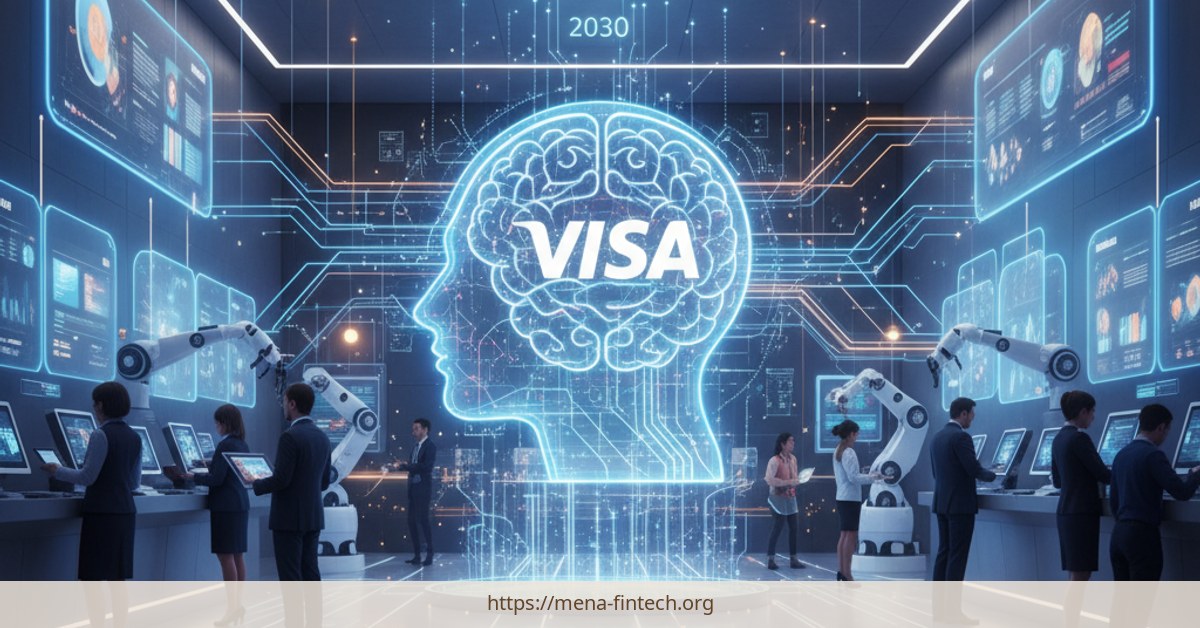
Visa’s survey predicts that artificial intelligence will fundamentally reshape retail banking by 2030. The findings highlight a growing divide between financial institutions that integrate AI early and those that delay implementation, with implications for the broader global banking ecosystem, including the Middle East and North Africa (MENA) region.
AI Adoption Trends in European Banking
Visa’s survey identifies a clear trajectory toward AI-driven transformation in European retail banking, with early adopters poised to capture significant competitive advantages by 2030. The study underscores that institutions leveraging AI for customer personalization, fraud detection, and operational automation are expected to outperform peers who lag in adoption. European banks are increasingly deploying machine learning models to optimize loan underwriting, streamline back-office processes, and enhance real-time transaction monitoring. This shift reflects a broader industry-wide push toward digital-first strategies, driven by evolving customer expectations and the need to reduce operational costs amid economic pressures.
The competitive divide highlighted by the study is not merely a matter of technological capability but also of strategic foresight. Early adopters are investing in AI infrastructure, talent development, and data governance frameworks to ensure seamless integration of AI tools into existing systems. For example, AI-powered chatbots and virtual assistants are already improving customer engagement, while predictive analytics are enabling more accurate risk assessments and personalized financial advice. These advancements are expected to redefine service delivery models, creating a new standard for efficiency and user experience in the sector.
Implications for MENA Banks
The Visa study’s findings carry significant relevance for MENA banks, which are at a critical juncture in their digital transformation journeys. While the study does not provide MENA-specific data, the broader trends suggest that institutions that accelerate AI adoption could position themselves to align with global benchmarks. However, regional banks face unique challenges, including fragmented regulatory environments, infrastructure limitations, and varying levels of digital maturity across Gulf Cooperation Council (GCC) countries.
MENA banks must prioritize AI integration to remain competitive in an increasingly digitized financial landscape. Key areas of focus include enhancing customer experience through AI-driven personalization, improving fraud detection mechanisms, and optimizing operational efficiency. For instance, AI can enable banks to offer tailored financial products, automate routine tasks, and reduce processing times for cross-border transactions. However, the region’s progress may be hindered by data localization laws, which could complicate the use of large datasets required for training AI models. Additionally, the availability of skilled AI professionals and the maturity of local tech ecosystems may influence the pace of adoption.
Regulatory Considerations for AI in Banking
Regulatory frameworks play a pivotal role in shaping AI adoption in the banking sector, particularly in the MENA region. While European regulators are advancing guidelines for ethical AI use, data privacy, and algorithmic transparency, MENA jurisdictions are still in the early stages of developing similar frameworks. The absence of clear directives could slow AI implementation, but proactive engagement with regulators offers an opportunity to shape favorable conditions for innovation.
In the GCC, central banks and financial authorities are increasingly emphasizing the need for balanced regulation that fosters innovation while mitigating risks. For example, the UAE’s regulatory sandbox and Saudi Arabia’s Vision 2030 initiatives have created environments conducive to fintech experimentation. MENA banks leveraging AI must ensure compliance with existing regulations, such as data protection laws and anti-money laundering (AML) requirements, while advocating for policies that support responsible AI deployment. Collaboration with regulators to establish clear guidelines on AI ethics, bias mitigation, and model accountability will be critical to building trust and ensuring long-term sustainability.
Significance: For MENA fintech stakeholders, the Visa study underscores the urgency of accelerating AI integration to avoid falling behind European peers. The practical question for regional banks and fintechs is how to balance innovation with compliance while addressing infrastructure and talent gaps that may delay adoption. Institutions that prioritize AI strategies aligned with global trends and regional regulatory priorities are likely to gain a competitive edge in the evolving financial landscape.
What wasn’t disclosed: The study does not provide MENA-specific data, regulatory steps, or case studies relevant to the region. It also does not address potential barriers such as data localization laws or the maturity of AI ecosystems in GCC countries.