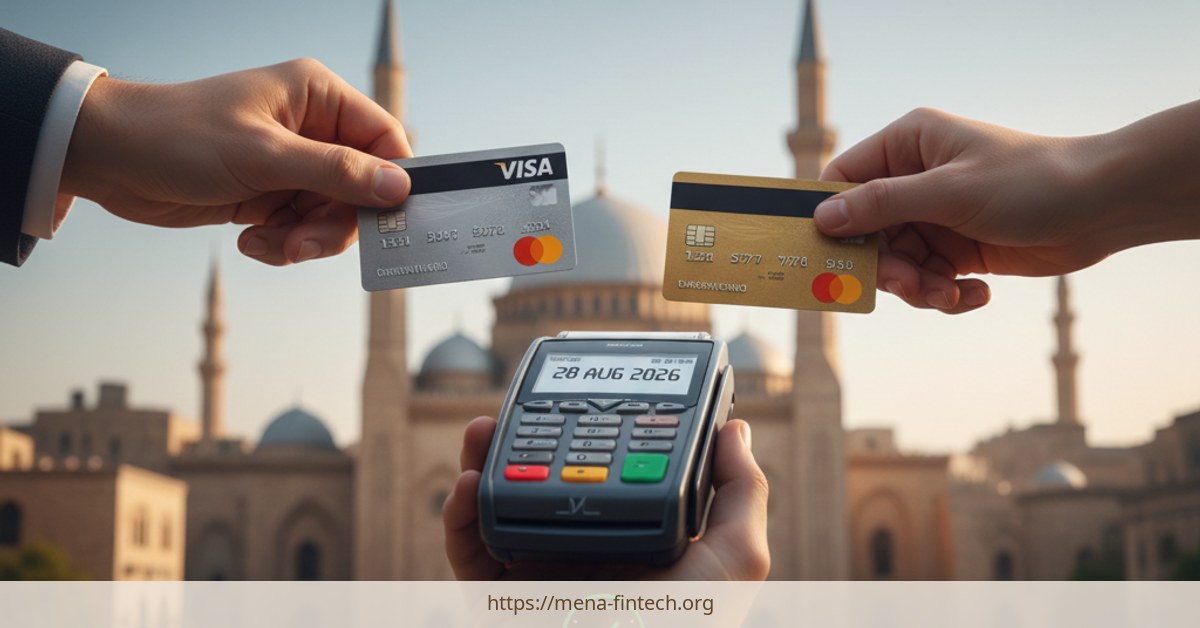
Visa and Mastercard completed their first international card transactions in Syria on August 28, 2026, following the US’s removal of the country from its list of state sponsors of terrorism. This development marks a significant shift in the financial landscape of Syria and could have implications for the broader MENA fintech ecosystem.
Transaction Details
Visa and Mastercard processed their first international card transactions in Syria on August 28, 2026. The transactions were made possible after the US lifted Syria’s designation as a state sponsor of terrorism on August 15, 2026, a move that cleared the way for international financial institutions to operate within the country. This marks the first time since 2011 that major global payment networks have facilitated cross-border card transactions in Syria, a period during which the country’s financial infrastructure had been largely isolated due to sanctions and geopolitical tensions. The transactions involved both consumer and merchant payments, including purchases from international retailers and digital services, signaling a potential reintegration of Syria into the global payment ecosystem.
Impact on Fintech in Syria
This development could encourage other financial institutions to consider entering the Syrian market, potentially catalyzing a wave of investment and innovation in the country’s fintech sector. For MENA fintech, the implications are significant, as this could signal a broader trend of reintegration into global financial systems for countries previously isolated by sanctions. The return of international payment networks may spur local startups to develop solutions tailored to Syria’s unique financial needs, such as mobile money platforms or digital wallets that bridge gaps in traditional banking access. Additionally, the presence of global players like Visa and Mastercard may pressure local banks to modernize their infrastructure, adopting technologies such as real-time payment processing and blockchain-based settlement systems to remain competitive.
The Syrian fintech landscape, which has historically been constrained by limited access to international capital and fragmented regulatory frameworks, now faces an opportunity to align with global standards. This could accelerate the adoption of digital banking services, particularly among small and medium-sized enterprises (SMEs) that rely on cross-border transactions for trade. For example, Syrian SMEs exporting agricultural products or handicrafts may gain access to international markets through digital payment corridors, reducing reliance on cash or informal remittance channels. Such developments could also attract foreign venture capital to the region, as investors seek opportunities in markets undergoing financial liberalization.
Regulatory Implications
The change in US policy may set a precedent for other countries considering similar sanctions. Fintech companies must navigate new regulatory frameworks as opportunities arise in Syria. The US policy change highlights the importance of adapting to evolving regulatory environments, especially in regions affected by sanctions. For instance, the lifting of Syria’s designation may prompt other nations, such as those in the European Union or Gulf Cooperation Council (GCC), to reassess their own sanctions regimes, potentially leading to a more fragmented or harmonized approach to financial inclusion in conflict-affected regions.
For fintech firms operating in the MENA region, this development underscores the need for agile compliance strategies. Companies must balance the risks of regulatory uncertainty with the potential rewards of entering emerging markets. In Syria, for example, fintechs may need to partner with local financial institutions to navigate complex licensing requirements or ensure adherence to anti-money laundering (AML) protocols. This could lead to the emergence of hybrid models, where international players collaborate with regional partners to build compliant, scalable solutions.
Significance: For the MENA fintech market, the partnership reflects a broader shift toward embedded financial distribution, where merchant platforms are used to surface banking and credit products inside day-to-day business tools. For banks, acquirers, and SME-focused fintechs across MENA, the deal underscores the growing overlap between payment infrastructure, digital banking, and working-capital access. The integration of Visa and Mastercard into Syria’s financial system may also serve as a catalyst for regional regulatory harmonization, as countries seek to align their policies with global standards to attract investment and foster innovation.
What wasn’t disclosed in the announcement includes financial terms, expected merchant volumes, and specific regulatory approvals. The development is best treated as an infrastructure initiative to monitor rather than a completed market rollout. However, the absence of these details raises questions about the scalability of the initiative. For instance, without clear timelines for full network expansion or data on merchant adoption rates, it remains uncertain how quickly the Syrian economy will benefit from these services. Additionally, the lack of transparency around compliance mechanisms may deter smaller fintechs from entering the market, as they may lack the resources to navigate regulatory hurdles independently.