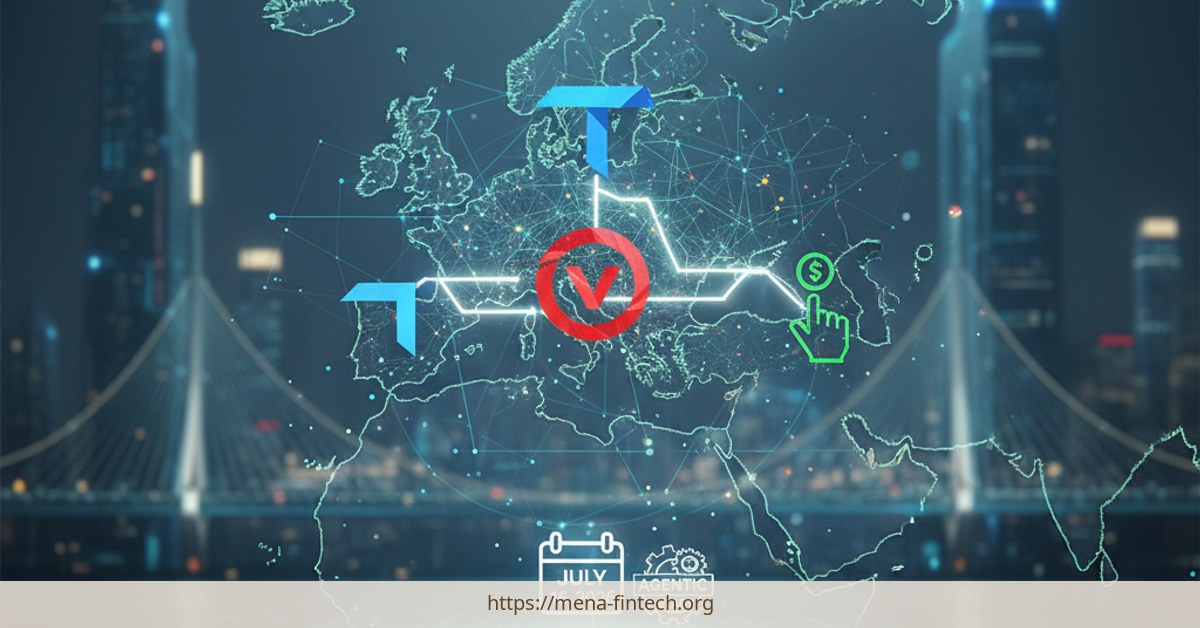
Thredd announced its participation in Visa’s Agentic Ready programme on July 16, 2026, enabling issuers across Europe to engage in agent-initiated payments.
Thredd’s Integration with Visa
Thredd, an AI-first issuer processing platform, has joined Visa’s Agentic Ready programme. This partnership allows issuers in Europe to participate in agent-initiated payments, enhancing their payment infrastructure without the need for extensive rebuilding. The programme is designed to facilitate transactions where an agent—such as a merchant or service provider—initiates a payment on behalf of a cardholder, streamlining the process for both parties. Thredd’s integration with Visa’s infrastructure underscores its role in advancing payment solutions through AI-driven technologies. By leveraging machine learning algorithms, Thredd can optimize transaction routing, reduce latency, and automate compliance checks, which are critical for high-volume payment ecosystems. This aligns with broader industry trends toward real-time processing and reduced friction in cross-border transactions, particularly in markets where legacy systems often hinder efficiency.
Implications for the MENA Region
While the partnership is currently focused on European issuers, the integration of AI technologies in payment processing could have broader implications for the MENA region. As fintech companies in the GCC and wider MENA area continue to adopt AI-driven solutions, this partnership may influence regional trends in payment infrastructure. The model of agent-initiated payments could be adapted to local markets, potentially improving efficiency in cross-border transactions and SME financing. For instance, in the UAE, where digital payment adoption has surged due to initiatives like the National Payment Strategy 2021, such models could support the growth of embedded finance and B2B payment corridors. However, the announcement did not specify plans for MENA-specific implementation or regulatory alignment. This raises questions about how regional regulators, such as the UAE’s Central Bank or Saudi Arabia’s SAMA, might approach AI-integrated payment systems, particularly in terms of data localization requirements and anti-money laundering (AML) protocols.
Significance of AI in Payment Processing
The partnership highlights the growing role of AI in transforming payment infrastructures. AI technologies are increasingly being leveraged to enhance efficiency, reduce fraud, and improve user experience in financial services. For the MENA fintech ecosystem, this development signals a shift toward AI-integrated solutions that could reshape regulatory frameworks and operational models. As AI adoption expands, regulators and financial institutions will need to address challenges related to compliance, data security, and interoperability with existing systems. In the GCC, where financial inclusion initiatives are accelerating, AI-driven payment platforms could enable more seamless access to services for unbanked populations. However, the lack of standardized AI governance frameworks in the region could pose risks. For example, the absence of clear guidelines on algorithmic transparency may hinder trust-building among consumers and institutions. This partnership may prompt regulators to expedite the development of AI-specific policies, akin to the EU’s proposed AI Act, which could have cross-border implications for MENA-based fintechs operating in European markets.
The announcement did not disclose investment size, ownership terms, regulatory approvals, named banking partners, launch markets, or committed transaction volumes. It also did not confirm when the first live corridor or AI-driven payment product would move into production. These gaps underscore the early-stage nature of the collaboration, which may still require extensive testing and regulatory validation before scaling. For regional financial institutions, the practical question will be whether the joint venture can translate its corridor and AI integration plans into licensed, bank-compatible services across multiple jurisdictions. Until specific approvals, partners, and launch volumes are disclosed, the development is best treated as an infrastructure initiative to monitor rather than a completed market rollout.
Significance: Regional Implications and Practical Questions
For the MENA fintech ecosystem, the partnership reflects the continued convergence of AI, payment infrastructure, and digital finance. This aligns with the region’s broader push toward innovation in financial services, exemplified by the UAE’s Smart Dubai initiative and Saudi Arabia’s Vision 2030. However, the absence of explicit MENA-focused details in the announcement highlights a potential disconnect between global fintech trends and regional implementation priorities. While the GCC has made strides in adopting digital payment solutions—such as the widespread use of QR code-based transactions and mobile wallets—agent-initiated models may require tailored adaptations to local business practices. For example, in markets where cash remains prevalent, integrating AI-driven payment systems could necessitate partnerships with traditional banks and retail networks to ensure adoption.
The practical challenge for regional stakeholders lies in assessing how this partnership might influence competitive dynamics. As Thredd and Visa’s AI capabilities evolve, they could either complement or disrupt existing payment gateways in the MENA region. For instance, if the Agentic Ready programme enables faster, lower-cost cross-border transactions, it could pressure local providers to innovate or risk losing market share. Conversely, the partnership might create opportunities for collaboration, such as integrating Visa’s global network with Thredd’s AI tools to serve SMEs in the GCC. However, without clear timelines or regulatory pathways, the immediate impact on the region remains speculative. Market participants will need to closely monitor subsequent announcements and regulatory developments to gauge the partnership’s potential to reshape the MENA payment landscape.
Sources
- Thredd joins Visa’s Agentic Ready programme – finextra.com