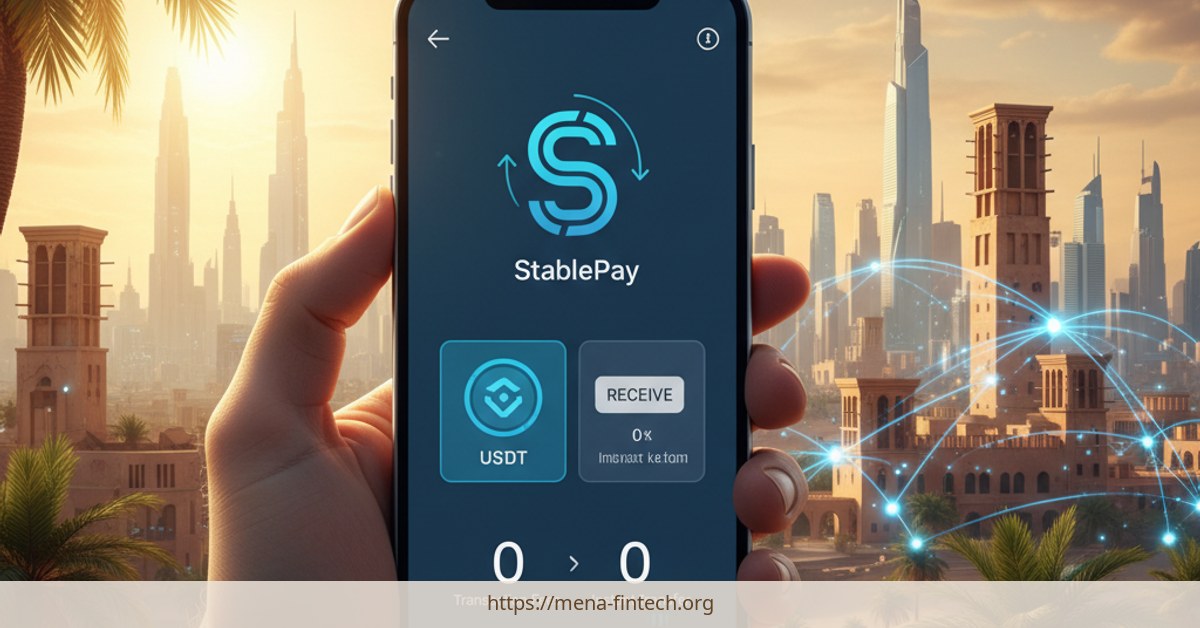
Stable has launched a mobile app called StablePay that allows users to send and receive USDT instantly and for free. The app, built on a Layer 1 blockchain aligned with Tether, was announced on July 16, 2026. This development could significantly impact the digital payments landscape in the MENA region, particularly in markets where cross-border transactions are often hindered by high fees and slow processing times.
StablePay Launch Details
StablePay enables instant and free transactions of USDT globally. The app is built on a Layer 1 blockchain specifically designed for stablecoin payments, which aligns with Tether‘s infrastructure. This technical alignment suggests the app is optimized for speed and scalability, critical factors for cross-border transactions. Layer 1 blockchains, unlike Layer 2 solutions, handle transactions directly on their native networks, reducing latency and enabling higher throughput. This architecture is particularly advantageous for stablecoins like USDT, which are widely used in remittances, e-commerce, and institutional trading.
The July 16, 2026 launch date positions StablePay as a timely response to growing demand for frictionless digital payments in the GCC and broader MENA region. The app’s focus on USDT, one of the most widely used stablecoins, underscores its potential to attract both retail and institutional users. With over $60 billion in circulation as of 2026, USDT dominates the stablecoin market, making it a strategic choice for a payments platform targeting high-volume transactions.
Market Implications
The introduction of zero-fee transactions may disrupt existing payment models by reducing barriers to entry for users in the MENA region. Traditional cross-border payment systems, such as SWIFT or local remittance services, often charge fees ranging from 5% to 15% of the transaction value, with processing times extending to several days. StablePay’s model could shift consumer and business preferences toward stablecoins as a preferred medium for cross-border transfers, particularly in markets where traditional banking infrastructure is less accessible or inefficient.
For MENA fintech stakeholders, the app’s accessibility and cost structure may encourage broader integration of stablecoins into financial services. This could accelerate the adoption of embedded finance models, where stablecoin-based payments are seamlessly integrated into e-commerce platforms, mobile wallets, and digital banking services. However, the absence of disclosed regulatory approvals or banking partnerships means the app’s long-term impact remains contingent on compliance frameworks in the GCC.
Regulatory Context
StablePay’s launch may influence regulatory approaches to digital payments in the MENA region. While the app is built on a Layer 1 blockchain, its compliance with GCC regulatory standards is not explicitly stated in the announcement. This gap raises questions about how Stable will navigate licensing requirements in jurisdictions like the UAE, Saudi Arabia, and Qatar.
The GCC has been increasingly proactive in regulating digital assets, with frameworks such as the ADGM (Abu Dhabi Global Market) and CBUAE (Central Bank of the UAE) guidelines shaping the sector. These frameworks emphasize anti-money laundering (AML) protocols, consumer protection, and the licensing of digital asset service providers. StablePay’s alignment with these standards will be critical for its acceptance by financial institutions and regulators. For instance, the UAE’s Virtual Assets Regulatory Authority (VARA) requires platforms handling digital assets to obtain a license, which could be a prerequisite for StablePay to operate legally in the country.
The Saudi Arabian Monetary Authority (SAMA) has also been advancing its digital payments agenda, with initiatives like the National Transformation Program 2030 aiming to digitize 80% of transactions by 2030. StablePay’s zero-fee model could align with these goals, but only if it secures regulatory endorsements. Similarly, Qatar’s Financial Services Regulatory Authority (FSRA) has been exploring sandboxes for blockchain-based solutions, which could provide a testing ground for StablePay to demonstrate compliance before scaling.
Significance: For MENA fintech, the launch reflects a growing trend of blockchain-based payment solutions that prioritize cost efficiency and speed. The app’s focus on USDT aligns with the region’s increasing interest in stablecoins for cross-border transactions. For regional financial institutions, the practical question is whether StablePay can secure regulatory approvals and banking partnerships to scale its operations across multiple GCC jurisdictions.
The announcement did not disclose investment size, ownership terms, regulatory approvals, named banking partners, launch markets, or committed transaction volumes. It also did not confirm when the first live corridor or commodity product would move into production. These omissions leave critical questions about the app’s financial backing, operational roadmap, and competitive positioning unanswered.
Sources
- Stable launches zero-fee global payments app – finextra.com