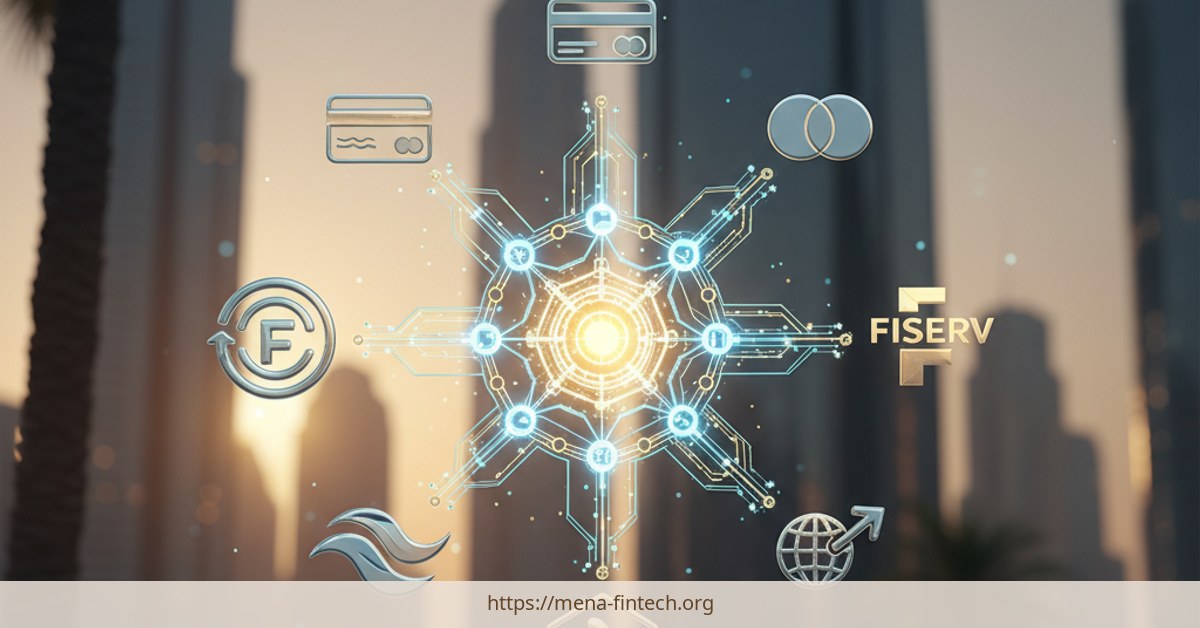
Visa and Mastercard have joined forces with Fiserv, Circle, and others to establish the Agentic Payments Alliance, aimed at advancing AI commerce. The coalition, announced on August 18, 2026, includes major players such as Fiserv, Circle, Solana, and Remitly, and focuses on shaping the future of payment technologies. This development aligns with growing global efforts to integrate artificial intelligence into financial services, with potential implications for the MENA fintech ecosystem.
Impact on MENA Payment Solutions
The Agentic Payments Alliance (APA) could catalyze advancements in payment infrastructure across the Middle East and North Africa. By leveraging AI-driven solutions, the alliance may enable faster, more secure, and more scalable transaction systems. For the MENA region, this could translate into improved cross-border payment corridors, enhanced remittance services, and greater adoption of digital wallets and embedded finance models. Local fintech startups may benefit from access to global AI tools and collaboration opportunities with established players.
The MENA region has seen a surge in digital payment adoption, driven by high mobile penetration and a young, tech-savvy population. However, challenges such as fragmented regulatory frameworks, limited interoperability between regional systems, and underdeveloped digital infrastructure persist. The APA’s focus on AI could address these gaps by standardizing protocols for cross-border transactions and enabling real-time fraud detection. For instance, AI-powered algorithms could reduce transaction processing times from days to seconds, a critical improvement for remittance services that often face delays due to manual verification processes. Additionally, the integration of AI into embedded finance models could allow banks and fintechs to offer personalized financial products, such as dynamic credit scoring or automated expense management, tailored to regional consumer behaviors.
Challenges and Opportunities for Local Startups
While the APA presents opportunities for innovation, it also introduces challenges for MENA-based fintech companies. Increased competition from global firms could pressure local startups to accelerate their technological capabilities and regulatory compliance. However, the alliance’s focus on AI commerce may create pathways for regional firms to integrate with global networks, potentially expanding their market reach and access to capital. Partnerships with APA members could also provide startups with access to advanced AI tools, data analytics, and infrastructure.
MENA fintechs operating in niche markets, such as Islamic finance or SME lending, may find opportunities to collaborate with APA members to co-develop AI solutions aligned with regional needs. For example, AI could be used to automate Sharia-compliant transaction monitoring or optimize microloan risk assessments. However, startups must navigate the dual challenge of competing with global giants and adapting to evolving regulatory expectations. The UAE’s recent push for open banking frameworks, for instance, could create a regulatory environment where APA-aligned fintechs gain a competitive edge by offering interoperable, AI-enhanced services.
Significance of the Alliance
The formation of the Agentic Payments Alliance underscores the growing importance of collaboration in the rapidly evolving fintech landscape. By pooling resources and expertise, the coalition aims to address complex challenges in AI-driven commerce, such as fraud detection, transaction speed, and user experience optimization. For the MENA region, the alliance’s initiatives may influence future regulatory frameworks and market standards, particularly in areas like open banking and digital asset tokenization. The development highlights the need for regional stakeholders to engage proactively with global trends to remain competitive.
The APA’s emphasis on AI-driven commerce aligns with broader global shifts toward automation in financial services. In the MENA context, this could accelerate the adoption of digital currencies and tokenized assets, particularly in countries like Saudi Arabia and the UAE, which have already launched national digital payment platforms. However, the alliance’s success will depend on its ability to balance innovation with regulatory oversight, ensuring that AI tools comply with regional data privacy laws and anti-money laundering (AML) requirements. For example, the APA’s initiatives may need to align with the Gulf Cooperation Council’s (GCC) efforts to harmonize cross-border payment standards, which could facilitate smoother integration of AI solutions into existing financial ecosystems.
What wasn’t disclosed: The announcement did not specify financial terms, regional implementation plans, or timelines for APA initiatives. It also did not confirm whether MENA-based institutions would be directly involved in the alliance’s operations or benefit from its AI-driven solutions.
Sources
- Visa and Mastercard back new Agentic Payments Alliance – finextra.com