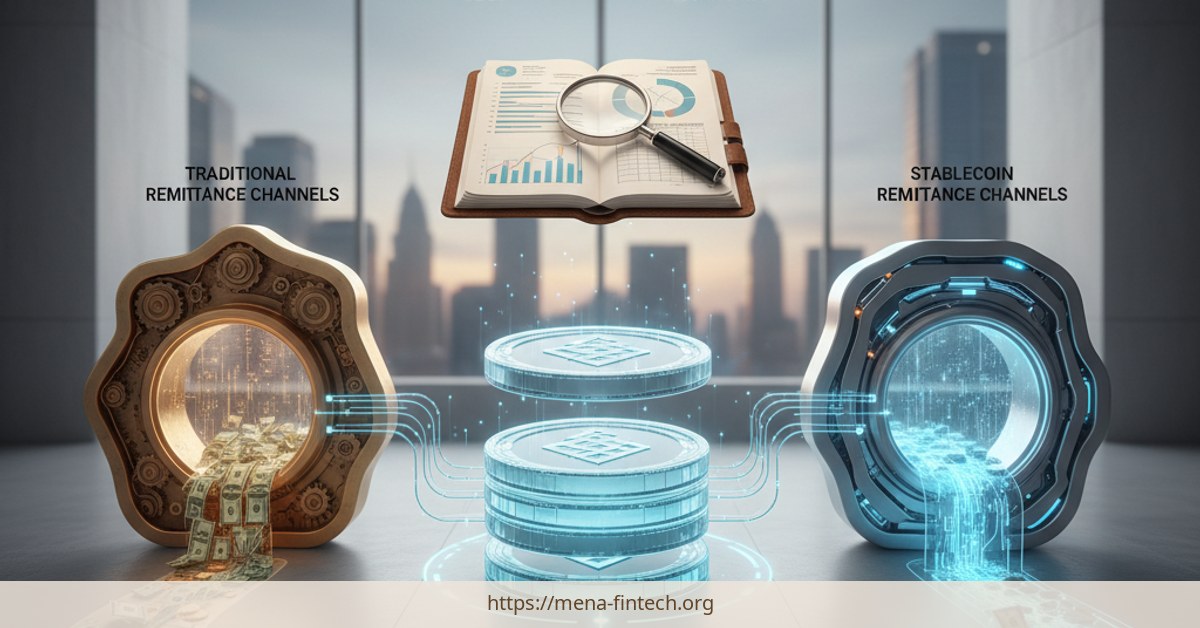
A recent study by Banca d’Italia reveals that stablecoins do not provide a significant cost or speed advantage over traditional remittance methods for cross-border payments.
Core Findings of the Study
The study published on August 19, 2026, indicates that stablecoins show no systematic cost advantage over traditional remittance channels. Researchers analyzed transaction data across multiple corridors and found that stablecoin transfers did not consistently outperform conventional methods in terms of speed or pricing. The findings suggest stablecoins may not be the solution for improving remittance efficiency.
The research methodology involved a comparative analysis of transaction fees, processing times, and reliability across various remittance corridors, including high-volume routes such as Europe-Africa, Asia-Pacific, and Latin America. The study controlled for variables like transaction size, currency pairs, and intermediary fees, yet stablecoins failed to demonstrate a consistent edge. This aligns with broader industry skepticism about the scalability of blockchain-based solutions for high-frequency, high-value cross-border transfers, where legacy systems like SWIFT and correspondent banking still dominate.
Implications for MENA Fintech
Banca d’Italia study highlights challenges for fintech companies in the MENA region exploring stablecoin integration. The research underscores that digital currencies may not deliver the expected improvements in remittance infrastructure, prompting a reevaluation of strategic priorities. Regulatory responses in the region could evolve as policymakers reassess the role of stablecoins in cross-border payment systems. For MENA fintech, this development reinforces the need to focus on proven technologies that align with existing remittance frameworks.
The MENA region, particularly Gulf Cooperation Council (GCC) countries, has been a focal point for digital currency experimentation due to its high remittance inflows and growing fintech ecosystem. However, the study’s findings may temper enthusiasm for stablecoin adoption, especially in markets where traditional remittance corridors are already optimized. For instance, in Saudi Arabia and the UAE, where real-time gross settlement (RTGS) systems are expanding, the marginal gains from stablecoins may not justify the regulatory and operational complexities of integrating them into existing infrastructures.
Alternative Solutions for Remittance
The study opens the door for exploring other methods to enhance remittance efficiency in the MENA region. Innovations in traditional remittance methods such as optimized routing algorithms, localized payment gateways, and partnerships with regional banks could offer more tangible benefits. Case studies from Gulf Cooperation Council (GCC) countries, where real-time payment systems are being rolled out, demonstrate that incremental improvements in existing infrastructure may yield better results than reliance on stablecoins. Fintech operators are advised to prioritize solutions that integrate seamlessly with current financial ecosystems rather than betting on unproven digital currency models.
For example, in the UAE, the Central Bank’s initiative to unify payment systems across banks has reduced transaction times by 40% for cross-border transfers. Similarly, in Egypt, mobile money platforms like Fawry have partnered with regional banks to offer localized remittance services that bypass traditional intermediaries. These examples highlight how incremental upgrades to existing systems—rather than wholesale adoption of new technologies—can achieve measurable efficiency gains.
What Wasn’t Disclosed
The announcement did not clarify whether the study considered specific stablecoin protocols or regional remittance corridors. It also did not address potential use cases where stablecoins might still hold value, such as in volatile currency environments or for microtransactions. Further details on the methodology, sample size, and geographic scope of the analysis remain undisclosed.
The absence of granular data on specific stablecoin protocols raises questions about the study’s applicability to niche use cases. For instance, stablecoins pegged to regional currencies like the UAE Dirham or Saudi Riyal might offer advantages in microtransactions or remittances to countries with unstable fiat systems. However, without explicit analysis of such scenarios, the study’s conclusions remain focused on the broader cross-border remittance landscape.
Significance:
For the MENA fintech ecosystem, the Banca d’Italia study underscores the importance of aligning with technologies that have demonstrated reliability in cross-border payment systems. The findings suggest that stablecoins may not be the silver bullet for remittance challenges, requiring regional operators to focus on refining existing infrastructure rather than adopting unproven models. The practical question for market participants is whether current remittance solutions can be enhanced through localized innovation or if alternative digital currency frameworks will emerge to address the gaps identified in the research.
The study also reinforces the need for regulators in the MENA region to adopt a cautious approach toward stablecoin integration. While digital currencies offer potential benefits in areas like financial inclusion and transaction transparency, the lack of clear efficiency gains in cross-border remittances suggests that regulatory frameworks should prioritize stability and interoperability over rapid adoption. This aligns with broader global trends, where central banks are increasingly exploring digital currencies that are pegged to fiat and integrated with existing financial systems, rather than fully decentralized alternatives.