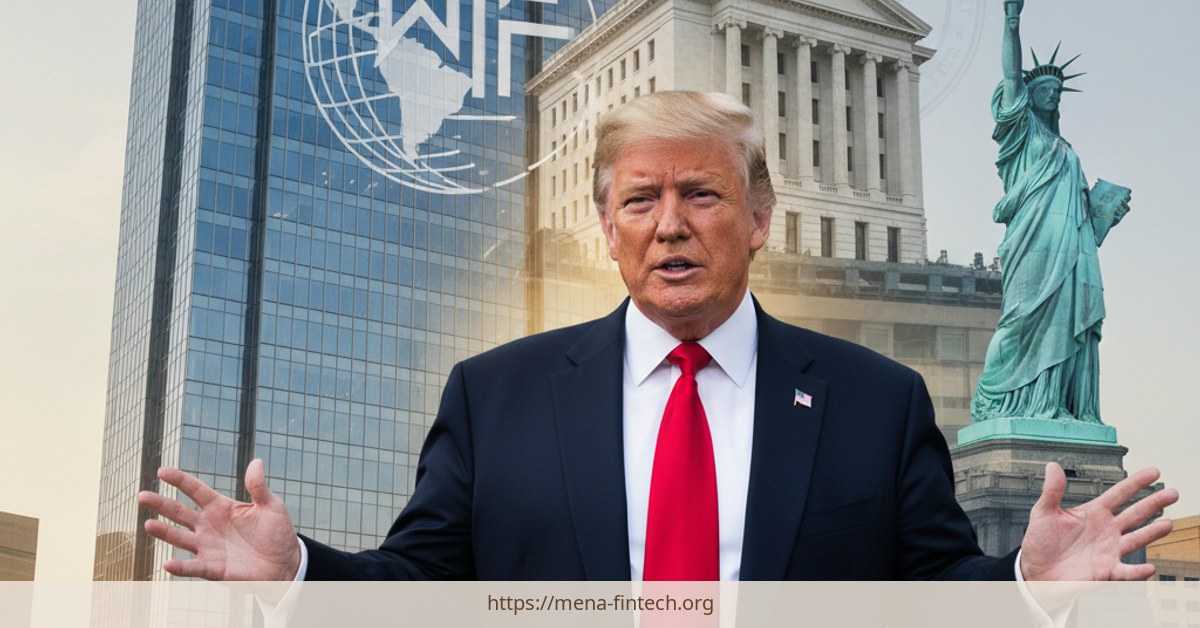
World Liberty Financial has received conditional approval for a bank charter from the Office of the Comptroller of the Currency. The approval was announced on August 17, 2026, and positions the Trump-linked crypto venture as a step closer to formal banking operations in the United States. The development raises questions about regulatory approaches to cryptocurrency ventures and their potential influence on the MENA fintech landscape.
Regulatory Context and Implications
The Office of the Comptroller of the Currency (OCC) oversees national banks and federal savings associations in the United States. Conditional approval for a bank charter typically requires the entity to meet specific compliance, capital, and operational standards before full authorization. For cryptocurrency firms, this marks a significant regulatory milestone, as few have secured such approvals. The OCC’s decision may signal a broader willingness to integrate digital assets into traditional banking frameworks, though the conditional nature of the approval underscores ongoing scrutiny.
In the MENA region, where regulatory frameworks for cryptocurrency remain fragmented, this development could influence discussions around licensing and compliance for fintech companies. The Gulf Cooperation Council (GCC) has seen increasing interest in blockchain and digital asset regulation, with Bahrain and the UAE leading efforts to establish clear guidelines. Bahrain’s Central Bank, for instance, has introduced a regulatory sandbox for blockchain-based financial services, while the UAE’s Dubai Financial Services Authority (DFSA) has been proactive in drafting frameworks for digital asset exchanges. However, the conditional approval for World Liberty Financial highlights the need for regional regulators to balance innovation with financial stability, particularly as cross-border digital asset flows grow.
The U.S. regulatory approach may serve as a reference point for GCC countries evaluating how to license crypto-native firms. While the GCC has not yet granted a bank charter to a cryptocurrency firm, the region’s central banks have expressed cautious optimism about integrating digital assets into the financial system. For example, Saudi Arabia’s Saudi Central Bank (SAMA) has been exploring the use of blockchain for cross-border payments, and the UAE has experimented with central bank digital currencies (CBDCs). The OCC’s conditional approval could prompt regulators in the GCC to reassess their own thresholds for licensing crypto ventures, particularly those with ties to international political figures.
Public Perception and Market Impact
The association of World Liberty Financial with Donald Trump, a prominent political figure, may affect public perception and regulatory scrutiny. While the OCC’s approval focuses on operational standards, the political connection could draw attention from policymakers and investors. In the MENA region, where regulatory environments vary, this could prompt discussions about the role of political affiliations in fintech licensing decisions.
For investors and market participants, the approval may signal growing institutional confidence in cryptocurrency ventures. However, the conditional nature of the charter and the lack of detailed disclosure about the company’s operations or financial terms leave uncertainties. The absence of confirmed regulatory approvals, named partners, or launch timelines means the development should be treated as an infrastructure initiative rather than a completed market rollout.
In the GCC, where political and business ties often intersect, the Trump affiliation could influence how regulators perceive the firm’s credibility. For example, in the UAE, where foreign investment is tightly regulated, the political connection may necessitate additional scrutiny to ensure compliance with national security and financial stability mandates. Similarly, in Saudi Arabia, where the government has been actively promoting Vision 2030 initiatives, the approval of a Trump-linked entity may be viewed through the lens of geopolitical considerations.
Significance
For the MENA fintech ecosystem, the approval reflects a potential convergence of cryptocurrency ventures and traditional banking frameworks. It underscores the growing interest in integrating digital assets into financial systems, a trend that could influence regional regulatory strategies. However, the conditional nature of the approval and the lack of detailed disclosures mean that the practical implications for MENA operators remain unclear.
The practical question for market participants is whether this development will encourage similar regulatory pathways for cryptocurrency firms in the region. Until specific approvals, partnerships, and operational details are disclosed, the focus should remain on monitoring the evolution of regulatory approaches to digital assets and their integration into banking infrastructure.
The approval also raises questions about the role of political influence in shaping regulatory outcomes. While the OCC’s decision is based on operational criteria, the Trump connection may lead to heightened scrutiny from both U.S. and MENA regulators. This could set a precedent for how political affiliations are evaluated in the licensing of fintech firms, particularly in regions where regulatory frameworks are still evolving.
What wasn’t disclosed
The announcement did not disclose investment size, ownership terms, regulatory approvals, named banking partners, launch markets, or committed transaction volumes. It also did not confirm when the first live corridor or commodity product would move into production.