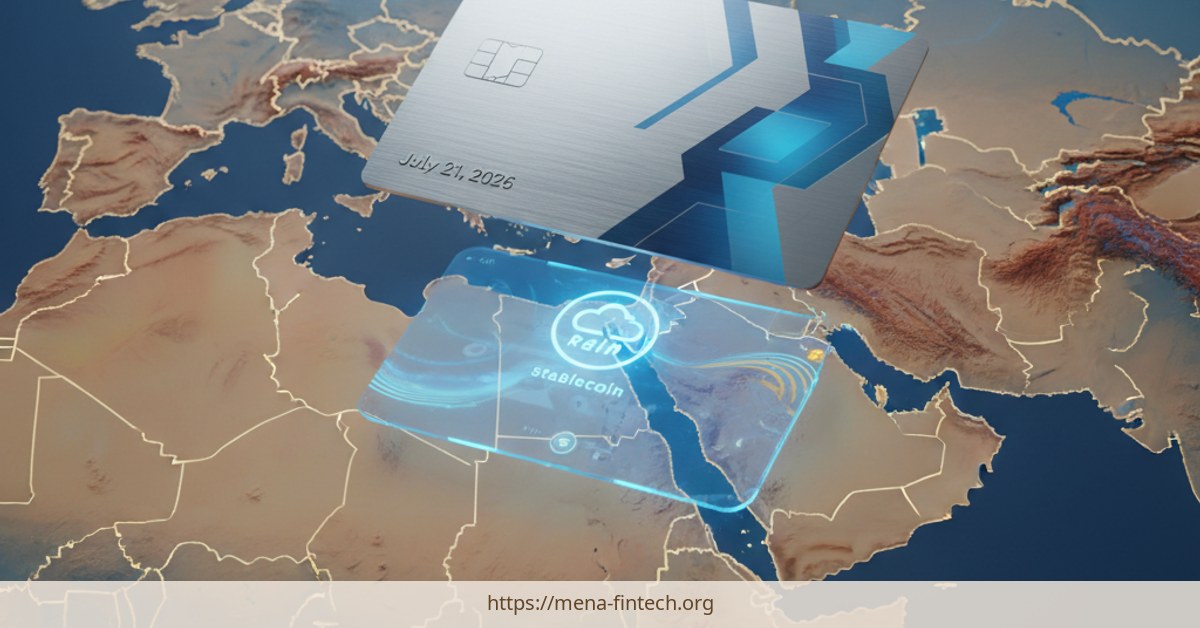
Western Union has launched its stablecoin wallet and card on July 21, 2026, in partnership with Visa and Rain. The stablecard is designed to facilitate digital payments and enhance cross-border solutions within the fintech ecosystem.
Partnership Details
The collaboration between Western Union, Visa, and Rain aims to expand access to digital payment infrastructure. The stablecard operates as a digital wallet and physical card, enabling users to send and receive stablecoins—cryptocurrencies pegged to fiat currencies—across borders. Visa’s network integration ensures the card can be used at millions of merchants globally, while Rain, a fintech platform specializing in digital wallets, provides the underlying infrastructure for the stablecoin wallet.
This partnership builds on Western Union’s long-standing role in cross-border remittances, which accounted for over $150 billion in global transactions annually as of 2025. By integrating stablecoins, the firm seeks to reduce the costs and delays associated with traditional currency conversions. Visa’s global payment network, which processes over 15,000 transactions per second, will enable the stablecard to function seamlessly across multiple jurisdictions. Rain’s role in the ecosystem includes managing the wallet’s backend operations, including user onboarding, transaction settlement, and compliance monitoring.
The announcement does not disclose investment size, ownership terms, or regulatory approvals for the stablecard. It also does not specify which jurisdictions will initially support the service, nor does it confirm when the first live transactions will occur.
Market Implications
For the MENA region, the launch aligns with growing adoption of digital payment solutions, particularly in GCC countries where cross-border transactions are a critical component of trade and remittances. The stablecard could reduce friction in international transfers by leveraging blockchain technology to enable faster, lower-cost transactions compared to traditional banking systems. In 2025, GCC countries processed over $40 billion in cross-border remittances, with the UAE and Saudi Arabia accounting for nearly 60% of this volume. The integration of stablecoins may further accelerate the shift toward digital currencies in these markets, where mobile money adoption has grown by 25% year-over-year.
However, the competitive landscape for digital wallets in the region remains fragmented, with multiple players offering similar services. Existing providers such as UAE-based N26, Saudi Arabia’s Al Rajhi Bank, and regional fintechs like PayTabs and InstaReM have already established footholds in the digital payments space. The partnership may accelerate consolidation or prompt existing providers to enhance their offerings to remain relevant. For instance, Al Rajhi Bank recently launched its own stablecoin-based remittance service, while PayTabs has expanded its blockchain integration to support cross-border B2B transactions.
Regulatory Considerations
The integration of stablecoins into mainstream financial services presents both opportunities and challenges for regulators in the GCC. While stablecoins can improve financial inclusion and efficiency, they also raise concerns about money laundering, consumer protection, and systemic risk. Regulators such as the UAE’s Central Bank of the UAE (CBUAE) and Saudi Arabia’s Saudi Arabian Monetary Authority (SAMA) have been cautious in their approach to stablecoins, requiring clear licensing and compliance frameworks. In 2024, the CBUAE issued guidelines for stablecoin issuers, mandating reserve transparency, audit requirements, and anti-money laundering (AML) protocols. Similarly, SAMA has emphasized the need for stablecoin operators to obtain licenses under its Virtual Assets Regulatory Framework (VARF), which came into effect in 2023.
The stablecard’s success will depend on its ability to meet regulatory requirements in the jurisdictions it targets. Western Union, Visa, and Rain have not yet disclosed how they plan to navigate these regulatory hurdles, though the involvement of Visa—a globally regulated entity—may provide some reassurance. The CBUAE and SAMA have both expressed interest in fostering innovation while ensuring stability, and their willingness to engage with global players like Visa could influence the approval process. However, the absence of clear jurisdictional details in the announcement leaves uncertainty about how the stablecard will be deployed in the region.
Significance: For MENA fintech, the launch reflects the continued convergence of payment infrastructure and digital assets in the region. It also highlights the role of global financial institutions in shaping the future of cross-border payments. For regional financial institutions, the practical question is whether the stablecard can translate its corridor and tokenization plans into licensed, bank-compatible services across multiple jurisdictions.
What wasn’t disclosed: The announcement did not specify investment size, ownership terms, regulatory approvals, named banking partners, launch markets, or committed transaction volumes. It also did not confirm when the first live corridor or stablecoin product would move into production.
Sources
- Western Union launches stablecard – finextra.com