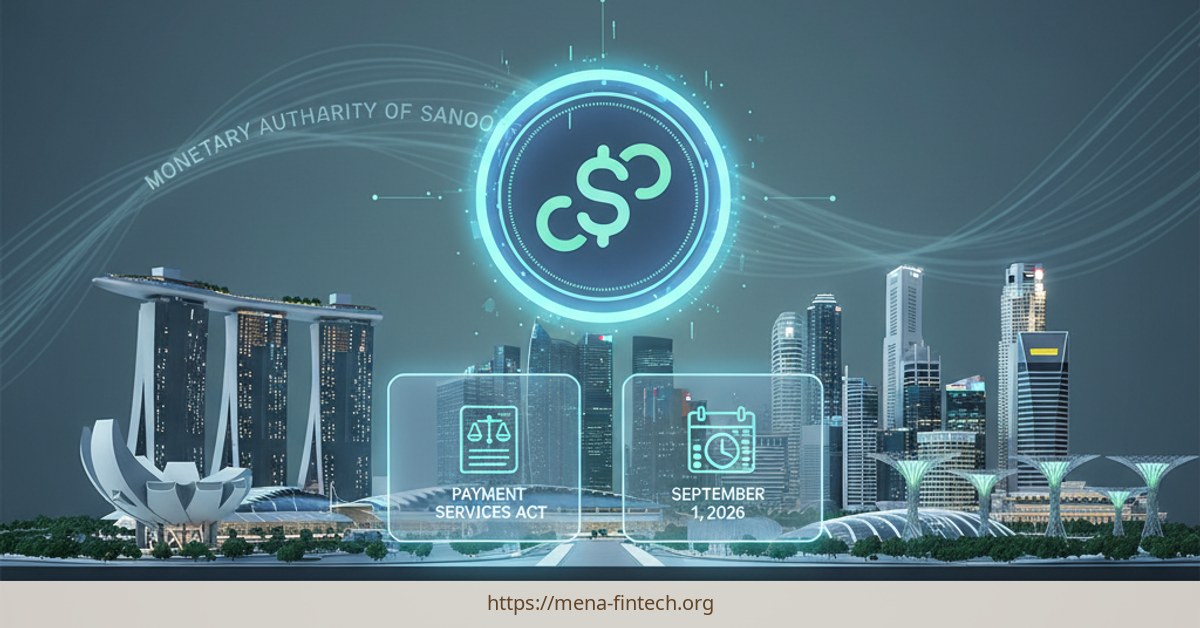
The Monetary Authority of Singapore (MAS) published a consultation paper on September 1, 2026, outlining a regulatory framework for stablecoins.
Regulatory Framework Overview
The proposed amendments to the Payment Services Act 2019 (PS Act) aim to enhance the regulatory landscape for digital currencies. The consultation paper outlines MAS’ regulatory framework for stablecoins in Singapore, which includes requirements for stablecoin issuers to maintain reserves, ensure transparency, and comply with anti-money laundering (AML) and counter-terrorism financing (CTF) regulations. The framework also introduces licensing requirements for stablecoin issuers and custodians, ensuring they meet stringent capital adequacy and operational resilience standards.
The proposed framework mandates that stablecoin issuers maintain reserves equivalent to the value of their issued tokens, a measure designed to prevent depegging from their pegged asset—typically fiat currency. This requirement is critical for maintaining trust in stablecoins as a reliable medium of exchange and store of value. Additionally, issuers must provide regular, auditable transparency reports detailing their reserve composition and liquidity management practices. These measures align with global best practices for digital asset regulation, such as those outlined by the Financial Action Task Force (FATF), which emphasizes the need for robust oversight to mitigate risks associated with money laundering and terrorist financing.
Licensing requirements under the PS Act amendments would apply to both stablecoin issuers and custodians, ensuring that entities operating in Singapore’s digital currency ecosystem meet rigorous capital adequacy thresholds. This includes maintaining sufficient capital reserves to absorb potential losses and demonstrating operational resilience against cyber threats and systemic risks. The framework also mandates that licensed entities undergo periodic regulatory reviews and adhere to strict compliance protocols, including the implementation of know-your-customer (KYC) procedures and transaction monitoring systems.
Potential MENA Impact
Singapore’s regulatory approach could influence the adoption of stablecoins in the MENA region, particularly in GCC countries developing their own digital currency frameworks. The proposed regulations emphasize consumer protection and financial stability, which align with the growing interest in digital assets across the region. For instance, the UAE and Saudi Arabia have been exploring central bank digital currencies (CBDCs) and private stablecoin initiatives. The MAS framework may serve as a reference point for regulators in the MENA region, encouraging them to adopt similar measures to ensure the safe and responsible development of stablecoin ecosystems.
The MENA region has seen increasing interest in digital assets, driven by the need for more efficient cross-border payment systems and the desire to diversify financial infrastructure. In the UAE, the Central Bank of the UAE (CBUAE) has been actively researching CBDCs, while Saudi Arabia’s Saudi Central Bank (SAMA) has expressed interest in private stablecoin projects that could complement its broader financial modernization goals. Singapore’s regulatory model, which balances innovation with risk mitigation, could provide a blueprint for these countries as they navigate the complexities of digital currency regulation. By adopting similar licensing and transparency requirements, MENA regulators may be able to foster a stable environment for both domestic and international stablecoin projects, attracting investment and promoting financial inclusion.
Significance of the Proposal
Singapore’s regulatory proposal is part of a global trend among regulators to establish guidelines for digital assets. This initiative is crucial for fostering innovation while ensuring consumer protection and financial stability. For MENA fintech companies, the proposal highlights the importance of aligning with international standards to facilitate cross-border transactions and attract global investors. The framework also underscores the need for robust compliance mechanisms, which could influence the operational strategies of fintech firms in the region.
The global regulatory landscape for stablecoins has been evolving rapidly, with jurisdictions such as the European Union, the United States, and Japan introducing their own frameworks. Singapore’s approach, which emphasizes a balance between innovation and oversight, positions the city-state as a leading hub for digital finance. For MENA fintechs, this development underscores the necessity of adopting compliance practices that align with international benchmarks, particularly as cross-border transactions become increasingly reliant on stablecoins. The framework’s focus on transparency and capital adequacy could also encourage regional fintechs to adopt more rigorous risk management protocols, enhancing their credibility in global markets.
What wasn’t disclosed in the announcement includes specific timelines for implementing the proposed regulations, the exact criteria for stablecoin licensing, and the potential impact on existing stablecoin projects in Singapore. Additionally, the consultation paper does not provide detailed guidance on how the framework will interact with other regulatory regimes, such as those governing traditional financial services.
Significance: For MENA fintech, the announcement reflects the growing convergence of regulatory approaches to digital assets, emphasizing the need for harmonized standards across jurisdictions. The practical question for regional financial institutions is whether they can adapt their operations to meet evolving regulatory expectations while maintaining competitive advantages in the digital currency space.