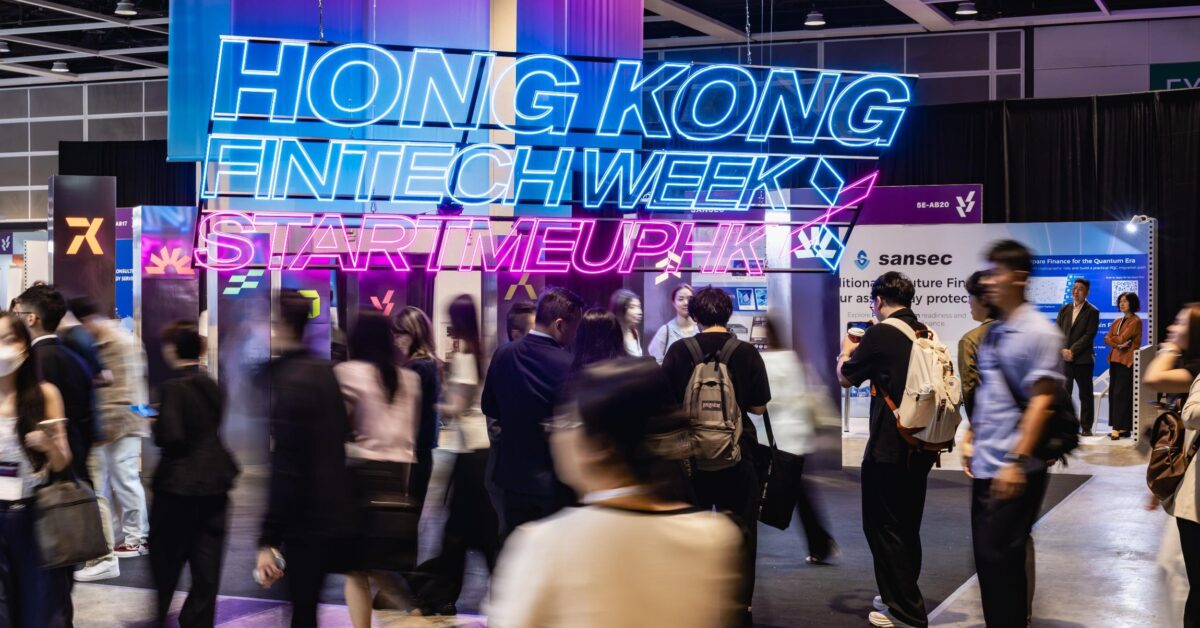
Economic ties between the United Arab Emirates and Hong Kong are extending beyond trade into investment, fintech and digital assets. Industry leaders from both markets discussed these links on the sidelines of Hong Kong FinTech Week x StartmeupHK Festival 2026, held from November 2 to 6, 2026. Bilateral trade reached US$48.95 billion in 2025, and the UAE ranked as Hong Kong's largest trading partner in the Middle East.
A framework of agreements
The two markets have built a set of agreements over several years. They signed an agreement to avoid double taxation in 2014, followed by an Investment Promotion and Protection Agreement in 2019 that entered into force in 2020. The Hong Kong Economic and Trade Office in Dubai, established in 2021, promotes trade and investment and supports businesses looking to expand into Hong Kong, mainland China and other Asian markets.
In 2023, the Hong Kong Monetary Authority and Abu Dhabi Global Market's Financial Services Regulatory Authority signed a memorandum of understanding to deepen fintech cooperation, with a focus on cross-border trade data exchange and business collaboration. In 2025, the UAE's Securities and Commodities Authority, now the Capital Market Authority, and Hong Kong's Securities and Futures Commission signed an agreement creating a mutual recognition framework for investment funds.
Where officials see the next phase
King Leung, Head of Financial Services and Fintech at InvestHK, the investment promotion agency of Hong Kong, sees scope for greater collaboration in innovation, fintech, digital assets and cross-border investment. He said he personally led two delegations to the Dubai FinTech Summit in 2024 and 2025. According to him, these visits helped companies assess the UAE as an entry point to the wider Gulf Cooperation Council market.
Leung also described a two-way flow of investors. He said UAE sovereign funds travel frequently to Hong Kong, while Hong Kong investors travel often to the UAE. He added that many Chinese firms use Hong Kong as a springboard to connect with sovereign funds in the UAE.
Startup support and the funding gap
Eric Or, Chief Ecosystem Development Officer at Hong Kong Science and Technology Parks Corporation (HKSTP), said the UAE is a strong market for Hong Kong technology companies seeking investment and international expansion. He said HKSTP chooses overseas markets according to where business potential lies. HKSTP, a statutory body established by the Hong Kong government, supports approximately 2,600 technology companies, including 14 unicorns.
The organisation offers incubation, mentorship, funding, research infrastructure and connections with investors and potential customers. Or said HKSTP also helps startups explore markets including the Middle East, Southeast Asia, Europe and the United States. Its external investor network includes:
- Corporate venture capital firms
- Family businesses
- Private equity firms
- Other investment institutions
Or identified funding as one of the biggest challenges for startups, even those with institutional support. He said every HK$1 invested by HKSTP attracts approximately HK$13 in external investment. He also stressed that funding does not guarantee success, and that product-market fit and securing customers remain critical. Or said: "They need external business."
Dubai as a regional base
Paul Keely, Chief Financial Officer of the Dubai Integrated Economic Zones Authority (DIEZ), described complementary roles for the two cities. Hong Kong provides access to mainland China and wider Asia, while Dubai serves as a gateway to the GCC, the Middle East, Africa and South Asia. Keely said the two cities show particular potential in artificial intelligence, fintech, digital commerce, advanced manufacturing and smart logistics.
DIEZ operates three economic zones: Dubai Airport Freezone, Dubai Silicon Oasis and Dubai CommerCity. According to Keely, DIEZ aims to strengthen bilateral trade and two-way investment by helping businesses access infrastructure, industry networks and commercial opportunities through these zones. He said Dubai offers Hong Kong companies a base for managing regional operations and coordinating trade and distribution from one location.
A partnership between Dubai CommerCity and the Hong Kong-Shenzhen Innovation and Technology Park, announced in October, is one example of this cooperation. Under the arrangement, Dubai CommerCity companies can explore establishing operations at Loop Hong Kong Park, while Hong Kong technology companies receive support entering Dubai and the wider UAE. The planned initiatives include:
- Entrepreneurship programmes
- Office space and business support services
- Mentorship and investor introductions
- Joint events to help companies develop commercial partnerships
Digital assets and stablecoins
Digital assets were a recurring theme during the week at the Hong Kong Digital Asset Summit and the Global Financial Leaders' Investment Summit, organised by the Hong Kong Monetary Authority. Discussions highlighted the need for effective clearing infrastructure and greater interoperability to support faster cross-border payments, real-time transactions and investment activities.
Leung said both jurisdictions have already licensed banks and financial institutions to issue stablecoins. He argued that a stablecoin needs counterparties to be useful, and said the work of both regulators is widely watched. In February 2026, the Central Bank of the UAE and the Hong Kong Monetary Authority held their third bilateral meeting in Abu Dhabi, covering stablecoin regulation, digital assets, tokenisation and central bank digital currencies.
Leung also expressed optimism about stablecoin transactions between the two markets, suggesting that Hong Kong dollar- and UAE dirham-linked stablecoins could eventually be traded against each other. Separately, James Wong, Senior Vice President for Financial Services and Fintech at InvestHK, pointed to Project mBridge, a cross-border central bank digital currency initiative, as an existing example of financial cooperation between the UAE and Hong Kong.