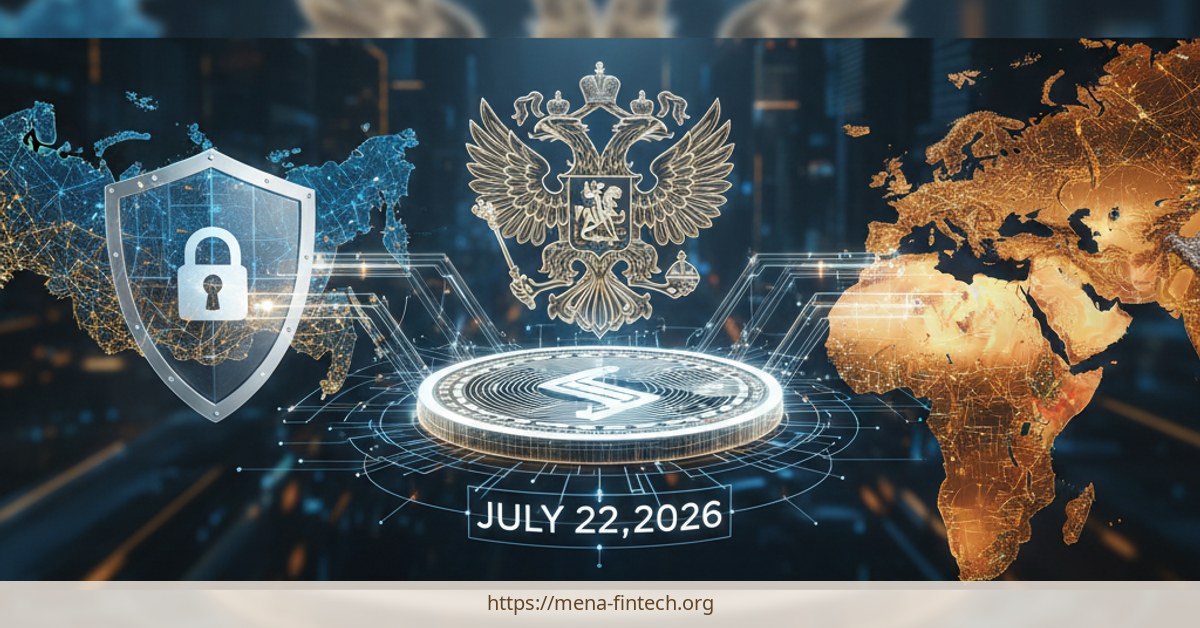
The Bank of Russia has confirmed a new crypto regime as of July 22, 2026, as part of its strategy to reduce reliance on the US dollar.
New Crypto Regulations Overview
The Bank of Russia has introduced a regulatory framework aimed at facilitating alternative payment methods. This initiative is part of Russia’s broader de-dollarisation strategy, which has gained momentum since the imposition of Western sanctions following the 2022 invasion of Ukraine. The new law seeks to enable cryptocurrency transactions as a means to circumvent international sanctions while maintaining financial sovereignty. According to the Central Banking report, the framework includes provisions for licensing crypto exchanges, regulating stablecoins, and establishing oversight for cross-border transactions. These measures are designed to create a legal infrastructure that supports the use of digital assets without compromising national security or regulatory control. The framework also mandates that crypto exchanges operating within Russia must adhere to stringent anti-money laundering (AML) and know-your-customer (KYC) protocols, aligning with global standards while ensuring compliance with domestic priorities.
Implications for MENA Fintech
The regulatory shift in Russia could have ripple effects across the MENA fintech ecosystem. As Russian businesses increasingly adopt cryptocurrency for transactions, MENA-based fintech companies with ties to Russian markets may need to adapt their compliance frameworks. This includes revisiting partnerships with Russian financial institutions, reassessing risk exposure to crypto-related sanctions, and updating internal policies to align with evolving regulatory landscapes. The move also highlights growing interest in blockchain-based solutions for cross-border payments, a trend already gaining traction in the Gulf Cooperation Council (GCC) region. For instance, the UAE and Saudi Arabia have been actively exploring blockchain for trade finance and remittances, with initiatives such as the UAE’s blockchain-powered trade platform and Saudi Arabia’s Vision 2030 digital transformation plan. MENA fintech firms may find opportunities to expand their services into Russia or collaborate with Russian entities, but they must navigate the dual challenges of geopolitical risk and regulatory divergence. The Central Banking analysis notes that Russia’s approach may influence similar regulatory experiments in other sanctioned economies, potentially accelerating the adoption of decentralized finance (DeFi) tools in the region. However, the lack of corroboration from additional sources means the full impact remains uncertain.
Significance of Alternative Payment Systems
Russia’s regulatory pivot underscores the global shift toward alternative payment systems as a response to geopolitical tensions. For MENA fintech operators, this development reinforces the importance of building resilient infrastructure that can accommodate evolving regulatory landscapes. The Central Banking analysis highlights that Russia’s approach may serve as a blueprint for other countries seeking to balance financial autonomy with international compliance. In the MENA region, where cross-border transactions are a critical component of trade and remittances, the adoption of blockchain-based solutions could reduce dependency on traditional banking systems and mitigate risks associated with currency fluctuations and sanctions. However, the absence of a unified regulatory framework across the region poses challenges for fintech firms aiming to scale operations. The Bank of Russia’s initiative may also spur innovation in areas such as smart contracts, tokenized assets, and digital identity verification, which are already being tested in the GCC. For market participants, the practical question is how to balance compliance with emerging regulatory frameworks while maintaining operational flexibility in a rapidly changing environment. This includes investing in technology that can adapt to varying legal requirements and fostering partnerships with local regulators to ensure seamless integration into new markets.
What Wasn’t Disclosed
The Bank of Russia’s announcement did not specify the timeline for implementing the new crypto framework or outline the exact criteria for licensing crypto exchanges. Additionally, the report did not provide details on how stablecoins will be regulated, including whether they will be required to hold reserves in Russian rubles or other currencies. The absence of these specifics leaves room for interpretation and may lead to further regulatory clarifications in the coming months. Furthermore, the potential impact on Russian consumers and businesses remains unclear, as the framework focuses primarily on institutional actors rather than individual users.
Significance:
For MENA fintech, the Bank of Russia’s crypto regulations highlight the growing intersection of geopolitical strategy and financial innovation. The move signals a potential acceleration in the adoption of blockchain-based payment systems across the region, particularly in sectors reliant on cross-border transactions. For market participants, the practical question is how to balance compliance with emerging regulatory frameworks while maintaining operational flexibility in a rapidly changing environment. The development also underscores the need for MENA fintech firms to monitor regulatory trends in Russia and other sanctioned economies, as these could influence regional policy and investment flows. By proactively adapting to these shifts, firms may position themselves to capitalize on emerging opportunities in the digital finance sector.
Sources
- Bank of Russia confirms new crypto regime – centralbanking.com