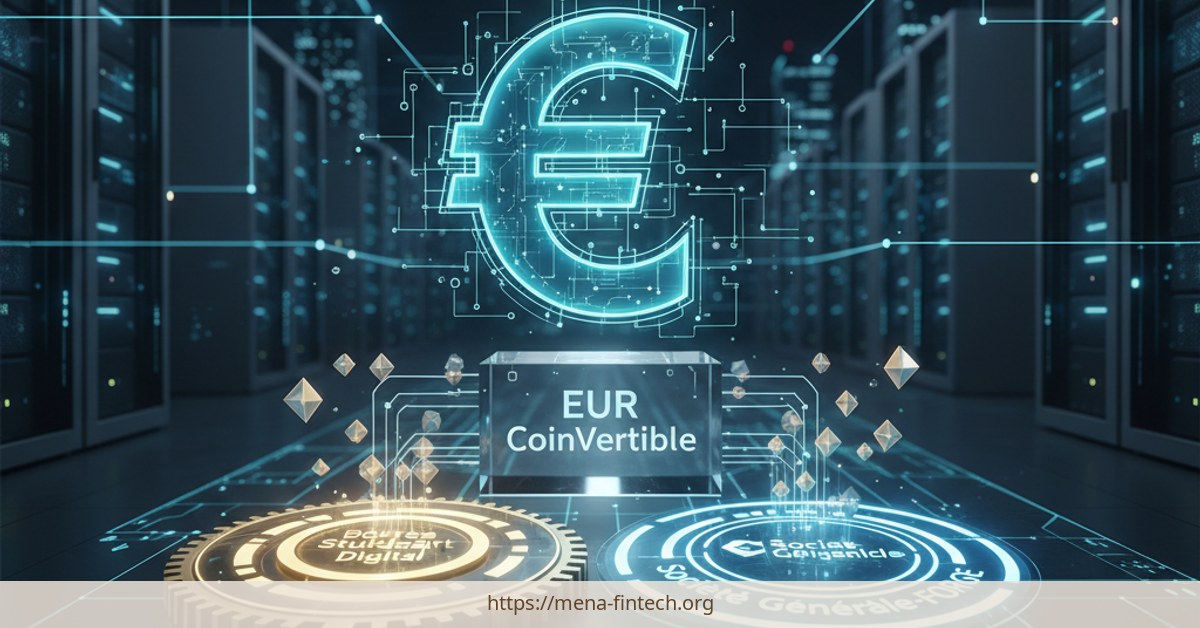
Boerse Stuttgart Digital has integrated EUR CoinVertible, a stablecoin issued by Societe Generale-FORGE, into its trading and custody solutions. This marks the first onboarding of a euro stablecoin issued by a bank-subsidiary into Boerse Stuttgart Digital’s regulated ecosystem.
Regulatory Compliance and Market Implications
EUR CoinVertible is compliant with the Markets in Crypto-Assets Regulation (MiCAR), a landmark EU framework designed to regulate crypto assets and ensure transparency, investor protection, and financial stability. MiCAR mandates rigorous reserve requirements, transparency protocols, and licensing for stablecoin issuers, creating a standardized approach to digital asset governance. By integrating a MiCAR-compliant stablecoin, Boerse Stuttgart Digital reinforces its position as a custodian of regulated digital assets, aligning with the European Union’s broader push to institutionalize crypto markets. This development underscores the growing acceptance of stablecoins as viable instruments within traditional financial systems, particularly in cross-border transactions and settlement processes. The integration also signals a shift in how European exchanges are positioning themselves to accommodate the evolving needs of institutional investors and corporate clients seeking exposure to digital assets without compromising regulatory adherence.
For the MENA region, where digital asset regulation remains fragmented, the European model offers a potential blueprint. Countries like the UAE and Saudi Arabia have recently introduced frameworks to govern crypto activities, but the absence of a unified regulatory approach has hindered widespread adoption. EUR CoinVertible’s compliance with MiCAR could serve as a reference point for regulators in the Gulf Cooperation Council (GCC) to design stablecoin frameworks that balance innovation with systemic risk mitigation. The European experience highlights the importance of reserve transparency, audit requirements, and licensing for stablecoin issuers—principles that could be adapted to the MENA context to foster trust in digital payment infrastructures.
Significance for MENA Fintech
The adoption of stablecoins like EUR CoinVertible is pivotal for enhancing digital payment infrastructures in the MENA region, where cross-border remittances and trade finance remain critical economic drivers. In 2023, the GCC accounted for over $150 billion in cross-border transactions, with a significant portion processed through traditional banking channels. Stablecoins, particularly those pegged to fiat currencies like the euro, offer a faster, cheaper alternative for remittances and trade settlements, reducing reliance on correspondent banking networks. However, the lack of standardized regulatory frameworks has limited the scalability of such solutions. By demonstrating how a bank-issued stablecoin can operate within a regulated ecosystem, Boerse Stuttgart’s integration provides a tangible example for MENA fintech firms and regulators to explore similar models.
The European experience with MiCAR-compliant stablecoins could also inform the development of central bank digital currencies (CBDCs) in the region. Several GCC countries, including the UAE and Saudi Arabia, are actively researching CBDCs to modernize their financial systems. The integration of EUR CoinVertible into a regulated exchange ecosystem could serve as a case study for how private-sector stablecoins might coexist with or complement CBDC initiatives. For instance, the UAE’s recent pilot of a digital dirham has emphasized the need for interoperability between private and public digital assets—a challenge that EUR CoinVertible’s compliance model may help address.
The practical question for market participants in the MENA region is whether regulators will adopt similar frameworks to facilitate stablecoin integration without compromising financial stability. Until such frameworks are established, the development serves as an infrastructure initiative to monitor rather than a completed market rollout. For fintech firms, the integration highlights the importance of aligning with global regulatory standards to attract cross-border investment and partnerships. However, without clear regulatory guidance, the adoption of stablecoins in the region may remain limited to niche use cases, such as remittances or trade finance, rather than broader financial inclusion initiatives.
What Wasn’t Disclosed
The announcement did not disclose investment size, ownership terms, regulatory approvals, named banking partners, launch markets, or committed transaction volumes. It also did not confirm when the first live corridor or commodity product would move into production. These gaps suggest that the integration is still in an early phase, with Boerse Stuttgart Digital likely conducting further testing or awaiting additional approvals before expanding the stablecoin’s availability. The absence of specific launch markets may indicate a cautious approach, particularly in regions where stablecoin adoption is still nascent or where regulatory clarity is lacking. For market participants, this uncertainty underscores the need for continued engagement with regulators and industry stakeholders to shape the future of stablecoin integration in the MENA region.
Sources
- Boerse Stuttgart adopts SocGen stablecoin – finextra.com