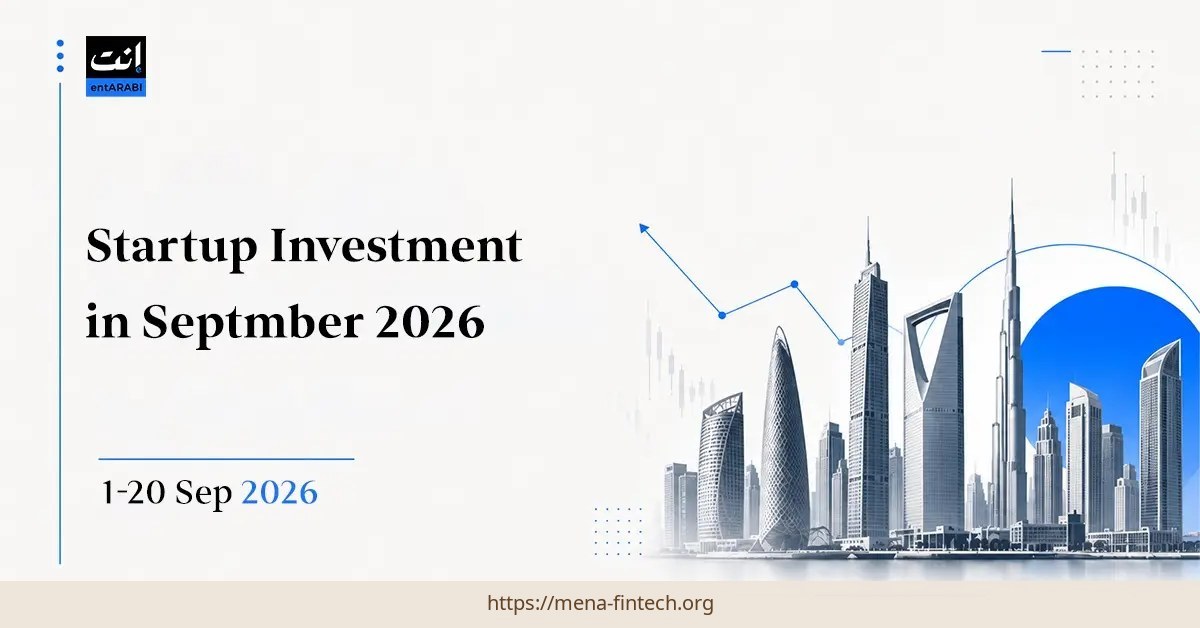
Startups across the Middle East and Gulf recorded more than $1.6 billion in disclosed investments between September 1 and 20, 2026, according to a report by entArabi. The investment figure covered 22 announced deals out of 24 transactions during this period, with artificial intelligence attracting the largest share of funding.
Investment Breakdown
Artificial intelligence dominated the funding landscape, with six deals worth $900.69 million, accounting for 56.3% of total disclosed funding. This represents a significant portion of the $1.6 billion raised by MENA startups in the first 20 days of September 2026. Other sectors also saw activity, though the AI focus highlights a clear trend toward technology-driven solutions. The report notes that the Gulf region and broader MENA area continue to draw interest from global investors, particularly in AI applications for fintech. This includes advancements in automated underwriting, fraud detection, and personalized financial services. The $900.69 million allocated to AI projects underscores the region’s growing role as a hub for innovation in financial technology.
Significance:
The surge in investment reflects increasing confidence in the MENA fintech ecosystem, particularly in technology-driven solutions. For regional financial institutions, the practical question is whether these developments will translate into licensed, bank-compatible services across multiple jurisdictions. Until specific approvals, partners, and launch volumes are disclosed, the development is best treated as an infrastructure initiative to monitor rather than a completed market rollout.
The $1.6 billion figure also signals potential for economic growth and innovation in the region. As startups scale their AI-driven offerings, they may reshape traditional financial services models, creating new opportunities for collaboration between fintechs, banks, and regulators. However, the confidence level remains low due to reliance on a single source, and corroboration is needed before publication.
What wasn’t disclosed
The announcement did not disclose investment size, ownership terms, regulatory approvals, named banking partners, launch markets, or committed transaction volumes for the AI-focused deals. It also did not confirm when the first live AI-driven financial product would move into production.
The focus on AI in fintech aligns with broader regional trends toward digital transformation. Gulf countries, in particular, have been investing heavily in smart infrastructure and regulatory sandboxes to foster innovation. For instance, the UAE’s Virtual Assets Regulatory Authority (VARA) and Saudi Arabia’s Securities and Commodities Authority (SCA) have introduced frameworks to support blockchain and AI startups. These regulatory efforts aim to position the region as a global fintech leader while ensuring compliance with international standards.
Despite the optimism, challenges remain. The lack of transparency in deal terms and regulatory clarity could hinder the scalability of AI-driven fintech solutions. Startups may face hurdles in navigating diverse legal frameworks across MENA countries, which vary in their approach to data privacy, financial regulation, and cross-border transactions. Additionally, the reliance on a single source for reporting raises questions about the accuracy and completeness of the data, emphasizing the need for independent verification.
The investment trend also highlights the region’s appeal to global venture capital firms. In recent years, MENA fintechs have attracted attention for their ability to address unique market needs, such as financial inclusion in underserved populations and cross-border payment solutions for diaspora communities. AI’s role in enhancing efficiency and reducing costs in these areas has made it an attractive proposition for investors seeking high-growth opportunities.
As the MENA fintech ecosystem continues to evolve, the interplay between innovation and regulation will be critical. While the $1.6 billion influx signals strong momentum, stakeholders must balance rapid growth with sustainable practices and regulatory alignment. This includes fostering partnerships between startups, financial institutions, and regulators to ensure that AI-driven solutions meet both market demands and compliance requirements.
Sources
- MENA Startup Investments Exceed $1.6B in First 20 Days of September 2026 – menastartupdigest.com
Image: entarabi.com