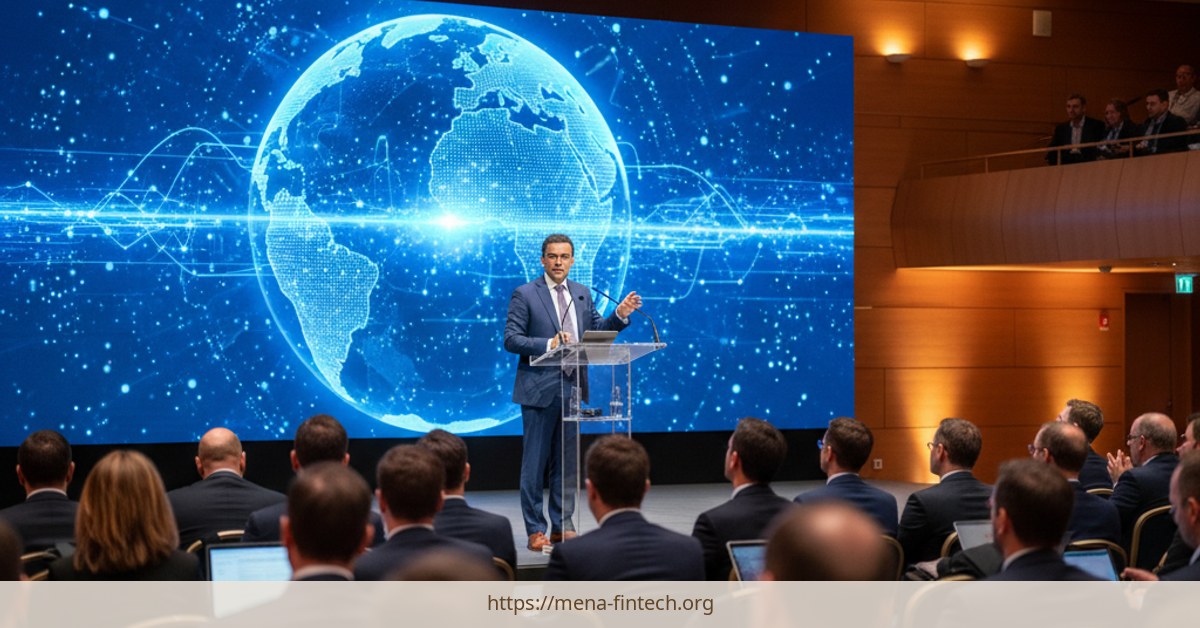
Sovon Chatterjee, Director of Product Management at HSBC, highlighted the operational benefits of tokenised deposits at EBADay 2026 in Copenhagen.
Operational Benefits of Tokenised Deposits
Tokenised deposits can eliminate the need for pre-funding floats, a significant cost for corporate treasurers. By enabling 24/7 operations, this technology streamlines financial processes and reduces liquidity management challenges. Chatterjee emphasized that these advantages could reshape financial practices for corporate treasurers in the MENA region.
Pre-funding floats refer to the practice of maintaining idle cash reserves to meet short-term obligations, a costly and inefficient process for corporations. Tokenisation, by digitising assets and enabling real-time settlement, allows treasurers to access liquidity on demand without tying up capital in physical reserves. This shift is particularly relevant in the MENA region, where cross-border trade and remittances are integral to economic activity. For example, businesses in the Gulf Cooperation Council (GCC) often manage complex supply chains that span multiple jurisdictions, requiring seamless access to funds. Tokenised deposits could reduce the friction associated with currency conversion, compliance checks, and settlement delays, thereby lowering operational costs and improving cash flow visibility.
The 24/7 operational capability of tokenised deposits aligns with the globalisation of financial markets, where time zones and regulatory differences often create bottlenecks. In the MENA context, where oil and gas exports, tourism, and e-commerce are key sectors, the ability to transact continuously could enhance competitiveness. For instance, a UAE-based exporter could instantly settle a transaction with a European buyer, bypassing traditional banking hours and currency intermediaries. This efficiency gain is expected to attract more corporations to adopt tokenisation, particularly as digital infrastructure in the region matures.
Implications for Regulatory Frameworks in the GCC
Tokenisation aligns with existing regulatory frameworks in the GCC, offering opportunities for regulators to adapt to new financial instruments. However, challenges such as ensuring compliance with evolving standards and establishing clear governance models remain. GCC regulators may need to update policies to fully leverage tokenisation’s potential while mitigating risks.
The GCC has been proactive in fostering innovation in financial technology, with jurisdictions like the UAE and Bahrain establishing regulatory sandboxes to test blockchain and digital asset solutions. However, tokenisation introduces complexities that require tailored regulatory approaches. For example, the digitisation of assets raises questions about ownership verification, fraud prevention, and the role of central counterparties. Regulators must balance innovation with systemic risk management, ensuring that tokenised deposits do not expose the financial ecosystem to vulnerabilities such as cyberattacks or market manipulation.
A critical area for regulatory alignment is cross-border interoperability. The MENA region’s financial systems are interconnected with global markets, necessitating harmonisation of standards with international bodies like the Basel Committee or the Financial Action Task Force (FATF). GCC regulators could collaborate to develop regional frameworks that address issues such as anti-money laundering (AML) compliance, data privacy, and the legal enforceability of smart contracts. Such efforts would not only facilitate the adoption of tokenisation but also position the GCC as a hub for digital finance in the Middle East.
Competitive Landscape of Fintech Innovations
The MENA fintech sector is witnessing a surge in innovations related to tokenisation. Key players are adopting similar technologies to enhance efficiency and security in cross-border transactions. This competitive environment underscores the importance of regulatory alignment and technological interoperability to maintain a robust financial ecosystem.
The adoption of tokenisation is part of a broader trend in the MENA fintech landscape, where digital infrastructure is increasingly viewed as a strategic enabler for economic diversification. Traditional banks, neobanks, and fintech startups are all exploring blockchain-based solutions to address pain points in payment processing, trade finance, and asset management. For example, the UAE’s Central Bank has been experimenting with central bank digital currencies (CBDCs), while Saudi Arabia’s Vision 2030 initiative includes investments in fintech innovation. These developments create a dynamic environment where tokenisation could serve as a unifying standard, enabling seamless integration between public and private sector systems.
However, the competitive landscape also presents challenges. The proliferation of proprietary tokenisation platforms risks creating silos, where different systems operate on incompatible protocols. This fragmentation could hinder scalability and interoperability, particularly for cross-border transactions that involve multiple jurisdictions. To address this, stakeholders must prioritise open standards and collaboration, ensuring that tokenisation solutions are compatible with existing financial infrastructure. Regulatory bodies, industry associations, and technology providers will need to work together to establish common frameworks that support innovation without compromising security or efficiency.
Significance: For the MENA fintech market, HSBC’s insights reflect a growing trend toward adopting tokenisation, which could significantly impact financial operations in the region. For regional financial institutions and regulators, the practical question is how to structure tokenisation frameworks to meet modern compliance and cross-border regulatory requirements while preserving the core intent of financial efficiency.
The shift toward tokenisation represents a paradigm change in how financial assets are managed and transacted. In the MENA region, where financial inclusion and digital transformation are key priorities, this technology could unlock new opportunities for small and medium-sized enterprises (SMEs) to access global markets. By reducing reliance on traditional banking intermediaries, tokenisation may also democratise access to financial services, enabling more businesses to participate in the digital economy. However, achieving this potential will require coordinated efforts from regulators, technologists, and market participants to address the technical, legal, and operational challenges associated with large-scale adoption.