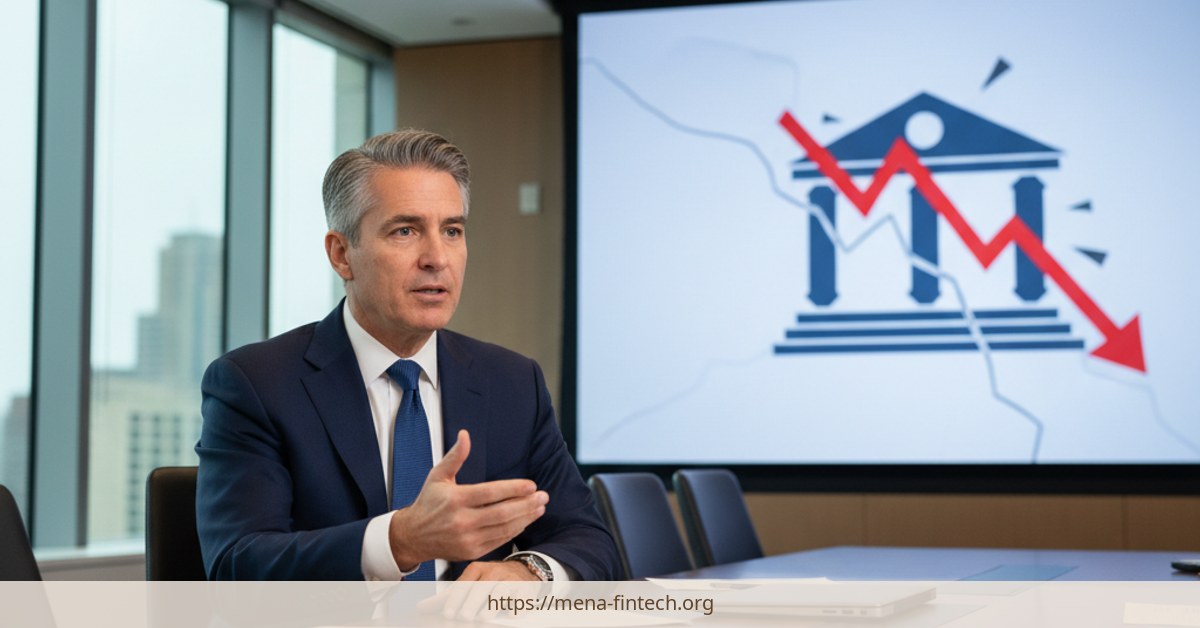
Phil Bruno, Chief Strategy and Growth Officer at ACI Worldwide, highlighted the challenges banks face with their price-to-book ratios during Payments Unleashed in London.
Adaptation Strategies
Bruno emphasized that banks must be open to cutting losses and learning from failures to improve their innovation strategies. This approach is critical as negative market sentiment is reflected in banks’ price-to-book ratios. The need for banks to adapt their strategies is underscored by the current economic climate, where market perceptions can significantly influence investment decisions and operational efficiency.
Price-to-book ratios serve as a key indicator of investor confidence, reflecting the market’s assessment of a bank’s intrinsic value relative to its book value. A declining ratio often signals skepticism about future earnings potential or asset quality, which can constrain capital availability and increase borrowing costs. Bruno’s remarks underscore the urgency for banks to recalibrate their innovation frameworks to align with evolving market expectations. This includes re-evaluating legacy systems, accelerating digital transformation, and prioritizing customer-centric solutions that address pain points in real-time.
Banks that have successfully adapted their strategies based on market feedback include those that have integrated digital solutions and improved customer engagement. For instance, institutions leveraging AI-driven analytics to personalize services or deploying blockchain for cross-border payments have demonstrated resilience amid shifting investor sentiment. The importance of being proactive in innovation is evident as banks strive to counter negative perceptions and maintain competitiveness in a rapidly evolving financial landscape.
In the MENA region, where digital adoption is accelerating, banks are increasingly adopting hybrid models that blend traditional services with embedded finance offerings. This includes partnerships with fintechs to expand access to credit, streamline onboarding processes, and enhance security through biometric authentication. Such adaptations not only address immediate challenges but also position institutions to capitalize on long-term trends like the rise of neobanks and the demand for seamless, omnichannel experiences.
Long-term Implications
The potential long-term effects of negative market perceptions on the banking sector are significant. These effects can lead to reduced investor confidence and increased pressure on banks to innovate and deliver value. How banks can leverage insights from market sentiment to inform future strategies is crucial for their sustained success.
Persistent negative sentiment may force banks to prioritize short-term cost-cutting measures over long-term investments in innovation. However, this approach risks exacerbating the very challenges they seek to address, such as declining customer retention and operational inefficiencies. Conversely, banks that proactively integrate market sentiment analysis into their strategic planning—through tools like sentiment tracking algorithms or customer feedback loops—can identify emerging trends and allocate resources more effectively.
The alignment of innovation efforts with market demands is particularly critical in the MENA region, where regulatory frameworks are evolving to support financial inclusion and digital transformation. For example, the UAE’s Central Bank has mandated the adoption of open banking standards, creating opportunities for banks to collaborate with fintechs and develop interoperable solutions. Similarly, Saudi Arabia’s Vision 2030 initiative emphasizes the role of technology in driving economic diversification, incentivizing banks to invest in AI, blockchain, and data analytics.
Banks are increasingly recognizing the need to align their innovation efforts with market demands. This alignment not only helps in addressing current challenges but also positions them for future opportunities in a dynamic financial environment. For instance, the integration of ESG (Environmental, Social, and Governance) criteria into product design and risk management frameworks is gaining traction, reflecting both regulatory pressures and shifting consumer preferences.
Significance:
For the MENA fintech market, the discussion reflects a broader shift toward adaptive strategies in banking innovation. As the region witnesses rapid digital transformation, the ability to respond to market sentiment will determine which institutions thrive. The GCC’s emphasis on financial inclusion, coupled with the rise of cross-border payment corridors and digital asset adoption, necessitates a strategic reorientation toward agile, customer-first models.
The practical question for regional financial institutions is how they can effectively integrate market sentiment into their innovation frameworks to ensure resilience and growth in a competitive landscape. This requires not only technological investment but also a cultural shift toward experimentation and continuous learning. Institutions that embed sentiment analysis into their decision-making processes—whether through real-time monitoring of social media trends or collaboration with regional fintech ecosystems—will be better positioned to anticipate disruptions and capitalize on emerging opportunities.
What wasn’t disclosed
The announcement did not disclose specific financial terms or expected merchant volumes. It also did not confirm when the first live corridor or commodity product would move into production.
Sources
- How Market Sentiment Affects Banks Innovation Opportunities – finextra.com