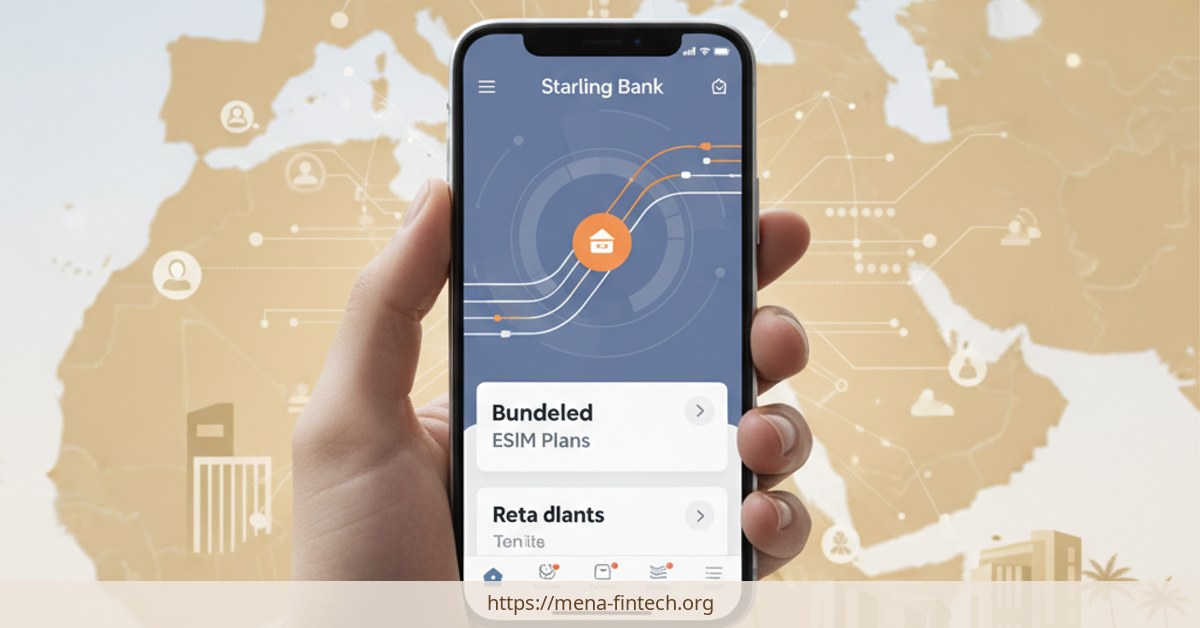
Starling Bank has bundled eSIM plans into its mobile app, providing competitive data-roaming options for retail customers traveling abroad.
Competitive Landscape
Starling Bank’s integration of eSIM technology into its mobile app positions the bank as a competitor in the digital banking space for travelers. While other banks have also introduced similar digital services, Starling’s approach focuses on bundling eSIM plans directly into its app, offering a seamless experience for customers. This move could influence customer loyalty and retention by addressing a key pain point for international travelers who often face high data roaming costs. Competitors such as Revolut and N26 have also offered data roaming solutions, but Starling’s feature is notable for its integration within a UK-based bank’s app, which may appeal to a broader customer base in the MENA region. The MENA region, characterized by a growing middle class and increasing cross-border travel, presents a unique opportunity for banks to innovate in digital services. By embedding eSIM solutions into existing banking infrastructure, Starling may reduce friction for users accustomed to managing multiple apps for travel-related expenses.
The adoption of eSIM technology in banking reflects a broader trend toward integrated digital solutions that enhance customer convenience. As more banks explore embedding financial services into everyday tools, the potential for enhanced customer service through digital solutions grows. For regional financial institutions, the practical question is whether similar technologies can be adapted to meet local regulatory requirements while maintaining the core intent of providing accessible, cost-effective services for travelers. Until specific approvals, partners, and launch volumes are disclosed, the development is best treated as an infrastructure initiative to monitor rather than a completed market rollout.
Future Implications
The integration of eSIM plans into banking apps aligns with the global shift toward embedded finance, where financial services are delivered through non-traditional channels such as travel apps, e-commerce platforms, and mobile wallets. In the MENA region, where digital adoption is accelerating, this approach could redefine how travelers manage expenses, particularly for those navigating complex regulatory environments or currency exchange challenges. For example, eSIM solutions could be paired with real-time currency conversion tools or localized payment gateways to further streamline the user experience.
However, the success of such initiatives depends on harmonizing with regional regulatory frameworks. In countries like the UAE and Saudi Arabia, where financial innovation is encouraged but compliance remains strict, banks must ensure eSIM services adhere to data privacy laws and cross-border transaction regulations. Additionally, partnerships with local telecom providers or mobile network operators (MNOs) may be necessary to offer competitive data plans, as seen in other regions where banks collaborate with telcos to expand service reach. The absence of disclosed partnerships in Starling’s announcement suggests that such collaborations are still in early stages.
For regional financial institutions, the challenge lies in balancing innovation with regulatory adherence. While eSIM technology offers a scalable solution for travelers, its implementation in MENA may require tailored approaches to address local market dynamics, such as varying levels of smartphone penetration or consumer preferences for prepaid versus postpaid services. The infrastructure initiative also raises questions about how banks will measure the ROI of such features, particularly in markets where customer acquisition costs remain high.
Significance:
For the MENA fintech market, the partnership reflects a broader shift toward embedded financial distribution, where merchant platforms are used to surface banking and credit products inside day-to-day business tools. This trend is particularly relevant in the GCC, where digital wallets and payment gateways are increasingly integrated into e-commerce and travel ecosystems. By embedding eSIM solutions into banking apps, Starling and similar institutions are positioning themselves as enablers of seamless, cross-border financial interactions—a critical need for the region’s growing number of international travelers and expatriates.
The practical question for market participants is whether similar technologies can be adapted to meet local regulatory requirements while maintaining the core intent of providing accessible, cost-effective services for travelers. For banks, acquirers, and SME-focused fintechs across MENA, the deal underscores the growing overlap between payment infrastructure, digital banking, and working-capital access. As competition intensifies in the digital banking sector, the ability to offer bundled services like eSIM plans may become a differentiator for institutions seeking to capture market share in the region.
What wasn’t disclosed
The announcement did not disclose financial terms or expected merchant volumes. It did point to a clearer route for Starling to reach customers through an existing payments footprint. The lack of specific data on adoption targets or revenue projections leaves room for speculation about the feature’s scalability and its role in Starling’s broader strategy for the MENA market. Additionally, the absence of details on regulatory approvals or partnerships with local telecom providers highlights the need for further clarity on how the service will be localized for regional users.
Sources
- Starling bundles eSims into mobile app – finextra.com