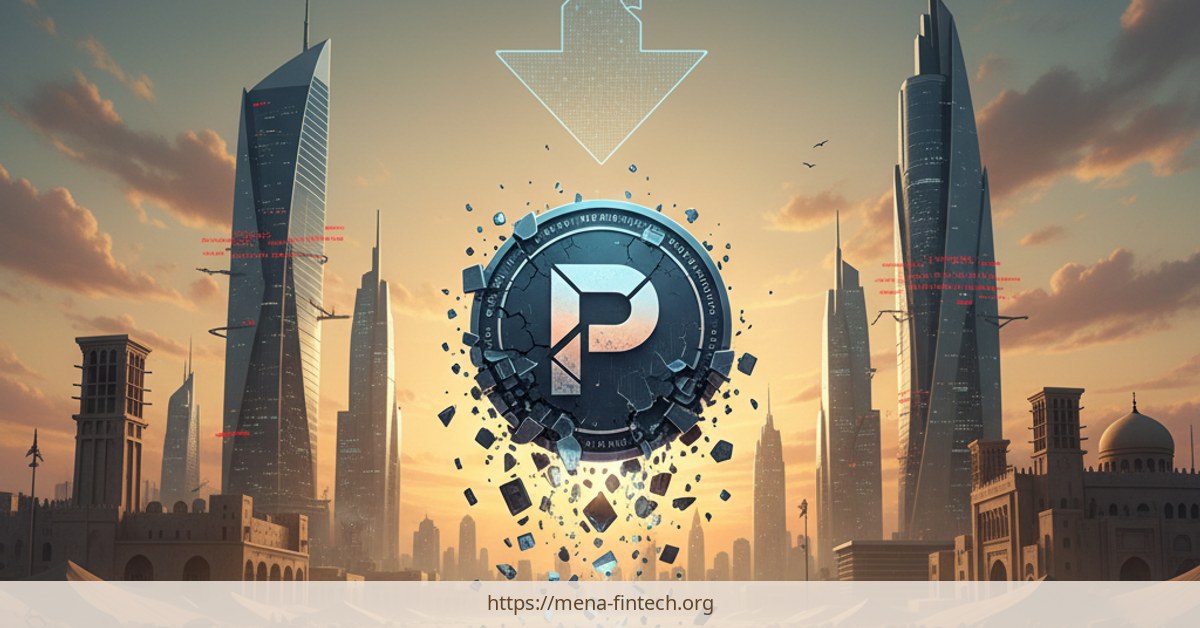
Parker, a fintech company that raised $200 million, has declared bankruptcy, raising alarms about the sustainability of fintech lending.
Structural Challenges in Fintech Lending
The bankruptcy of Parker highlights the structural vulnerabilities within the fintech lending sector. Despite raising significant capital, including a Series A funding round prior to its collapse, the company’s failure underscores the risks associated with rapid scaling and reliance on volatile economic conditions. Finextra reports that Parker’s case reflects broader challenges in the industry, including regulatory scrutiny, liquidity constraints, and the difficulty of maintaining profitability in a competitive market.
Parker’s inclusion in the Y Combinator 2019 cohort underscores the initial optimism surrounding its business model. Y Combinator, a prominent startup accelerator, typically selects ventures with scalable solutions and strong founding teams. However, the company’s subsequent collapse suggests that even well-backed fintechs face existential risks when operating in markets characterized by regulatory ambiguity, macroeconomic instability, or misaligned business strategies. This aligns with broader industry trends where fintechs often struggle to balance aggressive growth targets with sustainable financial practices, particularly in regions with less mature financial infrastructure.
The failure also raises questions about the role of venture capital in fintech lending. While capital injections can fuel innovation and market penetration, they may also create pressure to scale prematurely, leading to overleveraging or misallocation of resources. In Parker’s case, the $200 million raised likely enabled rapid expansion, but without a clear path to profitability or regulatory alignment, such growth could have exacerbated vulnerabilities during economic downturns or shifts in investor sentiment.
Implications for MENA Fintech Startups
For the MENA fintech ecosystem, Parker’s bankruptcy serves as a cautionary tale. The region’s fintech sector has seen rapid growth, particularly in GCC countries, with startups often relying on high valuations and venture capital to fuel expansion. However, this case illustrates the need for sustainable business models that prioritize long-term viability over short-term growth. Investors and regulators in the MENA region must now reassess risk profiles for fintech lending ventures, particularly those operating in markets with less mature financial infrastructure.
The GCC, a hub for fintech innovation, has witnessed a surge in digital lending platforms, many of which operate in regulatory gray areas or lack robust capital adequacy frameworks. Parker’s collapse may prompt regulators to tighten oversight, particularly in areas like consumer protection, data privacy, and capital reserves. For instance, the UAE’s Central Bank (CBUAE) and Saudi Arabia’s SAMA have been proactive in shaping fintech regulations, but the case highlights the need for more granular guidelines tailored to lending-specific risks.
For regional financial institutions and investors, the practical question is whether the MENA fintech sector can adapt its lending models to mitigate risks associated with liquidity, regulatory alignment, and market volatility. This includes adopting more conservative funding strategies, such as diversifying revenue streams beyond venture capital, or integrating with traditional banks to leverage their compliance and risk management frameworks. Additionally, fintechs may need to prioritize product differentiation and operational efficiency to stand out in a crowded market.
Significance:
For MENA fintech, the collapse of Parker underscores the growing scrutiny on lending models that rely heavily on venture capital and rapid scaling. The event may influence investor confidence in the region, prompting a shift toward more conservative funding strategies and stricter compliance frameworks. Regional stakeholders should consider how Parker’s failure might impact regulatory approaches to fintech oversight, particularly in areas like consumer protection and capital adequacy.
The broader implication is that fintech lending in MENA must evolve beyond high-growth hype to address systemic challenges. This includes developing robust underwriting models, ensuring transparency in lending practices, and aligning with regional regulatory priorities. For example, the UAE’s ADGM and DFSA have emphasized the importance of financial stability in fintech, which could become a focal point for policy reforms following cases like Parker’s.
For regional financial institutions and investors, the practical question is whether the MENA fintech sector can adapt its lending models to mitigate risks associated with liquidity, regulatory alignment, and market volatility. Until further corroboration is available, the development should be treated as an infrastructure challenge to monitor rather than a completed market failure.
What wasn’t disclosed
The announcement did not disclose financial terms, investor details, or specific regulatory approvals related to Parker’s operations. It also did not confirm the exact reasons for the bankruptcy filing or the company’s final asset status. These gaps limit the ability to fully assess the event’s implications for the broader fintech sector.
The absence of detailed financial disclosures raises concerns about transparency in fintech bankruptcies, particularly in regions where regulatory frameworks for insolvency are still developing. In the MENA context, this highlights the need for clearer reporting standards to ensure that stakeholders—whether investors, regulators, or consumers—can make informed decisions. Without such clarity, similar cases may go unanalyzed, limiting the sector’s ability to learn from failures and refine its strategies.