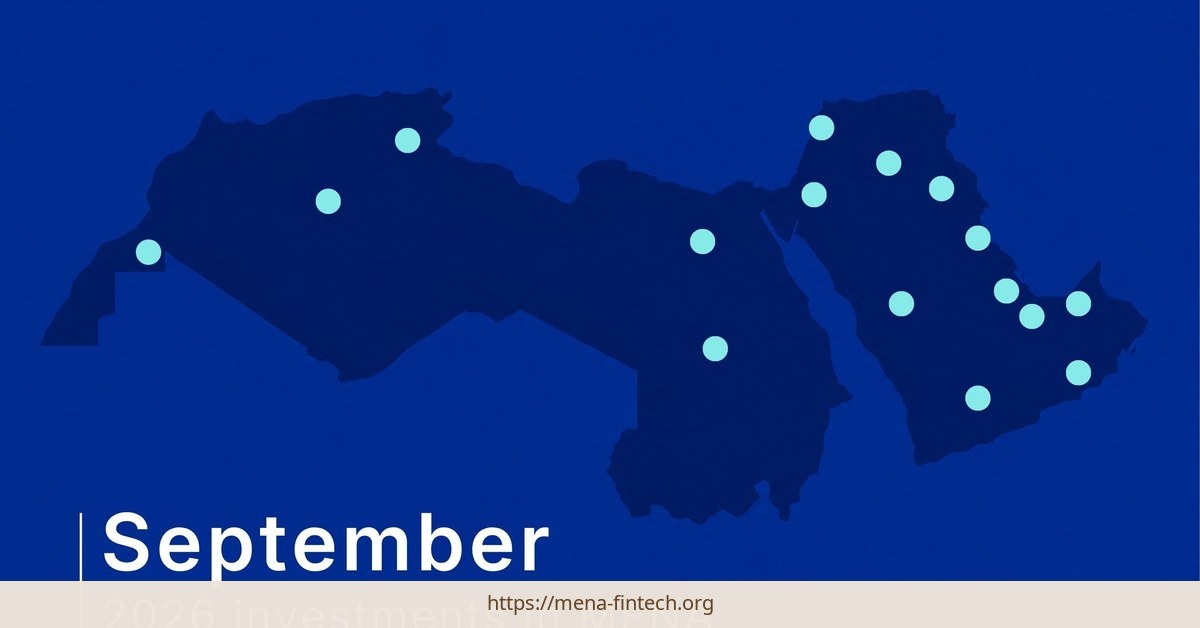
MENA startups raised $1.1 billion across 73 deals in September 2026, according to Wamda, marking a significant rebound in investment activity.
Market Implications
The $1.1 billion raised in September 2026 reflects a 193% increase from August 2026, though it remains 68% below the levels seen in September 2025. This rebound was concentrated in three large transactions, including Barq‘s $329.5 million Series A and Tabby‘s $233 million funding round. The increase suggests a potential recovery in the MENA startup ecosystem, with investor confidence returning to key sectors such as digital payments, embedded finance, and cross-border solutions.
The concentration of large transactions indicates a shift in investor strategy, with capital flowing toward scalable platforms and infrastructure-focused ventures. This trend aligns with broader regional priorities around financial inclusion and digital transformation, as highlighted by GCC regulators in recent policy frameworks. For instance, the UAE’s Central Bank and Saudi Arabia’s SAMA have emphasized the need for fintech innovation to support economic diversification goals. The surge in funding for digital payments infrastructure, such as Barq’s Series A, underscores investor appetite for solutions that address regional gaps in financial access and transaction efficiency.
Future Trends
The funding surge raises questions about the sustainability of this rebound and its implications for the MENA fintech landscape. While the September figures signal renewed interest, the gap compared to 2025 underscores ongoing challenges in attracting consistent capital flows. Investors may be prioritizing ventures with clear regulatory alignment and scalable business models, particularly in areas such as open banking, AI-driven financial services, and ESG-aligned fintech solutions.
For regional financial institutions and regulators, the practical question is whether this funding will translate into long-term growth or remain a short-term fluctuation. The concentration of large deals also highlights the need for diversified investment strategies and stronger ecosystem support for early-stage ventures. Startups in sectors like embedded finance, which integrate financial services into non-financial platforms, are likely to remain attractive as they align with the region’s push for digital-first economies.
The current funding environment also reflects a growing emphasis on cross-border collaboration. With GCC countries increasingly adopting unified regulatory standards, startups leveraging regional partnerships—such as those between UAE-based firms and Saudi or Qatari counterparts—are better positioned to scale. However, challenges such as fragmented regulatory frameworks outside the GCC and macroeconomic headwinds in some MENA countries may limit the pace of expansion.
Significance: For the MENA fintech ecosystem, the September funding rebound underscores the region’s resilience and its position as a hub for innovation in digital finance. However, the gap compared to 2025 highlights the need for sustained regulatory clarity, investor confidence, and cross-border collaboration to fully realize the potential of the startup landscape. The concentration of capital in large rounds suggests that while the ecosystem is recovering, it remains dependent on high-impact ventures to drive momentum. This dynamic may create opportunities for later-stage startups but could leave early-stage innovators underserved without targeted support mechanisms.
Sources
- MENA Startup Funding Reaches $1.1B Across 73 Deals in September 2026 – menastartupdigest.com
Image: cdn.wamda.com