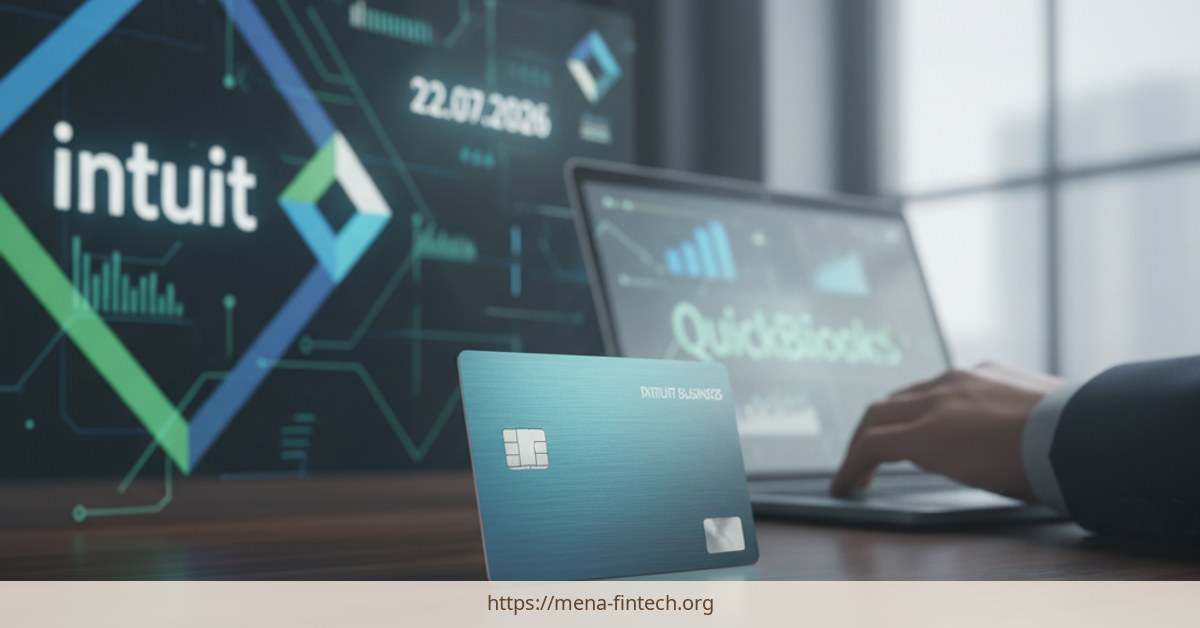
Intuit introduced the Intuit Business Credit Card on July 22, 2026, designed to streamline financial management for small businesses. The card is a World Elite Business Mastercard product that helps small businesses manage spending and access credit while syncing natively with QuickBooks, automatically matching receipts to transactions.
Product Overview
The Intuit Business Credit Card is positioned as a financial tool tailored for small businesses, offering seamless integration with QuickBooks. This synchronization feature allows users to automatically match receipts to transactions, reducing manual data entry and potential errors. The card is a World Elite Business Mastercard, providing access to global spending networks while maintaining local currency support for businesses operating across multiple markets. Key features include:
- Native integration with QuickBooks for automatic receipt-to-transaction matching
- Credit access with spending management tools
- Global transaction support with local currency conversion
The integration with QuickBooks represents a strategic move to leverage Intuit’s existing user base of small and medium-sized enterprises (SMEs) in the MENA region. By embedding credit card functionality within its accounting software, Intuit aims to reduce friction in financial workflows, a critical need for SMEs navigating complex regulatory environments and cross-border operations. The card’s global transaction support is particularly relevant for businesses in the GCC, where international trade and remittances are significant economic drivers.
Market Implications
Intuit’s entry into the business credit card market reflects broader trends in digital financial management solutions. By integrating its card offering with QuickBooks, a widely used accounting platform, Intuit positions itself to capture a segment of small businesses that rely on its ecosystem for daily operations. Competitors in the fintech space, including regional players in the MENA market, may need to accelerate their own integration efforts to maintain relevance.
The product launch also highlights the growing demand for embedded financial services, where credit and accounting tools are combined within a single platform. This approach aligns with regional developments in the MENA fintech ecosystem, where banks and fintechs are increasingly adopting multi-service models to serve SMEs. For example, UAE-based neobanks such as Tamdeen and Saudi Arabia’s Al Rajhi Bank have expanded their offerings to include integrated accounting and payment solutions, reflecting a shift toward holistic financial platforms.
Adoption rates among QuickBooks users will depend on factors such as:
- Perceived value of the integration
- Competitive pricing compared to standalone credit card providers
- Regulatory alignment with local financial services frameworks
The MENA region’s fragmented regulatory landscape poses a challenge for cross-border financial products. While the UAE’s Central Bank has been proactive in promoting digital banking through initiatives like the Virtual Asset Regulatory Framework, other GCC countries have more conservative approaches to fintech innovation. Intuit’s ability to navigate these differences will determine the card’s scalability across the region.
Significance
For the MENA fintech ecosystem, Intuit’s move underscores the continued convergence of payment infrastructure and digital accounting tools. The integration of credit card functionality with accounting software represents a model where financial service providers seek to expand their offerings through existing user bases rather than competing directly with established banks or fintechs. This approach could influence how regional institutions structure their own financial products, particularly in markets where SMEs are a critical economic segment.
For regional financial institutions and fintechs, the practical question is whether such integrated solutions can be adapted to meet local compliance requirements while preserving the core benefits of seamless financial management. Until specific approvals, partners, and launch volumes are disclosed, the development is best treated as an infrastructure initiative to monitor rather than a completed market rollout.
The launch also signals a potential shift in how SMEs in the MENA region approach financial management. With over 60% of GCC GDP generated by SMEs, according to the World Bank, tools that reduce administrative burdens and improve cash flow visibility are likely to gain traction. However, the success of Intuit’s offering will hinge on its ability to demonstrate tangible ROI for businesses, particularly in markets where cost sensitivity remains a key constraint.
What Wasn’t Disclosed
The announcement did not specify:
- The credit limits or interest rates for the card
- The geographic regions where the card will be initially available
- The names of any local banking partners or financial institutions involved in the product’s rollout
- The regulatory approvals secured in individual MENA markets
- The expected user adoption targets or revenue projections for the product