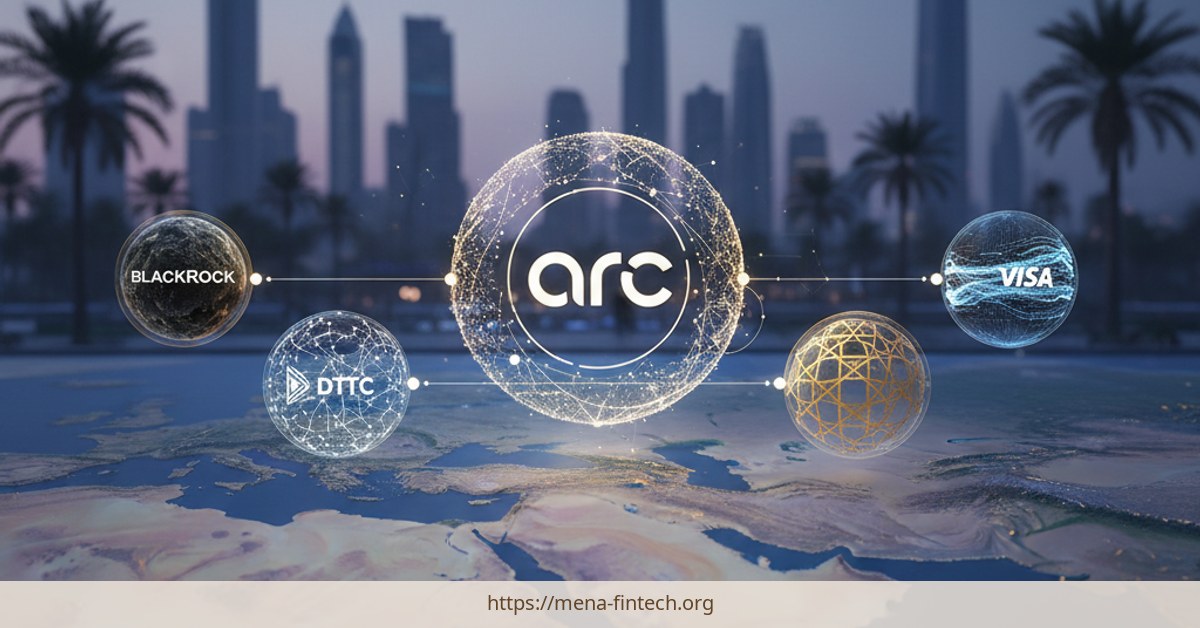
Circle has announced that BlackRock, the DTCC, Standard Chartered, and Visa will be founding validators for its Arc open blockchain network. The public mainnet launch for Circle’s Arc blockchain is scheduled for September 2026, as disclosed in an announcement made on August 5, 2026.
Founding Validators and Their Significance
The involvement of BlackRock, the DTCC, Standard Chartered, and Visa as founding validators underscores the growing integration of blockchain technology within traditional financial institutions. These entities bring extensive experience in asset management, clearing and settlement, banking, and payment processing, which could enhance trust and adoption of blockchain solutions. Their participation signals a potential shift in how blockchain networks are governed and validated, potentially aligning with regulatory expectations in regions like the MENA.
BlackRock, as the world’s largest asset manager, has previously explored blockchain applications for institutional-grade digital assets. Its inclusion as a validator suggests a strategic move to leverage blockchain for cross-border settlements and tokenized securities, which could streamline processes in markets with fragmented financial infrastructure. The DTCC, a critical player in post-trade processing for U.S. equities and corporate bonds, brings expertise in clearing and settlement systems. Its role in Arc may indicate a broader industry push to modernize legacy systems through distributed ledger technology (DLT). Standard Chartered, a global bank with a strong presence in the Gulf Cooperation Council (GCC), has long advocated for blockchain in trade finance and cross-border payments. Visa, a leader in digital payment infrastructure, has been experimenting with blockchain-based solutions for years, including its own blockchain for real-time payments.
Implications for MENA Fintech
The inclusion of major financial institutions as validators may influence regulatory frameworks in the MENA region, where blockchain adoption is rapidly evolving. For existing payment infrastructures and digital asset management systems, this development could signal a move toward more institutional-backed blockchain solutions. However, the practical impact on regional fintech ecosystems will depend on how these validators engage with local markets and whether their participation leads to broader adoption of blockchain-based financial services.
The MENA region has seen increasing interest in blockchain-driven financial innovation, particularly in the GCC, where countries like the UAE and Saudi Arabia have established regulatory sandboxes to test digital asset solutions. The UAE’s Virtual Assets Regulatory Authority (VARA) and Saudi Arabia’s Securities and Commodities Regulatory Authority (SCRA) have both signaled openness to blockchain-based financial services, provided they meet compliance standards. The presence of global validators like Visa and Standard Chartered could accelerate the development of cross-border payment corridors and tokenized asset markets in the region, aligning with the GCC’s vision for financial inclusion and digital transformation.
Significance: For MENA fintech, the announcement reflects the continued convergence of payment infrastructure, digital assets, and institutional validation in blockchain networks. The practical question for regional financial institutions is whether this model can translate into licensed, bank-compatible services across multiple jurisdictions. Until specific approvals, partners, and launch volumes are disclosed, the development is best treated as an infrastructure initiative to monitor rather than a completed market rollout.
What wasn’t disclosed: The announcement did not specify investment size, ownership terms, regulatory approvals, named banking partners, launch markets, or committed transaction volumes. It also did not confirm when the first live corridor or commodity product would move into production. The absence of these details leaves room for speculation about the scale and timeline of Arc’s commercialization. For instance, the lack of named regional partners raises questions about whether the network will prioritize GCC markets or target broader international corridors. Additionally, without clarity on regulatory approvals, the extent to which Arc will comply with MENA-specific financial regulations remains unclear, which could affect its adoption by local institutions.
The absence of quantitative data also limits the ability to assess the potential market impact. For example, the size of the investment from each validator, if any, could indicate the level of commitment to the project. Similarly, the absence of launch volumes or transaction forecasts makes it difficult to gauge the network’s capacity to handle high-throughput use cases such as cross-border remittances or trade finance. These gaps highlight the need for further transparency as the project progresses toward its September 2026 launch.