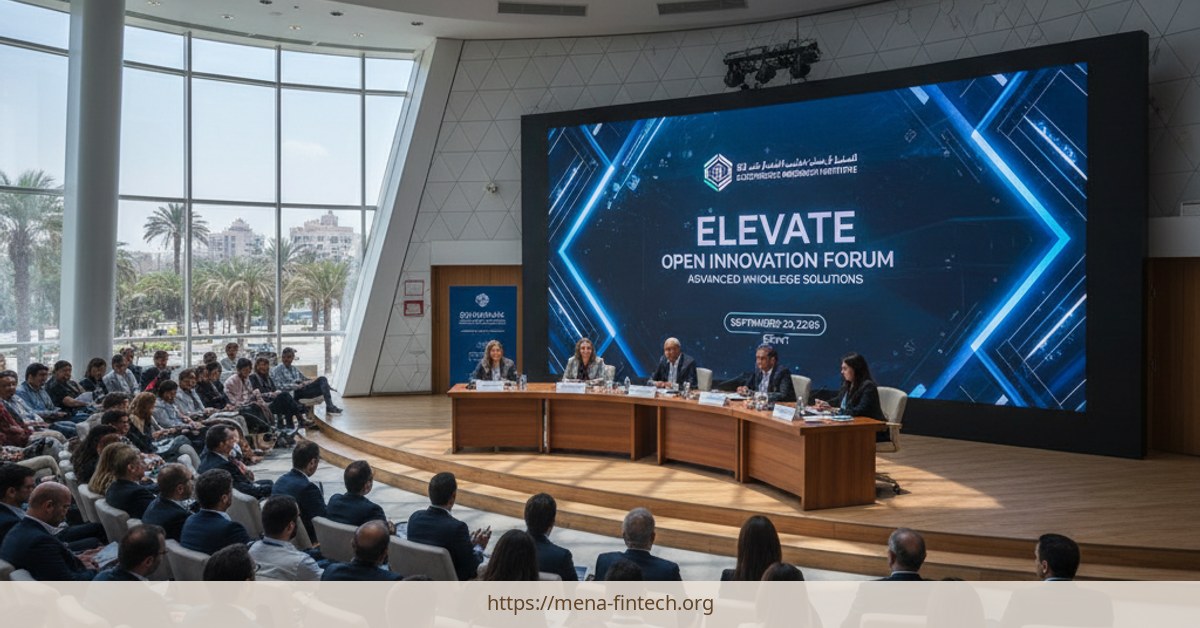
The Bank for International Settlements (BIS) has issued a warning regarding the trillion-dollar AI investment boom, suggesting that it may lead to a significant downturn that could adversely affect the global economy. The warning was published on July 14, 2026.
Impact on MENA Fintech Startups
The BIS alert raises concerns for stakeholders in the fintech sector, particularly in the MENA region, where AI investments are rapidly growing. Current state of AI investments in the MENA fintech ecosystem shows a surge in funding for AI-driven solutions, including digital payments infrastructure, open banking platforms, and AI-powered risk assessment tools. This growth has been fueled by the region’s strategic push toward digital transformation, with governments and private sector actors prioritizing innovation in financial services. For instance, the UAE’s Vision 2021 and Saudi Arabia’s Vision 2030 have explicitly emphasized the adoption of AI and fintech to modernize economies and reduce reliance on traditional sectors. However, the potential bust in AI investments could disrupt funding pipelines for startups relying on venture capital and private equity, particularly those in early-stage development.
Potential strategies for resilience among MENA fintech startups include diversifying revenue streams, focusing on regulatory-compliant use cases, and building sustainable business models that reduce dependency on speculative capital. Startups with embedded finance or cross-border payment solutions may find stronger footing due to their alignment with GCC regulatory priorities, which increasingly emphasize financial inclusion and cross-border trade facilitation. For example, the UAE’s Central Bank has been actively promoting cross-border payment corridors, while Saudi Arabia’s SAMA has introduced frameworks to support embedded finance models. These initiatives create a structural advantage for firms that can demonstrate clear value propositions tied to regional economic goals.
Regulatory Responses
MENA regulators are likely to respond to the BIS warning by tightening oversight of AI-driven financial services. Expected actions from MENA regulators include strengthening compliance frameworks for AI applications in fraud detection, credit scoring, and automated trading. This could lead to increased due diligence requirements for fintechs seeking licenses in the UAE, Saudi Arabia, and Bahrain. The regulatory focus on AI ethics and transparency is already evident in the UAE’s Abu Dhabi Global Market (ADGM), which has been developing guidelines for AI use in financial services, and Bahrain’s Central Bank, which has emphasized the need for explainable AI in credit scoring systems.
For compliance and strategic decisions among MENA fintech companies, the BIS warning underscores the need for proactive risk management. Firms may need to allocate resources toward regulatory tech (RegTech) solutions and data governance frameworks to meet evolving standards. The ADGM and CBUAE are expected to issue guidelines on AI ethics and transparency in financial services, which will likely require fintechs to document AI decision-making processes and ensure fairness in algorithmic outputs. This shift could increase operational costs for startups but may also drive innovation in areas such as bias detection and auditability of AI models.
Significance
For the MENA fintech ecosystem, the BIS warning reflects the need for caution among investors and stakeholders. The potential bust in AI investments could slow innovation cycles and increase pressure on startups to demonstrate scalable, revenue-generating use cases. This may accelerate consolidation in the sector as weaker players struggle to secure funding. The MENA region’s fintech landscape has already seen a wave of mergers and acquisitions in 2025, with firms like Careem and Tamara undergoing strategic repositioning. A broader downturn could intensify this trend, leading to a more mature, but less fragmented, ecosystem.
The practical question for market participants is whether the MENA region’s regulatory environment and strategic focus on digital transformation can buffer against broader market volatility. Investors and fintech leaders must weigh the long-term value of AI-driven solutions against the short-term risks of a potential investment downturn. For example, AI-powered credit scoring tools may face scrutiny if they are perceived as opaque or discriminatory, but their ability to expand financial inclusion in underserved populations could make them a priority for regulators. This tension between innovation and regulation will likely shape the next phase of fintech development in the region.
What Wasn’t Disclosed
The BIS warning did not specify regulatory timelines, exact funding thresholds for at-risk startups, or named MENA companies impacted by the potential bust. It also did not confirm government intervention plans or specific AI applications under scrutiny. The absence of these details suggests that the BIS is positioning its warning as a general cautionary note rather than a targeted regulatory action. This ambiguity may leave room for regional regulators to interpret and act independently, potentially leading to a patchwork of responses across the MENA region.
Sources
- AI investment boom could turn to bust, warns BIS paper – finextra.com