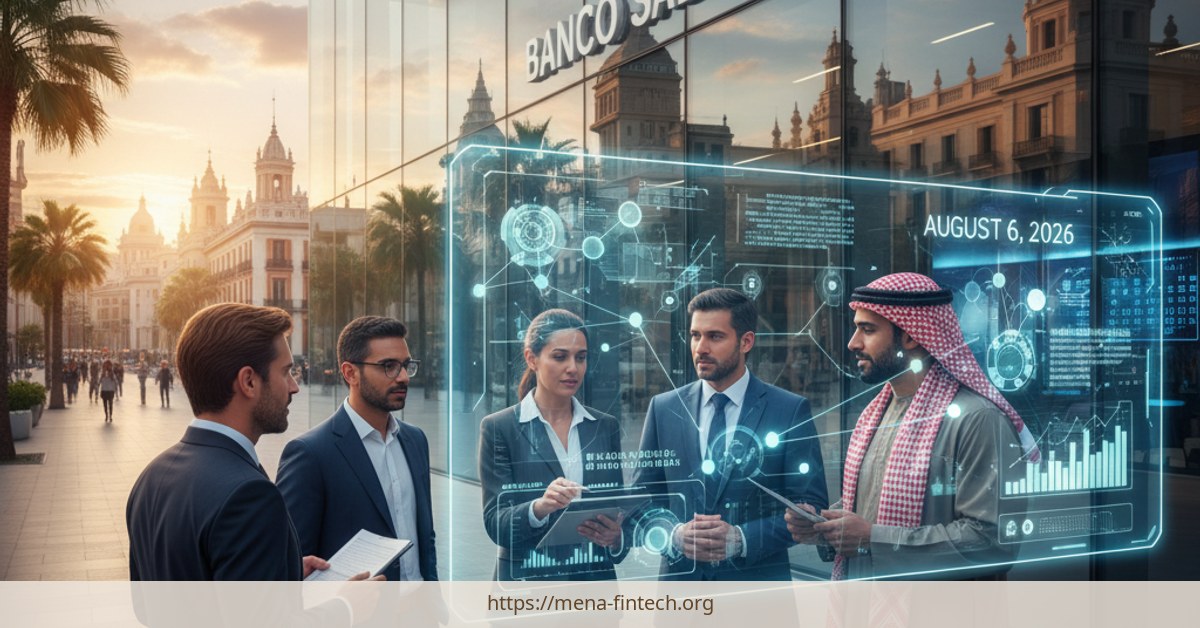
Banco Sabadell announced a new organizational structure on August 6, 2026, aimed at integrating artificial intelligence into its operations. The transformation seeks to simplify the bank’s framework while positioning AI as a core driver for operational efficiency and growth.
AI Integration and Organizational Change
The restructuring focuses on embedding AI across Banco Sabadell’s processes to streamline operations and reduce complexity. According to the bank’s announcement, the goal is to accelerate growth by leveraging AI for data analysis, customer insights, and process automation. This shift aligns with broader industry trends where financial institutions are adopting AI to enhance decision-making and reduce manual interventions. The integration of AI is expected to standardize workflows, minimize human error, and optimize resource allocation. For instance, AI algorithms can analyze vast datasets to identify patterns in customer behavior, enabling more accurate risk assessments and personalized financial planning. Additionally, automation of routine tasks such as transaction processing and compliance checks could free up human employees to focus on higher-value activities, such as strategic planning and client relationship management.
The organizational restructuring likely involves the creation of dedicated AI teams or the integration of AI specialists into existing departments. This approach ensures that AI initiatives are aligned with the bank’s overall strategic objectives. The transformation also underscores the importance of upskilling employees to work alongside AI systems, fostering a culture of innovation and adaptability. As AI becomes more integral to banking operations, the ability to interpret and act on AI-generated insights will be critical for maintaining competitive advantage.
Implications for Customer Relationships
Banco Sabadell has identified the relationship banking model as a strategic cornerstone for its future. The integration of AI is expected to refine customer engagement by enabling personalized services, predictive analytics, and real-time support. For example, AI-driven tools could help banks anticipate client needs, optimize product recommendations, and improve response times to queries. These capabilities may strengthen customer retention and satisfaction, particularly in competitive markets like the MENA region, where personal relationships and trust are pivotal to financial services.
AI can enhance relationship banking by providing deeper insights into customer preferences and behaviors. Through machine learning models, banks can segment their customer base more effectively, tailoring products and services to meet specific needs. Predictive analytics can also help identify potential issues, such as declining account activity or signs of financial distress, allowing banks to proactively engage with customers. Real-time support, powered by chatbots and virtual assistants, can address customer inquiries instantly, reducing wait times and improving overall service quality. However, the challenge lies in balancing automation with the human touch that remains essential in building and maintaining trust in the banking sector.
Impact on the MENA Banking Landscape
The move by Banco Sabadell reflects a growing emphasis on AI adoption in global banking, with potential ripple effects for the MENA region. GCC banks, which are increasingly focused on digital transformation, may view this as a benchmark for integrating AI into their own operations. The region has seen a surge in fintech innovation, with several banks and startups exploring AI-driven solutions to enhance customer experience and operational efficiency. For example, UAE-based banks have already begun piloting AI tools for fraud detection and personalized marketing, while Saudi Arabia’s Vision 2030 initiative emphasizes the importance of technology in driving economic growth.
The shift could influence fintech partnerships, as banks seek collaborations with AI-focused startups to enhance their technological capabilities. However, the lack of corroboration from multiple sources means this development should be monitored closely for further validation. The integration of AI in the MENA region also raises important questions about regulatory frameworks and data privacy. As banks adopt AI, they must navigate evolving regulations to ensure compliance with local and international standards. This includes addressing concerns related to data security, algorithmic bias, and transparency in AI decision-making processes.
Significance: For the MENA banking sector, Banco Sabadell’s AI integration underscores the accelerating role of artificial intelligence in reshaping financial services. The model may serve as a reference point for regional institutions exploring similar technologies. For market participants, the practical question is whether AI-driven strategies can be scaled effectively in MENA markets while meeting regulatory and compliance standards. The success of AI adoption in the region will depend on factors such as the availability of skilled talent, the readiness of existing infrastructure, and the willingness of customers to embrace digital banking solutions.
Sources
- Banco Sabadell puts AI at the centre of business overhaul – finextra.com