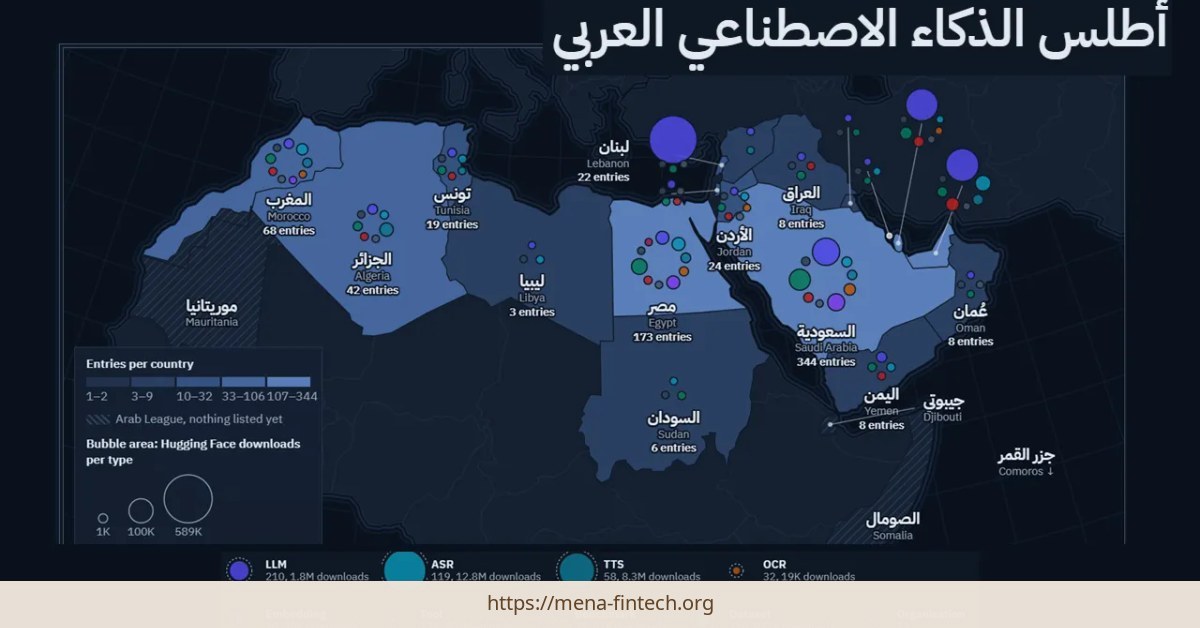
Hesham Haroon has launched the Arabic AI Atlas, an open-source repository that maps over 1,000 AI models and tools tailored for Arabic applications.
Introduction
The Arabic AI Atlas, launched by Riyadh-based AI professional Hesham Haroon, serves as an open-source repository aimed at developers seeking Arabic-capable AI models and tools. This initiative is significant for enhancing accessibility and usability of AI technologies in the Arabic language. The repository lists more than 1,000 models and tools, including over 1,000 datasets covering various AI applications such as large language models, speech recognition, and optical character recognition. These resources are designed to address linguistic and cultural nuances specific to Arabic-speaking regions, providing a foundation for localized AI development.
Impact on Local Startups
Availability of Arabic-capable AI tools can foster innovation among local startups. Developers can leverage these resources to create tailored solutions for Arabic-speaking users, such as language-specific chatbots, regional content moderation systems, or culturally adapted voice assistants. The Arabic AI Atlas provides a centralized platform for accessing and utilizing AI technologies that are specifically adapted to the linguistic and cultural nuances of the Arabic-speaking world. This can reduce the barriers to entry for startups looking to develop AI-driven products and services in the MENA region. By eliminating the need to build foundational models from scratch, the Atlas enables entrepreneurs to focus on application-specific innovations that align with local market demands.
Significance of Open-Source Resources
Open-source initiatives like the Arabic AI Atlas enhance collaboration and knowledge sharing. They provide critical infrastructure for advancing technology in the Arabic-speaking world. By making these resources freely available, the Arabic AI Atlas encourages a culture of innovation and continuous improvement within the MENA tech ecosystem. This can lead to the development of more sophisticated AI applications that address local challenges and opportunities. For instance, optical character recognition tools tailored for Arabic script can improve document processing in regions where Arabic is the primary language, while speech recognition models optimized for Arabic dialects can enhance voice-based interfaces in local markets.
Significance: For the MENA tech ecosystem
The Arabic AI Atlas represents a significant step towards enhancing AI accessibility for Arabic-speaking developers. It addresses a critical gap in the availability of localized AI resources, which can drive innovation and economic growth in the region. For regional financial institutions and tech companies, the practical question is how effectively the Arabic AI Atlas can be integrated into existing workflows and whether it can catalyze broader adoption of AI technologies tailored to the Arabic-speaking market. The initiative also raises questions about the long-term sustainability of such projects, including the need for ongoing community contributions and technical maintenance to ensure the repository remains up-to-date with evolving AI standards.
What wasn’t disclosed
The announcement did not disclose investment size, ownership terms, regulatory approvals, named banking partners, launch markets, or committed transaction volumes. It also did not confirm when the first live corridor or commodity product would move into production.
Sources
- Arabic AI Atlas Maps More Than 1,000 Open Models and Tools – menastartupdigest.com
Image: substackcdn.com